Nevada OHV program warns current grant pace is unsustainable; finance chief proposes staged cuts
November 21, 2025 | Commission on Off-Highway Vehicles, Executive Agencies, Organizations, Executive, Nevada
This article was created by AI summarizing key points discussed. AI makes mistakes, so for full details and context, please refer to the video of the full meeting. Please report any errors so we can fix them. Report an error »
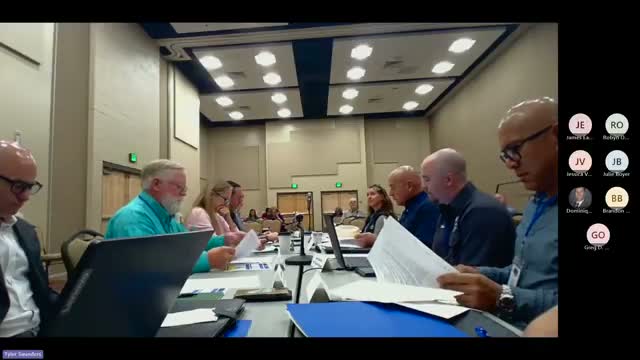
Heather Buck, chief financial officer for the Department of Conservation and Natural Resources, warned the Nevada Commission on Off‑Highway Vehicles that the program’s current grant pace would exhaust reserves if unchanged.
"When we closed state fiscal year '25, we carried forward $2,800,000 into the current fiscal year," Buck said while presenting the program’s financial summary. Buck also reported a revenue recognition adjustment of about $1,056,000 related to DMV transfers and identified roughly $1,500,000 in outstanding grant‑round liabilities.
Buck recommended a staged reduction in grant rounds to protect the program’s reserve and make funding sustainable: $1.25 million in state fiscal year 2026, $1.0 million in 2027, and then a longer‑term target around $750,000. "If we continue to issue grants at the $1,500,000 it is not sustainable for the program," she said.
Commissioners probed the revenue assumptions and timing of transfers from DMV, and urged staff to run alternate scenarios. Commissioner Eason asked whether staff had modeled flat grant amounts and what alternate fee structures might mean for longer‑term projections; Buck said she used a three‑year running average for revenue projections and agreed to provide additional analyses, including a scenario using a $7.50 registration fee.
Commissioners also asked for more DMV data to validate trends. Buck said DMV had collected about $400,000 to date for the program but transfers typically occur quarterly and some recent processing delays were linked to controller software changes and recent system outages.
The commission did not take formal action on funding levels at the meeting but directed staff to return with further modeling and recommended steps to stabilize both revenues and reserve balances.
What’s next: staff will run alternative revenue and grant‑award scenarios and provide a revised projection at a future meeting; commissioners asked for a breakdown showing how changes to registration or award sizes would affect grant capacity and reserves.
"When we closed state fiscal year '25, we carried forward $2,800,000 into the current fiscal year," Buck said while presenting the program’s financial summary. Buck also reported a revenue recognition adjustment of about $1,056,000 related to DMV transfers and identified roughly $1,500,000 in outstanding grant‑round liabilities.
Buck recommended a staged reduction in grant rounds to protect the program’s reserve and make funding sustainable: $1.25 million in state fiscal year 2026, $1.0 million in 2027, and then a longer‑term target around $750,000. "If we continue to issue grants at the $1,500,000 it is not sustainable for the program," she said.
Commissioners probed the revenue assumptions and timing of transfers from DMV, and urged staff to run alternate scenarios. Commissioner Eason asked whether staff had modeled flat grant amounts and what alternate fee structures might mean for longer‑term projections; Buck said she used a three‑year running average for revenue projections and agreed to provide additional analyses, including a scenario using a $7.50 registration fee.
Commissioners also asked for more DMV data to validate trends. Buck said DMV had collected about $400,000 to date for the program but transfers typically occur quarterly and some recent processing delays were linked to controller software changes and recent system outages.
The commission did not take formal action on funding levels at the meeting but directed staff to return with further modeling and recommended steps to stabilize both revenues and reserve balances.
What’s next: staff will run alternative revenue and grant‑award scenarios and provide a revised projection at a future meeting; commissioners asked for a breakdown showing how changes to registration or award sizes would affect grant capacity and reserves.
View the Full Meeting & All Its Details
This article offers just a summary. Unlock complete video, transcripts, and insights as a Founder Member.
✓
Watch full, unedited meeting videos
✓
Search every word spoken in unlimited transcripts
✓
AI summaries & real-time alerts (all government levels)
✓
Permanent access to expanding government content
30-day money-back guarantee
