Louisiana committee hears clash over bill to curb ‘claim sharks’ who assist veterans with VA benefits
May 21, 2024 | Judiciary B, Senate, Committees, Legislative, Louisiana
This article was created by AI summarizing key points discussed. AI makes mistakes, so for full details and context, please refer to the video of the full meeting. Please report any errors so we can fix them. Report an error »
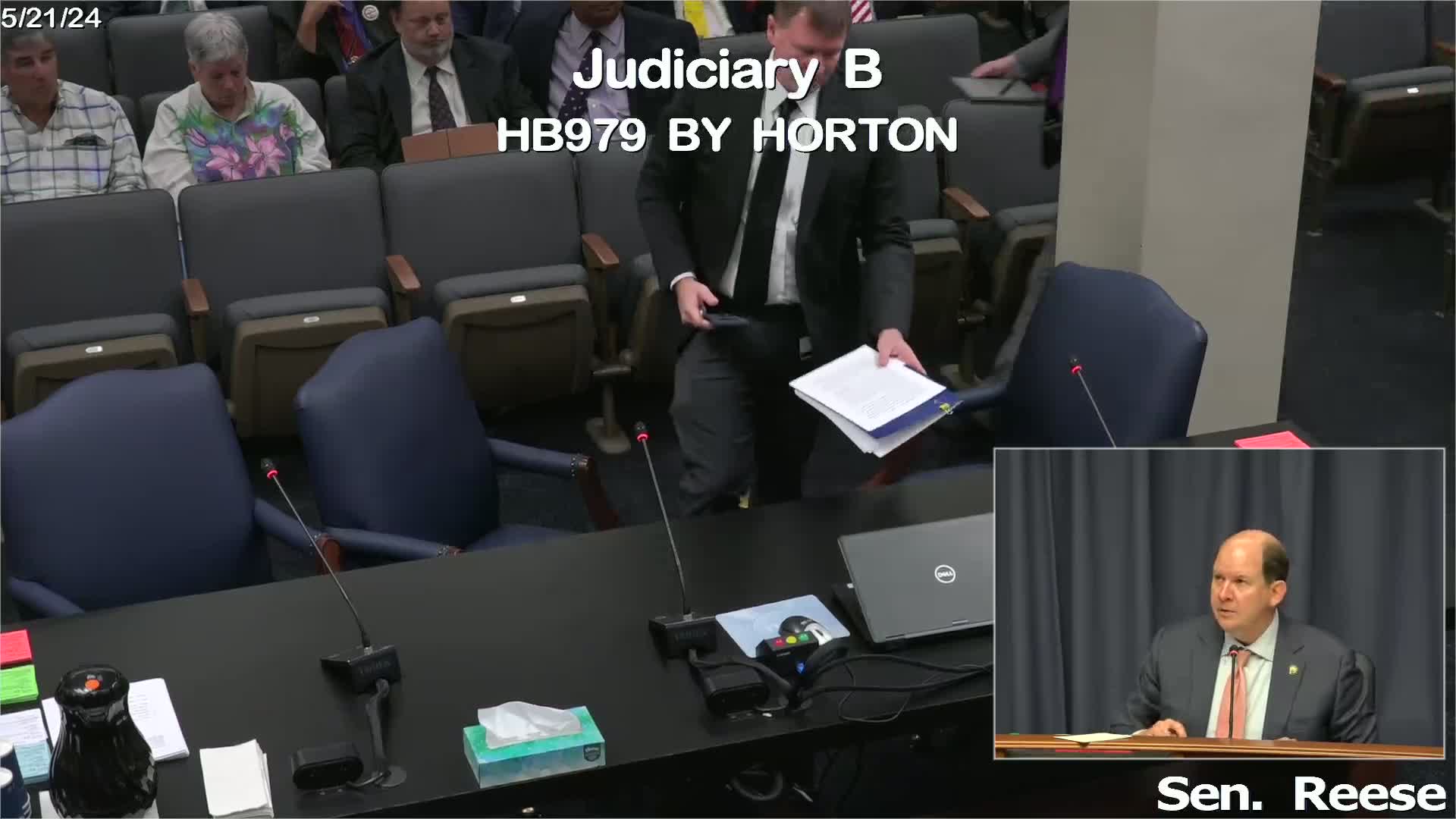
Charlton McGinley, secretary of the Louisiana Department of Veterans Affairs, told the Senate Judiciary B committee that House Bill 979 is intended to protect veterans from private companies that charge fees to assist with VA claims and often operate outside VA accreditation rules. “If you wanna help veterans, you gotta play by the rules,” McGinley said.
McGinley described a federal backdrop of recent veterans legislation — including the PACT Act and the Camp Lejeune-related measures — and said a private market of unaccredited disability-claims consultants has arisen to fill veterans’ needs. He said many of those firms use consulting or fee agreements rather than powers of attorney and, under federal regulation, “most of these companies are operating illegally.”
The bill, sponsored in the House by Representative Horton and presented to the committee by LDVA, would require that third-party firms assisting veterans be accredited under the standards the VA applies to agents and attorneys. Supporters said accreditation would impose training and ethics standards and limit excessive fees. “We have 75 veteran assistance counselors throughout the state who file claims on behalf of veterans, free of charge,” McGinley said, urging state-level action while federal legislation remains unsettled.
Veterans-service organizations and former veterans officials urged the committee to back the bill. Rudolph Borg of the American Legion described veterans who paid large sums to private firms and said VSOs perform outreach and counseling free of charge. Don Reber of the VFW said unaccredited companies cannot access VA records and typically only prepare paperwork for veterans; he called accreditation the appropriate mechanism for oversight. John Wells of Military Veterans Advocacy, who has worked in appeals and litigation, said the bill targets predatory actors while preserving accredited attorneys and agents.
Opponents said the measure risks reducing options for veterans who seek faster help outside the VA system. Peter O'Rourke, president of the National Association For Veteran Rights and a former acting VA secretary, urged the committee to oppose HB 979, saying the bill would “trap veterans in a backlog appeal system” and curtail private-market alternatives that some veterans prefer. O'Rourke and others also warned of legal complications tied to federal preemption and existing state legislation that addresses fees and disclosures.
Committee members questioned how state rules would interact with federal rules (citing 38 C.F.R. on representation and fee structures) and whether state action could inadvertently close a path that some veterans use. The committee adopted a technical amendment (amendment set 3938) to HB 979 without objection, but did not make a motion to report the bill for final passage; the chair indicated the bill would remain in committee for further work.
What’s next: HB 979 was amended in committee but not acted on further. Proponents said they will continue to work with veterans organizations, the governor’s office and the legislature to refine the measures and to consider federal developments such as the Guard Act and the Plus Act that are pending in Congress.
Reported authorities and context: witnesses repeatedly referenced VA regulation and federal bills, including the PACT Act of 2022, the Camp Lejeune-related legislation, and 38 C.F.R. provisions on accredited representatives and fee rules; supporters cited a letter from 44 state attorneys general urging the Guard Act approach.
No final vote on HB 979 was recorded in the hearing.
McGinley described a federal backdrop of recent veterans legislation — including the PACT Act and the Camp Lejeune-related measures — and said a private market of unaccredited disability-claims consultants has arisen to fill veterans’ needs. He said many of those firms use consulting or fee agreements rather than powers of attorney and, under federal regulation, “most of these companies are operating illegally.”
The bill, sponsored in the House by Representative Horton and presented to the committee by LDVA, would require that third-party firms assisting veterans be accredited under the standards the VA applies to agents and attorneys. Supporters said accreditation would impose training and ethics standards and limit excessive fees. “We have 75 veteran assistance counselors throughout the state who file claims on behalf of veterans, free of charge,” McGinley said, urging state-level action while federal legislation remains unsettled.
Veterans-service organizations and former veterans officials urged the committee to back the bill. Rudolph Borg of the American Legion described veterans who paid large sums to private firms and said VSOs perform outreach and counseling free of charge. Don Reber of the VFW said unaccredited companies cannot access VA records and typically only prepare paperwork for veterans; he called accreditation the appropriate mechanism for oversight. John Wells of Military Veterans Advocacy, who has worked in appeals and litigation, said the bill targets predatory actors while preserving accredited attorneys and agents.
Opponents said the measure risks reducing options for veterans who seek faster help outside the VA system. Peter O'Rourke, president of the National Association For Veteran Rights and a former acting VA secretary, urged the committee to oppose HB 979, saying the bill would “trap veterans in a backlog appeal system” and curtail private-market alternatives that some veterans prefer. O'Rourke and others also warned of legal complications tied to federal preemption and existing state legislation that addresses fees and disclosures.
Committee members questioned how state rules would interact with federal rules (citing 38 C.F.R. on representation and fee structures) and whether state action could inadvertently close a path that some veterans use. The committee adopted a technical amendment (amendment set 3938) to HB 979 without objection, but did not make a motion to report the bill for final passage; the chair indicated the bill would remain in committee for further work.
What’s next: HB 979 was amended in committee but not acted on further. Proponents said they will continue to work with veterans organizations, the governor’s office and the legislature to refine the measures and to consider federal developments such as the Guard Act and the Plus Act that are pending in Congress.
Reported authorities and context: witnesses repeatedly referenced VA regulation and federal bills, including the PACT Act of 2022, the Camp Lejeune-related legislation, and 38 C.F.R. provisions on accredited representatives and fee rules; supporters cited a letter from 44 state attorneys general urging the Guard Act approach.
No final vote on HB 979 was recorded in the hearing.
Don't Miss a Word: See the Full Meeting!
Go beyond summaries. Unlock every video, transcript, and key insight with a Founder Membership.
✓
Get instant access to full meeting videos
✓
Search and clip any phrase from complete transcripts
✓
Receive AI-powered summaries & custom alerts
✓
Enjoy lifetime, unrestricted access to government data
30-day money-back guarantee
