North Dakota committee hears bill to let state invest in precious metals and large-cap digital assets
January 14, 2024 | Industry, Business and Labor, House of Representatives, Legislative, North Dakota
This article was created by AI summarizing key points discussed. AI makes mistakes, so for full details and context, please refer to the video of the full meeting. Please report any errors so we can fix them. Report an error »
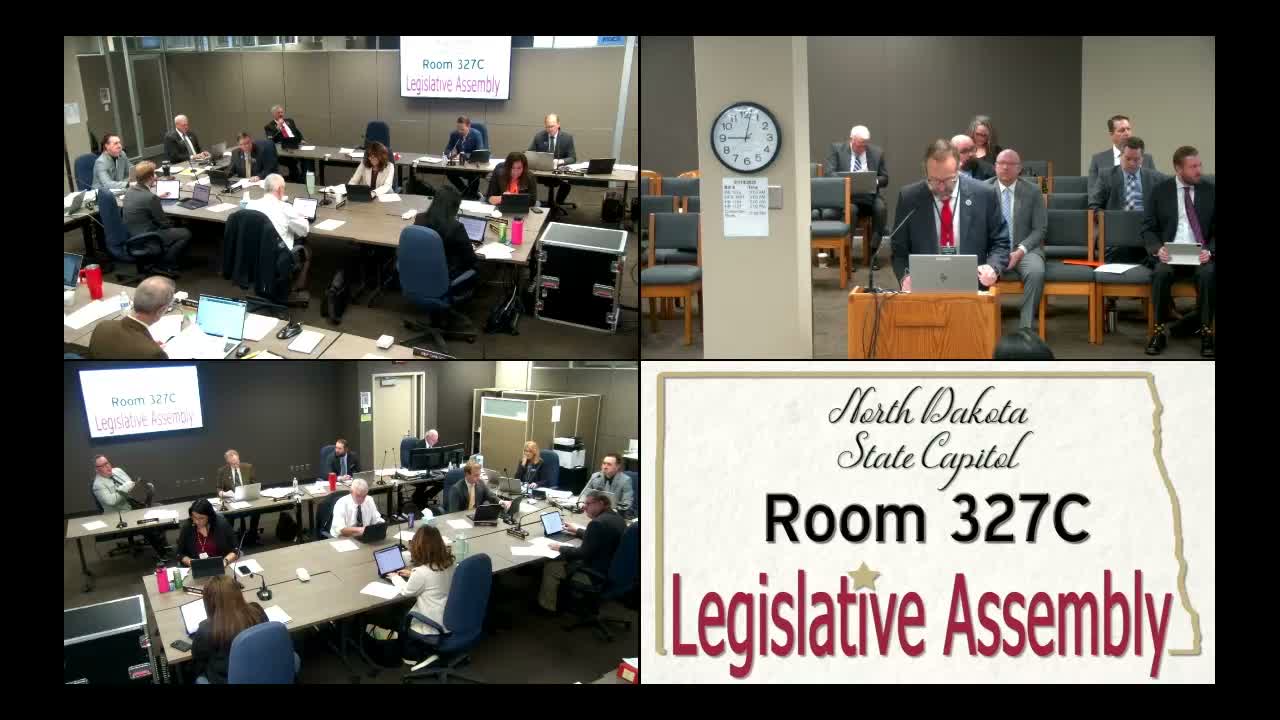
Representative Nathan Toman, R‑Mandan, told the Industry, Business and Labor Committee that House Bill 1184 would authorize the state treasury, working with the State Investment Board, to buy physical precious metals and digital assets with market capitalizations above $500,000,000,000, and set a guardrail of roughly a 10% cap on eligible funds.
"This bill is to allow investment into our state treasury into precious metals or digital assets with a market capitalization exceeding $500,000,000,000," Toman said, framing the measure as an optional tool the treasurer and investment board could use to hedge against inflation.
Proponents said modest allocations could have preserved purchasing power during recent inflation. Eric Peterson, policy director of Satoshi Action Fund, told the committee that a small allocation to bitcoin or gold over the past several years would have largely offset declines in purchasing power. "If the state were to buy small amounts of gold or bitcoin...even a modest 3% allocation would have completely wiped out any of the losses due to inflation over that period of time," Peterson said.
Industry witnesses described custody and operational options. Peterson and other supporters said the bill distinguishes direct holdings and secure custody solutions from speculative exchange-traded products; he described three custody approaches in the draft (secure custody, a qualified custodian, or exposure through an exchange-traded product) and said the bill seeks to avoid ETF‑style structures for metals.
Local business testimony highlighted economic development arguments. Aaron Hall, CEO of Sundog Mining, described using underutilized, off‑peak electricity to mine bitcoin and said a legislative signal would help attract jobs and training programs for electricians and engineers.
Investment officers and state fiduciaries cautioned against declaring a legislative preference that could constrain prudent fiduciary decision‑making. Frank Mikhail, chief investment officer for the State Trust Lands Board, and Scott Anderson of the Retirement and Investment Office said their governance structures already permit consideration of such assets and emphasized the boards’ focus on cash‑flowing investments, prudent investor standards and portfolio construction. Anderson noted bitcoin’s high historical volatility and pointed to existing alternatives for inflation protection such as Treasury Inflation‑Protected Securities or floating‑rate instruments.
Banking and operational concerns focused on the general fund. Don Morgan, president and CEO of the Bank of North Dakota, and Rick Kleberg of the North Dakota Bankers Association urged excluding the general fund from any volatile allocations, citing deposit flows, reconciliation systems and core‑processing costs needed to custody digital assets. Morgan said banks are studying the technology but that the core systems and transaction-processing requirements are complex and costly.
Treasurer Thomas Beadle testified in neutral and said the bill could provide "political cover" for investment boards, while noting the general fund’s existing relationship with the Bank of North Dakota and statutory constraints that likely require separate action before the general fund could be treated differently.
The committee took testimony but did not take a final vote on the bill during this session. Committee members discussed potential amendments (for example, excluding appropriated general fund dollars or limiting which funds are eligible) and questioned whether a delayed effective date or narrower list of funds would ease operational concerns.
What’s next: The committee closed the hearing and may consider amendments or follow‑up staff work before any committee vote. Supporters urged a limited, optional approach while cautious witnesses urged more guardrails and clarified that existing boards retain authority to consider these asset classes under current governance.
"This bill is to allow investment into our state treasury into precious metals or digital assets with a market capitalization exceeding $500,000,000,000," Toman said, framing the measure as an optional tool the treasurer and investment board could use to hedge against inflation.
Proponents said modest allocations could have preserved purchasing power during recent inflation. Eric Peterson, policy director of Satoshi Action Fund, told the committee that a small allocation to bitcoin or gold over the past several years would have largely offset declines in purchasing power. "If the state were to buy small amounts of gold or bitcoin...even a modest 3% allocation would have completely wiped out any of the losses due to inflation over that period of time," Peterson said.
Industry witnesses described custody and operational options. Peterson and other supporters said the bill distinguishes direct holdings and secure custody solutions from speculative exchange-traded products; he described three custody approaches in the draft (secure custody, a qualified custodian, or exposure through an exchange-traded product) and said the bill seeks to avoid ETF‑style structures for metals.
Local business testimony highlighted economic development arguments. Aaron Hall, CEO of Sundog Mining, described using underutilized, off‑peak electricity to mine bitcoin and said a legislative signal would help attract jobs and training programs for electricians and engineers.
Investment officers and state fiduciaries cautioned against declaring a legislative preference that could constrain prudent fiduciary decision‑making. Frank Mikhail, chief investment officer for the State Trust Lands Board, and Scott Anderson of the Retirement and Investment Office said their governance structures already permit consideration of such assets and emphasized the boards’ focus on cash‑flowing investments, prudent investor standards and portfolio construction. Anderson noted bitcoin’s high historical volatility and pointed to existing alternatives for inflation protection such as Treasury Inflation‑Protected Securities or floating‑rate instruments.
Banking and operational concerns focused on the general fund. Don Morgan, president and CEO of the Bank of North Dakota, and Rick Kleberg of the North Dakota Bankers Association urged excluding the general fund from any volatile allocations, citing deposit flows, reconciliation systems and core‑processing costs needed to custody digital assets. Morgan said banks are studying the technology but that the core systems and transaction-processing requirements are complex and costly.
Treasurer Thomas Beadle testified in neutral and said the bill could provide "political cover" for investment boards, while noting the general fund’s existing relationship with the Bank of North Dakota and statutory constraints that likely require separate action before the general fund could be treated differently.
The committee took testimony but did not take a final vote on the bill during this session. Committee members discussed potential amendments (for example, excluding appropriated general fund dollars or limiting which funds are eligible) and questioned whether a delayed effective date or narrower list of funds would ease operational concerns.
What’s next: The committee closed the hearing and may consider amendments or follow‑up staff work before any committee vote. Supporters urged a limited, optional approach while cautious witnesses urged more guardrails and clarified that existing boards retain authority to consider these asset classes under current governance.
Don't Miss a Word: See the Full Meeting!
Go beyond summaries. Unlock every video, transcript, and key insight with a Founder Membership.
✓
Get instant access to full meeting videos
✓
Search and clip any phrase from complete transcripts
✓
Receive AI-powered summaries & custom alerts
✓
Enjoy lifetime, unrestricted access to government data
30-day money-back guarantee
