Scranton SD staff outlines ESSER spending, $11.6M unencumbered and plans for remaining funds
February 26, 2024 | Scranton SD, School Districts, Pennsylvania
This article was created by AI summarizing key points discussed. AI makes mistakes, so for full details and context, please refer to the video of the full meeting. Please report any errors so we can fix them. Report an error »
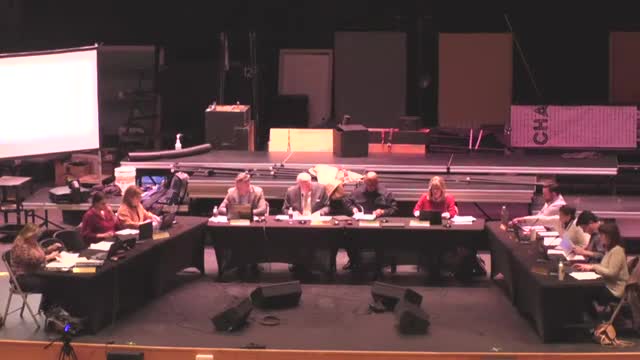
Mister Laffey, the district staff member who presented the recovery-plan slides, told the board the district’s ESSER 1 award was “just shy of $4,000,000,” with roughly half used to provide Chromebooks and the remainder applied to HVAC upgrades and abatement work. He said ESSER 2 totaled about $17,700,000 and included roughly $6.2 million recorded as salary and benefits to supplant general-fund costs so those general-fund dollars could instead be used for construction projects such as the Robert Morris renovation.
Laffey said ESSER 3 is the district’s largest award, “just shy of $35,800,000,” and that the district has invested in three principal priorities: a cyber program, a STEM program and districtwide HVAC and ATC projects. He described investments in curriculum updates, technology and specialized equipment for the STEM program (printing machines, a CNC router, computers and fixtures) and said salary-and-benefit lines for cyber and STEM roles total about $5.3 million. He added the district has an indirect cost rate approved by the Pennsylvania Department of Education of approximately 15 percent that is reflected in the grant application.
On the balance, Laffey said the district had about $11,600,000 unencumbered as of the prior week and projected that planned obligations through Sept. 30, 2024, will reduce that amount. He urged the board to consider one‑time investments that avoid creating recurring costs—examples he discussed included continued 1:1 device models, building PA/camera upgrades (which may require PDE capital-approval forms), and additional cybersecurity and accessibility investments.
Board members asked for clearer forecasts of how the remaining funds would be obligated; one member suggested preparing a prioritized plan or an editorial-style document showing how the district would spend new state funds if they arrive. Laffey and other staff said they will bring more concrete options to the board for discussion and will identify funding sources and timing when specific bids or proposals are ready.
The board did not take a final vote on spending allocations at the session; staff said many items require further procurement work, PDE approvals or the completion of E‑Rate paperwork before contracts could be awarded.
Laffey said ESSER 3 is the district’s largest award, “just shy of $35,800,000,” and that the district has invested in three principal priorities: a cyber program, a STEM program and districtwide HVAC and ATC projects. He described investments in curriculum updates, technology and specialized equipment for the STEM program (printing machines, a CNC router, computers and fixtures) and said salary-and-benefit lines for cyber and STEM roles total about $5.3 million. He added the district has an indirect cost rate approved by the Pennsylvania Department of Education of approximately 15 percent that is reflected in the grant application.
On the balance, Laffey said the district had about $11,600,000 unencumbered as of the prior week and projected that planned obligations through Sept. 30, 2024, will reduce that amount. He urged the board to consider one‑time investments that avoid creating recurring costs—examples he discussed included continued 1:1 device models, building PA/camera upgrades (which may require PDE capital-approval forms), and additional cybersecurity and accessibility investments.
Board members asked for clearer forecasts of how the remaining funds would be obligated; one member suggested preparing a prioritized plan or an editorial-style document showing how the district would spend new state funds if they arrive. Laffey and other staff said they will bring more concrete options to the board for discussion and will identify funding sources and timing when specific bids or proposals are ready.
The board did not take a final vote on spending allocations at the session; staff said many items require further procurement work, PDE approvals or the completion of E‑Rate paperwork before contracts could be awarded.
View the Full Meeting & All Its Details
This article offers just a summary. Unlock complete video, transcripts, and insights as a Founder Member.
✓
Watch full, unedited meeting videos
✓
Search every word spoken in unlimited transcripts
✓
AI summaries & real-time alerts (all government levels)
✓
Permanent access to expanding government content
30-day money-back guarantee
