Commission approves large planned-community amendment for 3,145-acre Agricola property with limits on conversions and funding provisions
April 23, 2024 | Clay County, Florida
This article was created by AI summarizing key points discussed. AI makes mistakes, so for full details and context, please refer to the video of the full meeting. Please report any errors so we can fix them. Report an error »
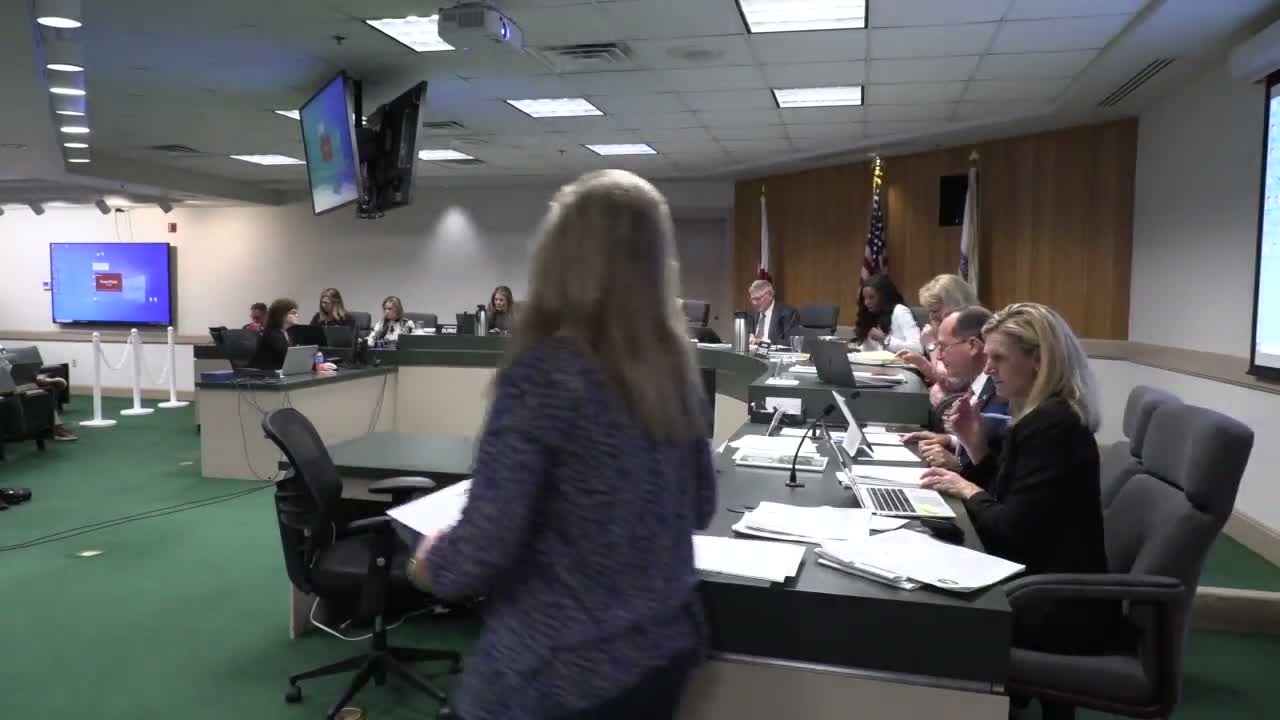
The Clay County Board of County Commissioners voted to adopt a comprehensive plan amendment, approve a development agreement and rezoning for a proposed 3,145-acre planned community project presented by the applicant (referred to in materials as the Agricola project). The approvals included an expansion of the county's urban service area to encompass the project site and several policy changes the county's staff recommended.
The development agreement and PUD (planned unit development) include specific commitments from the applicant: at least 1,573 acres set aside for buffers, wetlands and natural areas; a minimum of 320 acres of public recreation (including at least 22 acres of active recreation open to the public); a dedication of up to 40 acres for an elementary school site or payment of proportionate share; and a four-acre contribution (with fees credit) toward a fire station. The package also imposes a reported phase-based "stopper": no residential development beyond the first 1,250 units may proceed until a traffic study is completed and the board approves any necessary amendments to the development agreement.
Staff and the developer emphasized steps intended to limit sprawl and protect natural resources. The development agreement requires utilities coordination with CCUA (Clay County Utility Authority) and states that no phase may commence until potable water and wastewater service is confirmed. Staff recommended, and the board adopted, a set of new capital improvements and concurrency policies intended to provide a framework for mobility funding and infrastructure delivery.
During several hours of public hearing and board discussion, commissioners and residents pressed the developer on conversion language that would allow some nonresidential land to be converted to residential uses during later phases. The board's adopted motion included language that any conversion beyond an agreed table of units would require the developer to return to the board for approval. Commissioners also inserted explicit limits on the developer's exposure for road improvements: mobility-fee credits may be applied toward certain off-site roadway work, but the developer will not be obligated to fund improvements that exceed the total mobility-fee credits available to the project; if additional funding is required to move beyond the 1,250-unit threshold, the applicant must secure a solution and the board must approve any amendment.
The motion that bundled the urban service area expansion, future land use amendment, development agreement and the associated PUD rezoning passed on the board's voice vote after the public hearing and extended discussion.
Why it matters: The approvals change the county's urban service boundary and allow a concentrated, multi-phase mixed-use development on a large tract while also tying later buildout to traffic and service studies and to explicit funding and dedication commitments for schools, water/wastewater, public safety, and mobility improvements. Opponents expressed concern about cumulative traffic and infrastructure impacts; supporters said the project offers an opportunity for coordinated infrastructure and open-space preservation.
What happens next: The development will proceed in phases subject to the schedule and conditions in the development agreement and the PUD. Any request from the developer to convert additional nonresidential acreage to residential beyond the agreed conversion table must be presented to the board for approval.
The development agreement and PUD (planned unit development) include specific commitments from the applicant: at least 1,573 acres set aside for buffers, wetlands and natural areas; a minimum of 320 acres of public recreation (including at least 22 acres of active recreation open to the public); a dedication of up to 40 acres for an elementary school site or payment of proportionate share; and a four-acre contribution (with fees credit) toward a fire station. The package also imposes a reported phase-based "stopper": no residential development beyond the first 1,250 units may proceed until a traffic study is completed and the board approves any necessary amendments to the development agreement.
Staff and the developer emphasized steps intended to limit sprawl and protect natural resources. The development agreement requires utilities coordination with CCUA (Clay County Utility Authority) and states that no phase may commence until potable water and wastewater service is confirmed. Staff recommended, and the board adopted, a set of new capital improvements and concurrency policies intended to provide a framework for mobility funding and infrastructure delivery.
During several hours of public hearing and board discussion, commissioners and residents pressed the developer on conversion language that would allow some nonresidential land to be converted to residential uses during later phases. The board's adopted motion included language that any conversion beyond an agreed table of units would require the developer to return to the board for approval. Commissioners also inserted explicit limits on the developer's exposure for road improvements: mobility-fee credits may be applied toward certain off-site roadway work, but the developer will not be obligated to fund improvements that exceed the total mobility-fee credits available to the project; if additional funding is required to move beyond the 1,250-unit threshold, the applicant must secure a solution and the board must approve any amendment.
The motion that bundled the urban service area expansion, future land use amendment, development agreement and the associated PUD rezoning passed on the board's voice vote after the public hearing and extended discussion.
Why it matters: The approvals change the county's urban service boundary and allow a concentrated, multi-phase mixed-use development on a large tract while also tying later buildout to traffic and service studies and to explicit funding and dedication commitments for schools, water/wastewater, public safety, and mobility improvements. Opponents expressed concern about cumulative traffic and infrastructure impacts; supporters said the project offers an opportunity for coordinated infrastructure and open-space preservation.
What happens next: The development will proceed in phases subject to the schedule and conditions in the development agreement and the PUD. Any request from the developer to convert additional nonresidential acreage to residential beyond the agreed conversion table must be presented to the board for approval.
Don't Miss a Word: See the Full Meeting!
Go beyond summaries. Unlock every video, transcript, and key insight with a Founder Membership.
✓
Get instant access to full meeting videos
✓
Search and clip any phrase from complete transcripts
✓
Receive AI-powered summaries & custom alerts
✓
Enjoy lifetime, unrestricted access to government data
30-day money-back guarantee
