Clay County adopts new impact‑fee ordinance after months of debate; ordinance effective June 1, 2023
December 13, 2022 | Clay County, Florida
This article was created by AI summarizing key points discussed. AI makes mistakes, so for full details and context, please refer to the video of the full meeting. Please report any errors so we can fix them. Report an error »
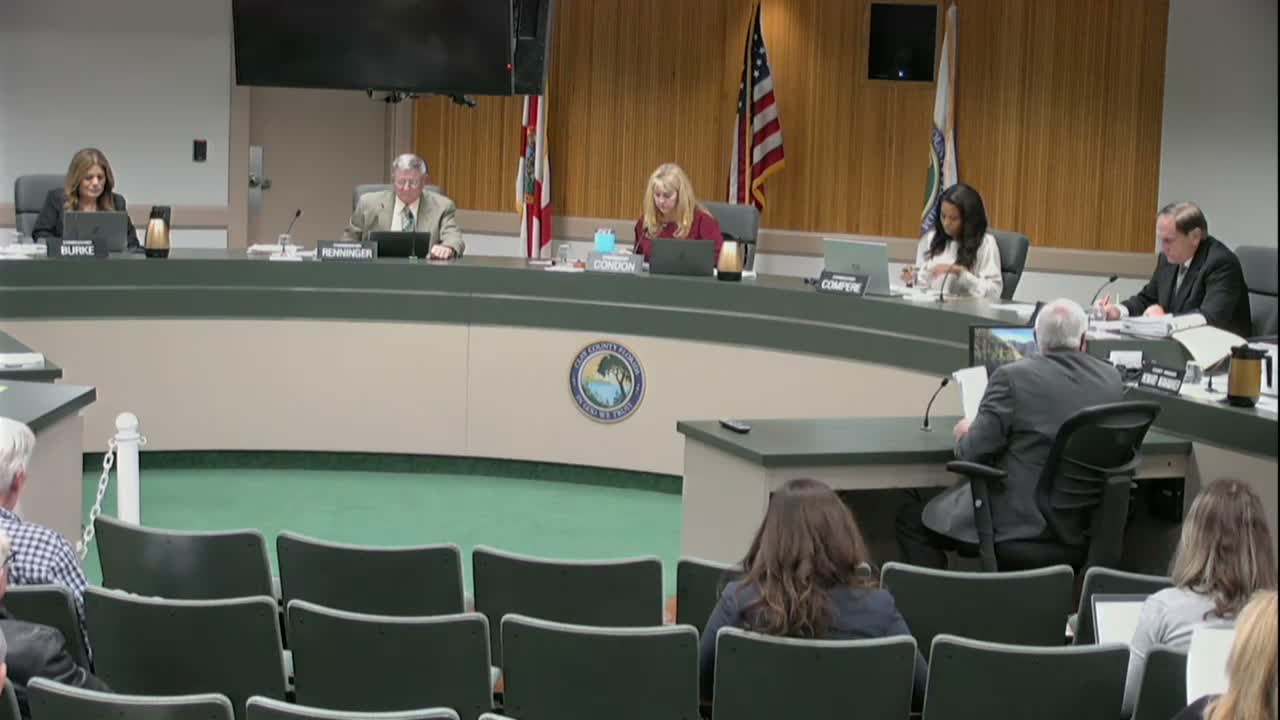
The Clay County Board of County Commissioners on Tuesday adopted a comprehensive impact‑fee ordinance intended to make new development pay a share of future public facilities.
The measure passed unanimously after hours of testimony from developers, builders and residents and presentations from county staff and consultants about how fees were calculated and what the money would pay for. Commissioners set the effective date for June 1, 2023.
Consultants working on the updated fee study said they revised the methodology in several categories to use a ‘‘functional population’’ approach—aimed at better accounting for nonresident workers and visitors—updated asset values and constrained some charges so new development would not be overcharged. The ordinance covers fees for jails and constitutional facilities, law enforcement, fire and rescue, parks, libraries and other capital categories.
Speakers for and against the ordinance lined up at the podium. Daniel Vaillancourt, a local builder, warned the board that new fees could slow housing production: "When you tax something ... you're going to have less of it," he said, describing lower permit counts and the stresses on builders’ margins.
Officials from public safety urged action to shore up strained services. Fire Chief Lauren Mogg described a jump in demand: "We've seen a 40% growth rate in calls for service," she said, and said existing stations and response footprints are stretched thin. Sheriff noted the county’s staffing edge behind the state average: "We currently have 1.19 deputies per 1,000. The state average is 1.69," he said, arguing that facilities and staffing need sustained investment.
County staff and the consulting team emphasized that the analysis identifies two funding streams: existing public revenues that must continue and new fees that will share the cost of capacity for new residents. The study estimates the county faces many tens of millions in existing deficiencies that cannot lawfully be charged to new development; impact fees are intended to pay only the new‑development share of future capacity.
Commissioners debated timing, affordability protections and options to phase increases or subsidize certain classes of development. Several commissioners said the ordinance will be reviewed again after initial implementation if market conditions or the fee performance indicate changes are needed.
The board directed staff to return in January with implementation details and follow‑up materials, including how exemptions and subsidies will be administered and how the county will monitor impacts on housing affordability and local construction markets.
The measure passed unanimously after hours of testimony from developers, builders and residents and presentations from county staff and consultants about how fees were calculated and what the money would pay for. Commissioners set the effective date for June 1, 2023.
Consultants working on the updated fee study said they revised the methodology in several categories to use a ‘‘functional population’’ approach—aimed at better accounting for nonresident workers and visitors—updated asset values and constrained some charges so new development would not be overcharged. The ordinance covers fees for jails and constitutional facilities, law enforcement, fire and rescue, parks, libraries and other capital categories.
Speakers for and against the ordinance lined up at the podium. Daniel Vaillancourt, a local builder, warned the board that new fees could slow housing production: "When you tax something ... you're going to have less of it," he said, describing lower permit counts and the stresses on builders’ margins.
Officials from public safety urged action to shore up strained services. Fire Chief Lauren Mogg described a jump in demand: "We've seen a 40% growth rate in calls for service," she said, and said existing stations and response footprints are stretched thin. Sheriff noted the county’s staffing edge behind the state average: "We currently have 1.19 deputies per 1,000. The state average is 1.69," he said, arguing that facilities and staffing need sustained investment.
County staff and the consulting team emphasized that the analysis identifies two funding streams: existing public revenues that must continue and new fees that will share the cost of capacity for new residents. The study estimates the county faces many tens of millions in existing deficiencies that cannot lawfully be charged to new development; impact fees are intended to pay only the new‑development share of future capacity.
Commissioners debated timing, affordability protections and options to phase increases or subsidize certain classes of development. Several commissioners said the ordinance will be reviewed again after initial implementation if market conditions or the fee performance indicate changes are needed.
The board directed staff to return in January with implementation details and follow‑up materials, including how exemptions and subsidies will be administered and how the county will monitor impacts on housing affordability and local construction markets.
Don't Miss a Word: See the Full Meeting!
Go beyond summaries. Unlock every video, transcript, and key insight with a Founder Membership.
✓
Get instant access to full meeting videos
✓
Search and clip any phrase from complete transcripts
✓
Receive AI-powered summaries & custom alerts
✓
Enjoy lifetime, unrestricted access to government data
30-day money-back guarantee
