Clay County presents 10‑year capital plan, flags $8 million shortfall in later years
March 14, 2023 | Clay County, Florida
This article was created by AI summarizing key points discussed. AI makes mistakes, so for full details and context, please refer to the video of the full meeting. Please report any errors so we can fix them. Report an error »
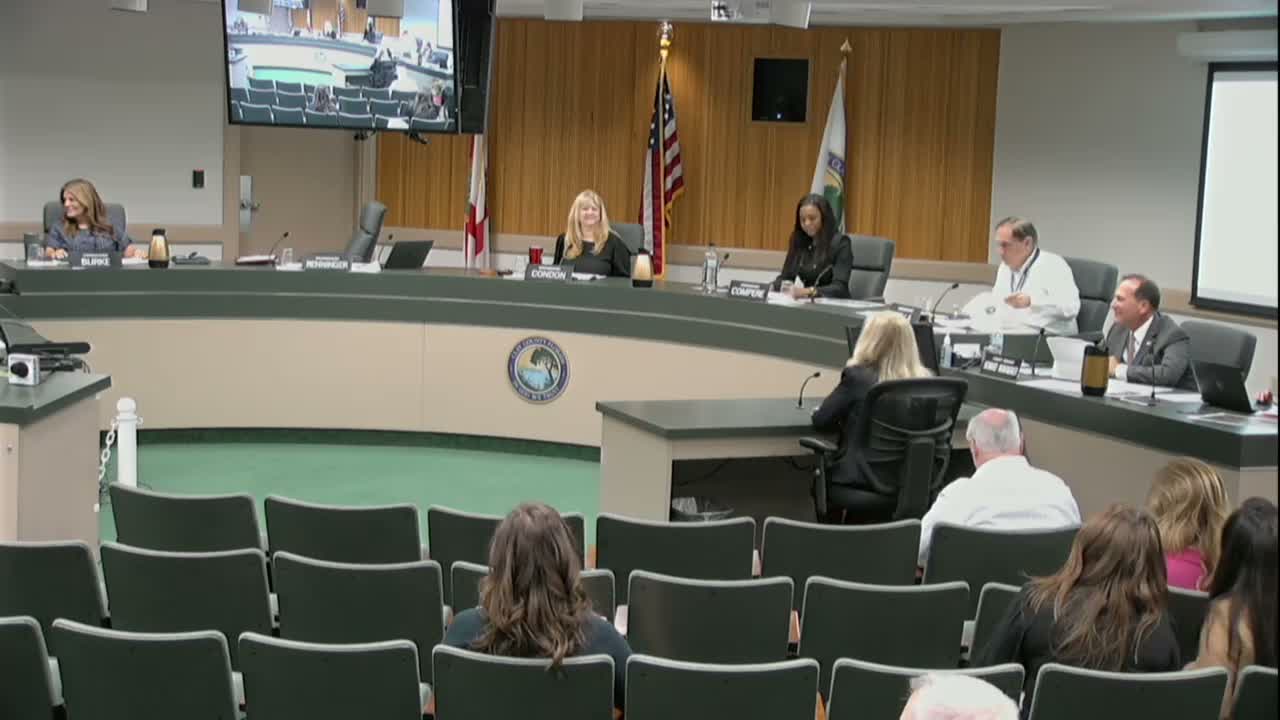
County staff on March 14 presented a proposed 10‑year capital improvements plan that maps funding streams, mobility and impact fees, and a multiyear list of county projects, and told commissioners the plan will return for formal adoption after more direction.
Troy Nagle, assistant county manager, told the board the document is an early, working plan: "This is really the start of a longer process." Staff said the plan includes four new fire stations, a warehouse, a consolidated 911/training building and a public‑safety operations complex, and that road resurfacing would ramp up and hold at $10 million per year beginning in year six.
Staff explained revenue sources that fund the plan, including discretionary sales surtax (used for debt service and CIP), the state second‑option fuel tax (a portion directed to CIP), developer contributions, mobility fees, legacy impact‑fee districts, tourist development transfers and restricted funds. Debbie (budget staff) summarized those funding buckets and said mobility‑fee and impact‑fee spending must be tied to projects on approved lists.
The plan assumes mobility‑fee projections will follow recent permit trends and sets facility impact‑fee revenue conservatively, based on about "1,700 homes" expected next year, excluding uncertain commercial growth. Staff said they left all dollar amounts in current‑year dollars rather than applying broad inflation escalators and will update revenue estimates annually based on the state's estimating conference and permit data.
Staff also flagged a financing challenge: with current project lists and assumptions, the 10‑year plan is balanced through year five but shows about an $8 million shortfall beginning in year seven. "So that is point for conversation at some point," Nagle said. Commissioners asked staff to return with prioritization options and timing changes to close gaps.
Road and sidewalk funding was a sustained topic. Staff described multiple road lists—mobility‑fee study roads, adequate public facilities (APF) connector roads and legacy impact‑fee lists—that determine project eligibility for specific revenue sources. Mobility‑fee rules allow money for approved road projects, three transit hubs and multi‑use trails; staff recommended budgeting about 5% of mobility‑fee revenue for trails so the county could provide matches for potential large trail grants.
Commissioners asked whether trail money could also be used for sidewalks; staff said mobility‑fee rules define multi‑use trails (8‑foot standard) and that sidewalk repairs generally require other CIP dollars. Several commissioners asked staff to provide a project map and a timeline showing when funding streams become available, especially for County Road 220 and bonded projects.
Staff also summarized legacy/sector development funds and proposed allocations: Northeast sector roughly $742,000 toward Bonnet Road or a related bonded project; West sector about $231,000 toward County Road 218; a Brandon Field allocation of about $1.3 million for the Long Bay Road extension; Lake Asbury ~ $287,000 for an east‑west connector design; and a sidewalk fund of roughly $186,000 to be applied to bonded road projects in the area where the funds were collected.
The board directed staff to return with clearer maps, prioritized project scenarios and updates to revenue and timing assumptions. Staff emphasized the plan is a working document and that annual updates to permit and estimating‑conference data will change mobility and fuel‑tax projections.
The workshop concluded with commissioners asking for a follow‑up workshop to set priorities before staff prepares adoption materials.
Troy Nagle, assistant county manager, told the board the document is an early, working plan: "This is really the start of a longer process." Staff said the plan includes four new fire stations, a warehouse, a consolidated 911/training building and a public‑safety operations complex, and that road resurfacing would ramp up and hold at $10 million per year beginning in year six.
Staff explained revenue sources that fund the plan, including discretionary sales surtax (used for debt service and CIP), the state second‑option fuel tax (a portion directed to CIP), developer contributions, mobility fees, legacy impact‑fee districts, tourist development transfers and restricted funds. Debbie (budget staff) summarized those funding buckets and said mobility‑fee and impact‑fee spending must be tied to projects on approved lists.
The plan assumes mobility‑fee projections will follow recent permit trends and sets facility impact‑fee revenue conservatively, based on about "1,700 homes" expected next year, excluding uncertain commercial growth. Staff said they left all dollar amounts in current‑year dollars rather than applying broad inflation escalators and will update revenue estimates annually based on the state's estimating conference and permit data.
Staff also flagged a financing challenge: with current project lists and assumptions, the 10‑year plan is balanced through year five but shows about an $8 million shortfall beginning in year seven. "So that is point for conversation at some point," Nagle said. Commissioners asked staff to return with prioritization options and timing changes to close gaps.
Road and sidewalk funding was a sustained topic. Staff described multiple road lists—mobility‑fee study roads, adequate public facilities (APF) connector roads and legacy impact‑fee lists—that determine project eligibility for specific revenue sources. Mobility‑fee rules allow money for approved road projects, three transit hubs and multi‑use trails; staff recommended budgeting about 5% of mobility‑fee revenue for trails so the county could provide matches for potential large trail grants.
Commissioners asked whether trail money could also be used for sidewalks; staff said mobility‑fee rules define multi‑use trails (8‑foot standard) and that sidewalk repairs generally require other CIP dollars. Several commissioners asked staff to provide a project map and a timeline showing when funding streams become available, especially for County Road 220 and bonded projects.
Staff also summarized legacy/sector development funds and proposed allocations: Northeast sector roughly $742,000 toward Bonnet Road or a related bonded project; West sector about $231,000 toward County Road 218; a Brandon Field allocation of about $1.3 million for the Long Bay Road extension; Lake Asbury ~ $287,000 for an east‑west connector design; and a sidewalk fund of roughly $186,000 to be applied to bonded road projects in the area where the funds were collected.
The board directed staff to return with clearer maps, prioritized project scenarios and updates to revenue and timing assumptions. Staff emphasized the plan is a working document and that annual updates to permit and estimating‑conference data will change mobility and fuel‑tax projections.
The workshop concluded with commissioners asking for a follow‑up workshop to set priorities before staff prepares adoption materials.
View the Full Meeting & All Its Details
This article offers just a summary. Unlock complete video, transcripts, and insights as a Founder Member.
✓
Watch full, unedited meeting videos
✓
Search every word spoken in unlimited transcripts
✓
AI summaries & real-time alerts (all government levels)
✓
Permanent access to expanding government content
30-day money-back guarantee
