Clay County commissioners weigh new impact‑fee ordinance to fund jails, fire stations, parks and libraries
October 11, 2022 | Clay County, Florida
This article was created by AI summarizing key points discussed. AI makes mistakes, so for full details and context, please refer to the video of the full meeting. Please report any errors so we can fix them. Report an error »
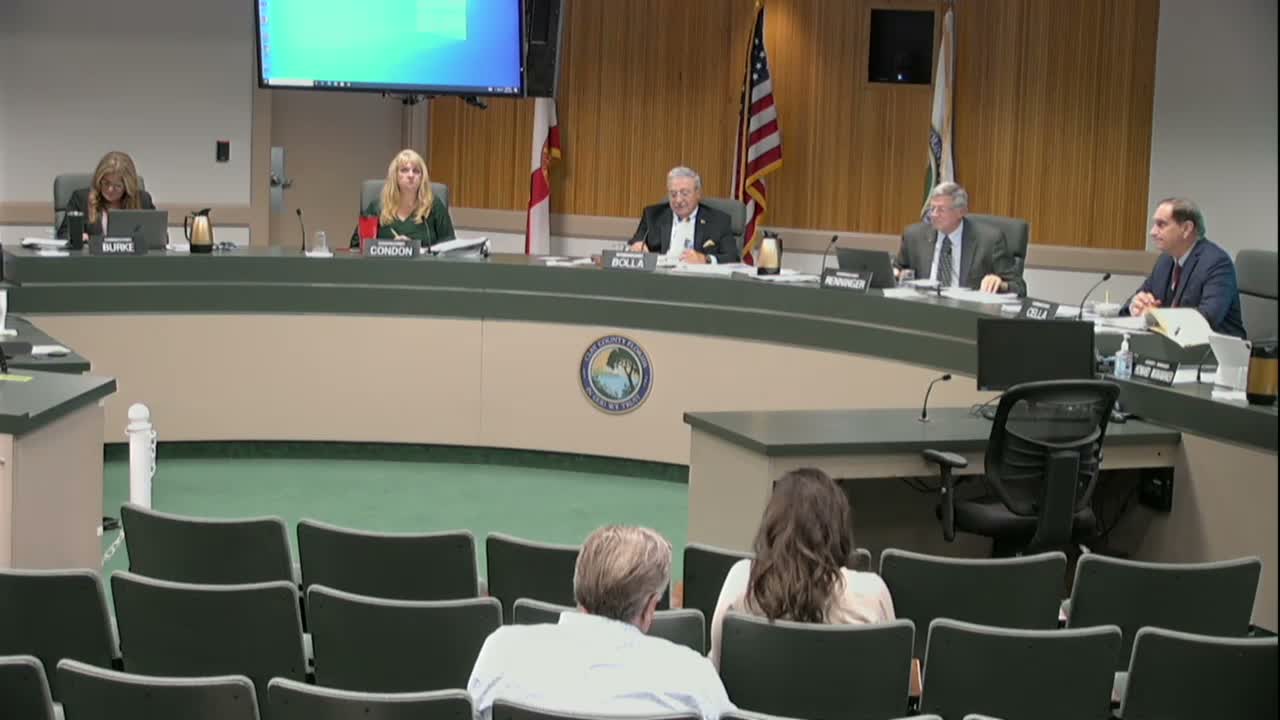
County staff and consultants from Willdan presented a draft impact‑fee study on Oct. 11 that proposed a fee schedule to fund government/jail facilities, fire and rescue, law enforcement, parks and library/cultural facilities through fees charged on new development.
Carlos Villareal, a principal at Willdan, explained the methodology and said the study used a mix of existing‑inventory and system‑plan approaches to calculate fees and a 2045 planning horizon. “Impact fees are a one‑time charge typically imposed at the building permit stage, to all development projects in a defined geographic area,” Villareal said. The consultant recommended collections be limited to the unincorporated county unless municipalities enter into interlocal agreements to collect fees on the county’s behalf.
Commissioners probed timing and equitable application. Several raised concerns that owner‑builders and people who pull permits late in the process could face a large, standalone bill; staff said fees typically trigger at the electrical‑clearance or certificate‑of‑occupancy stage and that statute gives a 90‑day waiting period once an ordinance is adopted. One commissioner noted that households who finance through a developer typically have fees capitalized into mortgage costs, while owner‑builders often must pay a single check during permitting.
Board members also discussed whether municipalities that receive county services should collect or remit impact fees. Willdan said the analysis includes demand from municipalities that receive county services and that the county could negotiate interlocal agreements if cities agree to collect fees. Commissioners asked staff to pursue interlocals and report back.
Policy choices remain. Willdan presented a maximum‑justified fee schedule but noted the board could adopt lower fees or exemptions. Commissioners asked staff to return a draft ordinance within about two weeks that would include options for exemptions, affordable‑housing credits modeled on existing mobility‑fee policies, and language to explore municipality collection. The board took a straw poll favoring moving the ordinance forward for more detailed drafting and analysis.
Carlos Villareal, a principal at Willdan, explained the methodology and said the study used a mix of existing‑inventory and system‑plan approaches to calculate fees and a 2045 planning horizon. “Impact fees are a one‑time charge typically imposed at the building permit stage, to all development projects in a defined geographic area,” Villareal said. The consultant recommended collections be limited to the unincorporated county unless municipalities enter into interlocal agreements to collect fees on the county’s behalf.
Commissioners probed timing and equitable application. Several raised concerns that owner‑builders and people who pull permits late in the process could face a large, standalone bill; staff said fees typically trigger at the electrical‑clearance or certificate‑of‑occupancy stage and that statute gives a 90‑day waiting period once an ordinance is adopted. One commissioner noted that households who finance through a developer typically have fees capitalized into mortgage costs, while owner‑builders often must pay a single check during permitting.
Board members also discussed whether municipalities that receive county services should collect or remit impact fees. Willdan said the analysis includes demand from municipalities that receive county services and that the county could negotiate interlocal agreements if cities agree to collect fees. Commissioners asked staff to pursue interlocals and report back.
Policy choices remain. Willdan presented a maximum‑justified fee schedule but noted the board could adopt lower fees or exemptions. Commissioners asked staff to return a draft ordinance within about two weeks that would include options for exemptions, affordable‑housing credits modeled on existing mobility‑fee policies, and language to explore municipality collection. The board took a straw poll favoring moving the ordinance forward for more detailed drafting and analysis.
View the Full Meeting & All Its Details
This article offers just a summary. Unlock complete video, transcripts, and insights as a Founder Member.
✓
Watch full, unedited meeting videos
✓
Search every word spoken in unlimited transcripts
✓
AI summaries & real-time alerts (all government levels)
✓
Permanent access to expanding government content
30-day money-back guarantee
