Soil and Water Conservation Commission: Waukapa demand outstrips funding; districts receive state match
February 04, 2024 | Agricultural Affairs, HOUSE OF REPRESENTATIVES, Committees, Legislative, Idaho
This article was created by AI summarizing key points discussed. AI makes mistakes, so for full details and context, please refer to the video of the full meeting. Please report any errors so we can fix them. Report an error »
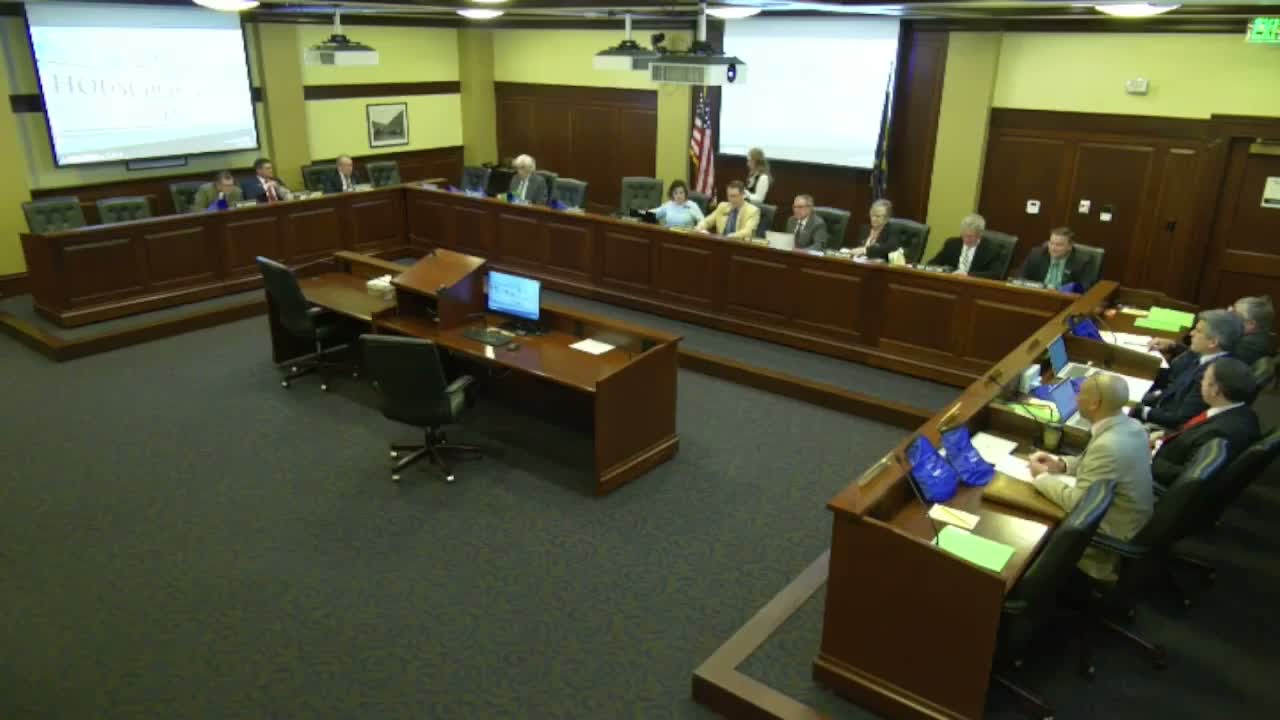
Loretta Strickland, acting administrator and Ag Program Manager for the Idaho Soil and Water Conservation Commission, told the House Agriculture Affairs Committee the commission’s FY2024 work included state distributions to local conservation districts and large public demand for a revived cost-share program.
Strickland said the commission’s reported total annual revenues were approximately $3,950,000 and expenditures just over $7,900,000 for FY2024. She told the committee $1,580,000 appropriated for distribution to conservation districts was disbursed “per statute and rule,” and, citing House Bill 352 (2023) intent language, that the first $725,000 was distributed equally among Idaho’s 50 districts (about $14,500 each) with the remaining $858,800 allocated as state match based on prior local support.
Why it matters: district-level funding supports the technical assistance and small grants that local conservation districts use to help private landowners adopt best management practices, improve irrigation efficiency and carry out streambank or soil-health projects. Commission staff said those services underpin the agency’s high satisfaction ratings from districts.
The commission reported outcome metrics for FY2024 that it said show improved service delivery: 97.5% of districts responding to the annual survey indicated overall satisfaction with commission services; 95% were satisfied with communications; and the commission covered 92% of assistance requests, surpassing its target.
Strickland identified several program outputs for the year: technical support for 9,705 acres enrolled in the Conservation Reserve Enhancement Program (CREP), RCRDP (Resource Conservation and Rangeland Development Program) loan assistance on 8,221 acres, and implementation of best management practices on 63,075 acres. She said EPA did not approve any new total maximum daily loads (TMDLs) in FY2024, allowing staff to emphasize implementation work.
Waukapa (state cost-share) demand: Strickland described the revived Waukapa program as the year’s most notable development. She said $10,000,000 was appropriated to the program across 2022–24 and that the commission received 170 project proposals requesting roughly $20,200,000 in cost share. Of those, 98 projects were funded across the multi-year appropriation; in FY2024 alone the commission reported $5,000,000 allocated to Waukapa, 80 proposals received and 50 projects selected for funding. “For every dollar the state invested in Waukapa in fiscal year 20 24, Idahoans accomplished $3.54 worth of conservation,” Strickland told the committee.
Committee questions focused on which project types were left unfunded. Strickland and fiscal manager Melanie Ziegler said the ranking prioritized public benefit and return on investment; funded projects included irrigation infrastructure and efficiency upgrades, livestock best management practices, streambank and erosion work, soil-health projects, and local district admin support. Ziegler described the commission’s funding mix as mostly general-fund appropriation plus dedicated funds for loan operations (RCRDP) and occasional federal grants.
The commission also noted a staffing vacancy in field staff and said it is working to fill that position. Strickland closed by thanking legislators for the appropriation and expressing appreciation for the commission’s partnerships with local districts, USDA Natural Resources Conservation Service, Idaho Department of Environmental Quality and NGOs.
What’s next: Committee members did not take a formal vote on the commission’s report; staff said they will continue to administer Waukapa requests and program rollouts based on appropriations and rule-based allocation.
Strickland said the commission’s reported total annual revenues were approximately $3,950,000 and expenditures just over $7,900,000 for FY2024. She told the committee $1,580,000 appropriated for distribution to conservation districts was disbursed “per statute and rule,” and, citing House Bill 352 (2023) intent language, that the first $725,000 was distributed equally among Idaho’s 50 districts (about $14,500 each) with the remaining $858,800 allocated as state match based on prior local support.
Why it matters: district-level funding supports the technical assistance and small grants that local conservation districts use to help private landowners adopt best management practices, improve irrigation efficiency and carry out streambank or soil-health projects. Commission staff said those services underpin the agency’s high satisfaction ratings from districts.
The commission reported outcome metrics for FY2024 that it said show improved service delivery: 97.5% of districts responding to the annual survey indicated overall satisfaction with commission services; 95% were satisfied with communications; and the commission covered 92% of assistance requests, surpassing its target.
Strickland identified several program outputs for the year: technical support for 9,705 acres enrolled in the Conservation Reserve Enhancement Program (CREP), RCRDP (Resource Conservation and Rangeland Development Program) loan assistance on 8,221 acres, and implementation of best management practices on 63,075 acres. She said EPA did not approve any new total maximum daily loads (TMDLs) in FY2024, allowing staff to emphasize implementation work.
Waukapa (state cost-share) demand: Strickland described the revived Waukapa program as the year’s most notable development. She said $10,000,000 was appropriated to the program across 2022–24 and that the commission received 170 project proposals requesting roughly $20,200,000 in cost share. Of those, 98 projects were funded across the multi-year appropriation; in FY2024 alone the commission reported $5,000,000 allocated to Waukapa, 80 proposals received and 50 projects selected for funding. “For every dollar the state invested in Waukapa in fiscal year 20 24, Idahoans accomplished $3.54 worth of conservation,” Strickland told the committee.
Committee questions focused on which project types were left unfunded. Strickland and fiscal manager Melanie Ziegler said the ranking prioritized public benefit and return on investment; funded projects included irrigation infrastructure and efficiency upgrades, livestock best management practices, streambank and erosion work, soil-health projects, and local district admin support. Ziegler described the commission’s funding mix as mostly general-fund appropriation plus dedicated funds for loan operations (RCRDP) and occasional federal grants.
The commission also noted a staffing vacancy in field staff and said it is working to fill that position. Strickland closed by thanking legislators for the appropriation and expressing appreciation for the commission’s partnerships with local districts, USDA Natural Resources Conservation Service, Idaho Department of Environmental Quality and NGOs.
What’s next: Committee members did not take a formal vote on the commission’s report; staff said they will continue to administer Waukapa requests and program rollouts based on appropriations and rule-based allocation.
View the Full Meeting & All Its Details
This article offers just a summary. Unlock complete video, transcripts, and insights as a Founder Member.
✓
Watch full, unedited meeting videos
✓
Search every word spoken in unlimited transcripts
✓
AI summaries & real-time alerts (all government levels)
✓
Permanent access to expanding government content
30-day money-back guarantee
