ISDA details 2024 Snake River quagga response: sampling, 60,000 gallons of copper and extended treatment duration
February 04, 2024 | Agricultural Affairs, HOUSE OF REPRESENTATIVES, Committees, Legislative, Idaho
This article was created by AI summarizing key points discussed. AI makes mistakes, so for full details and context, please refer to the video of the full meeting. Please report any errors so we can fix them. Report an error »
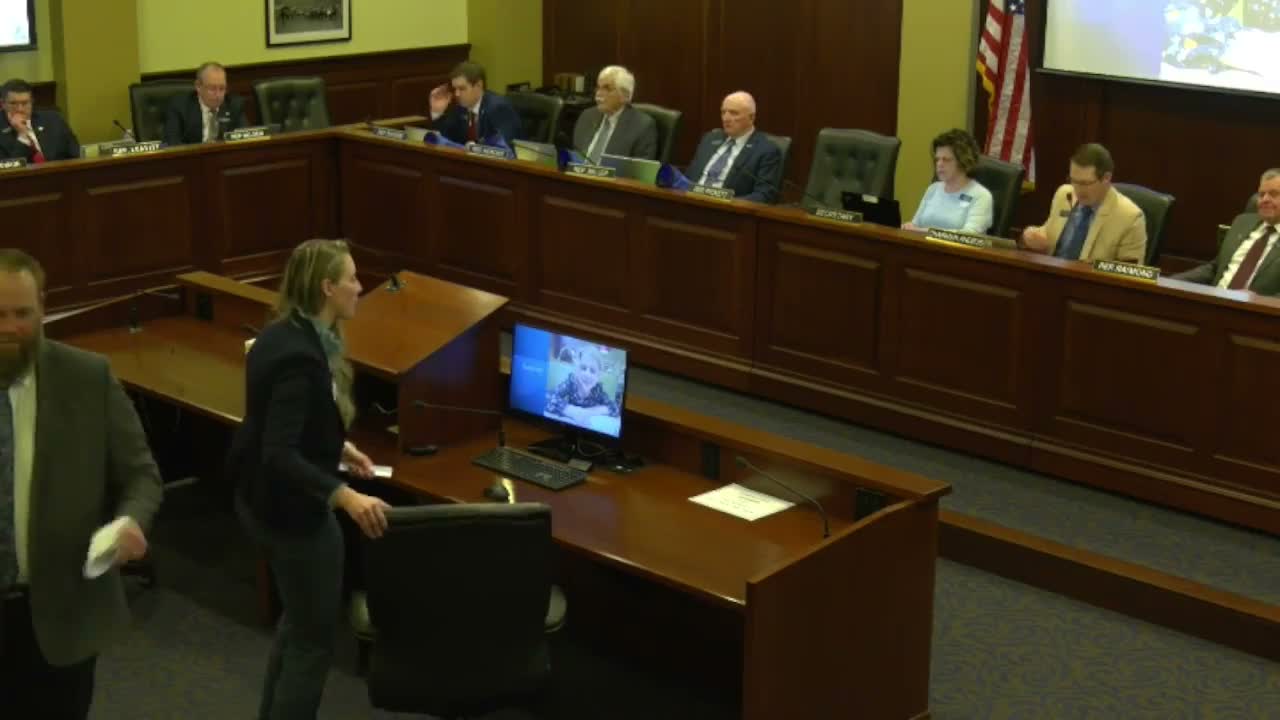
The Idaho State Department of Agriculture (ISDA) briefed the House Agriculture Affairs Committee on the agency’s 2024 response to quagga mussel detections in the Snake River basin, describing expanded sampling, laboratory verification, and an unprecedented river treatment performed in October.
Director Chanel Tewalt said ISDA found veligers—microscopic mussel larvae—on September 24, 2024. The department sought molecular confirmation before public notification and then launched intensive delimiting sampling to map the infestation. Tewalt described ISDA’s approach as layered: visual assessment, double-blind photographic verification, molecular confirmation and careful use of environmental DNA (eDNA) as an indicator rather than definitive proof of viable colonies.
Tewalt said the department doubled statewide water sampling and inspected about 50% more boats than the prior year. She framed the 2024 field response as a time-critical operation that required federal and local coordination, noting the agency moved at a “hair on fire” pace to secure permits, partner with federal and local agencies and deploy a treatment strategy.
Nick Zerflue, ISDA bureau chief overseeing the program, described the technical approach. Teams used clean plankton nets, strict decontamination and multi-laboratory verification to reduce cross-contamination risk. Treatment design combined scientific sampling with river knowledge: ISDA calibrated treatment polygons by depth, bathymetry and flows, coordinated with Idaho Power and the Idaho Department of Water Resources to stabilize flows, and used matrix/chelated copper at a label-approved 1 part per million. That contact concentration was maintained for an extended 200-hour duration (the clock began only after flows and concentrations were stabilized). Zerflue reported treatment started Oct. 8 and concluded Oct. 19, deploying just over 60,000 gallons of product through metering sites, applicator boats and containment totes.
Tewalt and Zerflue emphasized partnerships: contracted applicator Clean Lakes, product manufacturer SePRO, distributor Simplot Company, Idaho Power, local county law enforcement, and multiple taxonomic experts and labs for sample verification. ISDA also planned contingencies to protect ESA-listed downstream species (activated charcoal and other removal measures) but did not deploy those contingencies.
On the river, ISDA described operational challenges typical of large river systems—deep pools, springs and remote reaches—that complicated mixing and monitoring. Zerflue said the 2024 effort used more redundant lab review and longer treatment duration than 2023 to increase the chance of eradication when populations are still very small: "finding 6 in the water is finding a needle in a 9 mile haystack," he told the committee.
Tewalt addressed enforcement and prevention: Idaho law requires inspections for out-of-state boaters and prohibits launching boats with ballast water, but enforcement depends on local law enforcement partnerships. She urged stronger public awareness among out-of-state boaters and flagged that some water bodies may be impractical to treat in the future because of depth, complexity or listed-species constraints.
Why it matters: quagga and zebra mussels can encrust hard substrates and damage irrigation systems and hydropower infrastructure, with major economic and ecological consequences. Committee members asked about resourcing, station staffing at highway entry points and long-term prevention; ISDA said equipment can be provided in some cases but people to staff stations remain the limiting factor.
What’s next: ISDA will maintain expanded sampling statewide, continue partnerships for station coverage and work with legislators and local partners to address enforcement and staffing needs at key entry points.
Director Chanel Tewalt said ISDA found veligers—microscopic mussel larvae—on September 24, 2024. The department sought molecular confirmation before public notification and then launched intensive delimiting sampling to map the infestation. Tewalt described ISDA’s approach as layered: visual assessment, double-blind photographic verification, molecular confirmation and careful use of environmental DNA (eDNA) as an indicator rather than definitive proof of viable colonies.
Tewalt said the department doubled statewide water sampling and inspected about 50% more boats than the prior year. She framed the 2024 field response as a time-critical operation that required federal and local coordination, noting the agency moved at a “hair on fire” pace to secure permits, partner with federal and local agencies and deploy a treatment strategy.
Nick Zerflue, ISDA bureau chief overseeing the program, described the technical approach. Teams used clean plankton nets, strict decontamination and multi-laboratory verification to reduce cross-contamination risk. Treatment design combined scientific sampling with river knowledge: ISDA calibrated treatment polygons by depth, bathymetry and flows, coordinated with Idaho Power and the Idaho Department of Water Resources to stabilize flows, and used matrix/chelated copper at a label-approved 1 part per million. That contact concentration was maintained for an extended 200-hour duration (the clock began only after flows and concentrations were stabilized). Zerflue reported treatment started Oct. 8 and concluded Oct. 19, deploying just over 60,000 gallons of product through metering sites, applicator boats and containment totes.
Tewalt and Zerflue emphasized partnerships: contracted applicator Clean Lakes, product manufacturer SePRO, distributor Simplot Company, Idaho Power, local county law enforcement, and multiple taxonomic experts and labs for sample verification. ISDA also planned contingencies to protect ESA-listed downstream species (activated charcoal and other removal measures) but did not deploy those contingencies.
On the river, ISDA described operational challenges typical of large river systems—deep pools, springs and remote reaches—that complicated mixing and monitoring. Zerflue said the 2024 effort used more redundant lab review and longer treatment duration than 2023 to increase the chance of eradication when populations are still very small: "finding 6 in the water is finding a needle in a 9 mile haystack," he told the committee.
Tewalt addressed enforcement and prevention: Idaho law requires inspections for out-of-state boaters and prohibits launching boats with ballast water, but enforcement depends on local law enforcement partnerships. She urged stronger public awareness among out-of-state boaters and flagged that some water bodies may be impractical to treat in the future because of depth, complexity or listed-species constraints.
Why it matters: quagga and zebra mussels can encrust hard substrates and damage irrigation systems and hydropower infrastructure, with major economic and ecological consequences. Committee members asked about resourcing, station staffing at highway entry points and long-term prevention; ISDA said equipment can be provided in some cases but people to staff stations remain the limiting factor.
What’s next: ISDA will maintain expanded sampling statewide, continue partnerships for station coverage and work with legislators and local partners to address enforcement and staffing needs at key entry points.
Don't Miss a Word: See the Full Meeting!
Go beyond summaries. Unlock every video, transcript, and key insight with a Founder Membership.
✓
Get instant access to full meeting videos
✓
Search and clip any phrase from complete transcripts
✓
Receive AI-powered summaries & custom alerts
✓
Enjoy lifetime, unrestricted access to government data
30-day money-back guarantee
