Interlocal special‑education cooperative briefs board on staffing and funding shortfalls
November 11, 2024 | Pittsburg, School Boards, Kansas
This article was created by AI summarizing key points discussed. AI makes mistakes, so for full details and context, please refer to the video of the full meeting. Please report any errors so we can fix them. Report an error »
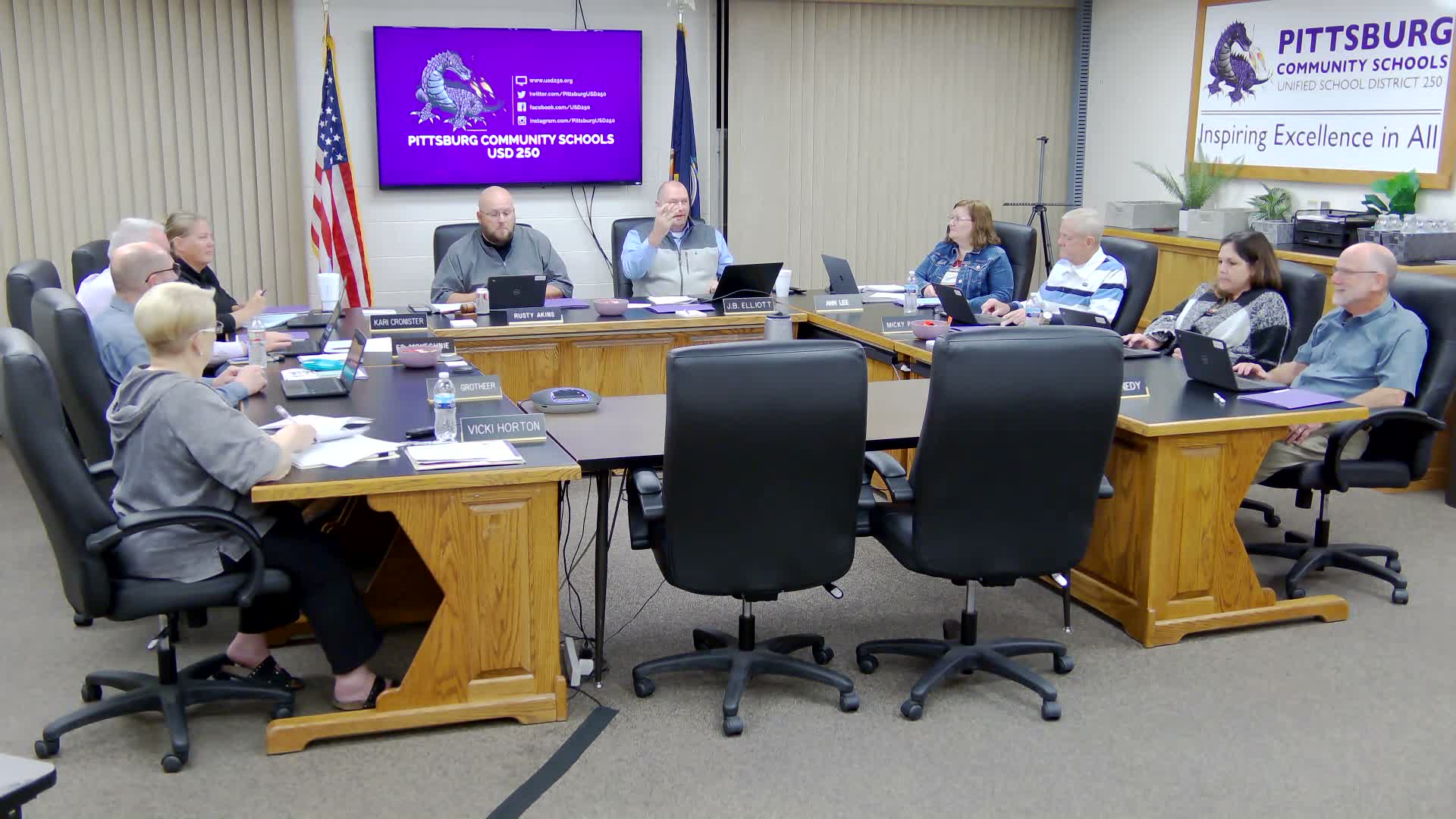
Presenters from the interlocal special‑education cooperative outlined services, staffing and finances and urged board support for advocacy on state and federal funding.
Speaker 12 said the cooperative serves 13 member districts across Cherokee, Crawford, Labette, Neosho and Bourbon counties and runs specialized programs—autism, low‑incidence and behavioral day schools—some of which are hosted in Pittsburg. "In Pittsburgh, we serve about 770 students with exceptionalities... and we have approximately 2,500 students that we serve within our 13 member districts," Speaker 13 said.
On finance, Speaker 12 said the interlocal budget is "just, under $25,000,000" and described funding composition: about 17% federal funds, roughly 51% state funding, and local assessments and reserves making up the remainder. Presenters warned that federal IDEA funding has not kept pace with intended levels and described the federal share as currently hovering around 14–15% rather than the historically cited 40% of excess costs; Kansas statute and state funding mechanisms have also shifted, requiring districts and the interlocal to absorb more costs.
Board members asked about staffing shortages and recruitment; Speaker 12 said the interlocal has about "6 or 7 professionals" vacancies and roughly 40 classified vacancies currently, and that leaders are exploring nontraditional hires and training pathways. The presenters asked board members to engage in respectful, story-driven advocacy to help influence legislative funding decisions.
Board members requested the interlocal bring back a roof-rotation and capital-priority plan and keep the board informed of advocacy opportunities. No formal board action was taken; this was an informational presentation.
The discussion highlighted the district's reliance on the interlocal for specialized programming and the fiscal exposure local taxpayers and boards face when federal and state support fall short.
Speaker 12 said the cooperative serves 13 member districts across Cherokee, Crawford, Labette, Neosho and Bourbon counties and runs specialized programs—autism, low‑incidence and behavioral day schools—some of which are hosted in Pittsburg. "In Pittsburgh, we serve about 770 students with exceptionalities... and we have approximately 2,500 students that we serve within our 13 member districts," Speaker 13 said.
On finance, Speaker 12 said the interlocal budget is "just, under $25,000,000" and described funding composition: about 17% federal funds, roughly 51% state funding, and local assessments and reserves making up the remainder. Presenters warned that federal IDEA funding has not kept pace with intended levels and described the federal share as currently hovering around 14–15% rather than the historically cited 40% of excess costs; Kansas statute and state funding mechanisms have also shifted, requiring districts and the interlocal to absorb more costs.
Board members asked about staffing shortages and recruitment; Speaker 12 said the interlocal has about "6 or 7 professionals" vacancies and roughly 40 classified vacancies currently, and that leaders are exploring nontraditional hires and training pathways. The presenters asked board members to engage in respectful, story-driven advocacy to help influence legislative funding decisions.
Board members requested the interlocal bring back a roof-rotation and capital-priority plan and keep the board informed of advocacy opportunities. No formal board action was taken; this was an informational presentation.
The discussion highlighted the district's reliance on the interlocal for specialized programming and the fiscal exposure local taxpayers and boards face when federal and state support fall short.
Don't Miss a Word: See the Full Meeting!
Go beyond summaries. Unlock every video, transcript, and key insight with a Founder Membership.
✓
Get instant access to full meeting videos
✓
Search and clip any phrase from complete transcripts
✓
Receive AI-powered summaries & custom alerts
✓
Enjoy lifetime, unrestricted access to government data
30-day money-back guarantee
