Office of Defense Services: parental‑representation roll‑out and holistic defense model drive FY26 requests
February 20, 2024 | 2025 Legislature DE Collection, Legislative, Delaware
This article was created by AI summarizing key points discussed. AI makes mistakes, so for full details and context, please refer to the video of the full meeting. Please report any errors so we can fix them. Report an error »
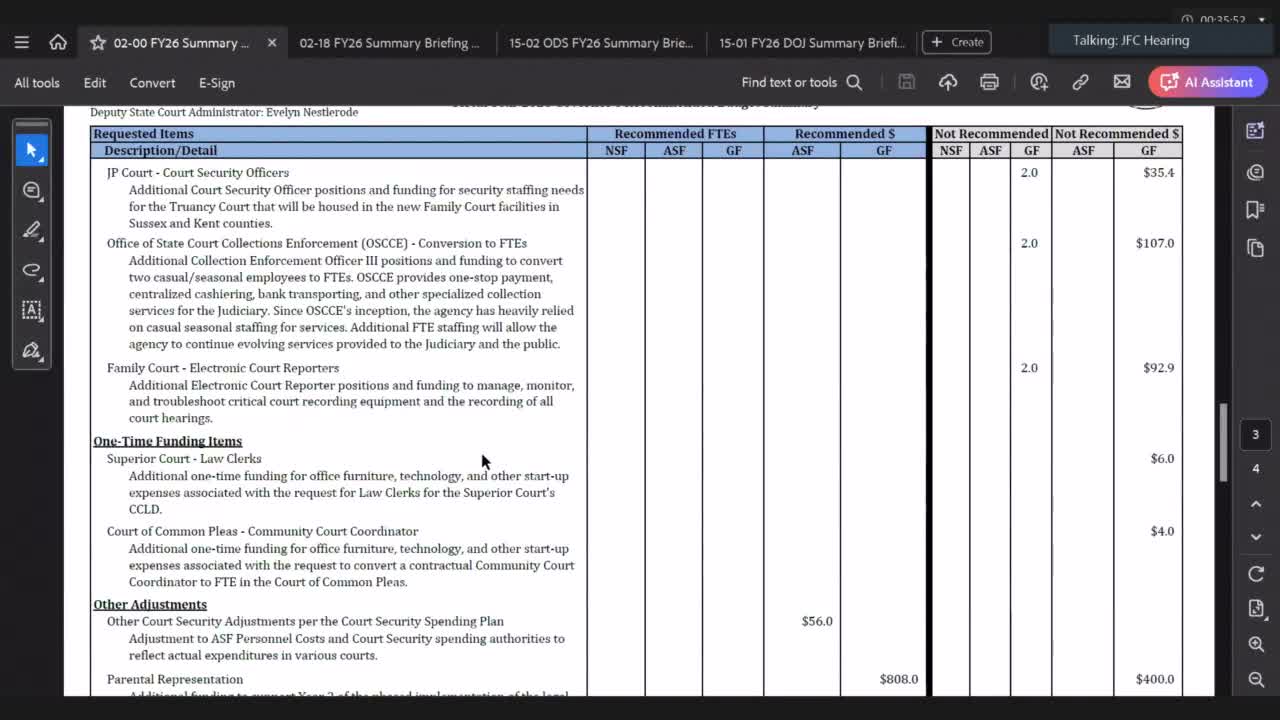
The Office of Defense Services told the Joint Finance Committee that implementation of parental representation (House Bill 86) and rising caseload complexity require continued staffing and operational support, including funds recommended in the governor’s budget and additional year‑2 implementation resources.
Jason’s earlier briefing noted ODS requests connected to HB 86—annualization of personnel, operating costs, travel and training, plus year‑2 positions to staff the Parental Representation Unit. Kevin O’Connell, chief defender, later outlined ODS’s holistic, client‑centered defense approach and the office’s recruitment and training efforts: a bar‑pass pipeline, partners for justice advocates, and staff roles that support post‑disposition and reentry work.
O’Connell argued the office’s workload should be assessed by a national workload study (a method used by other states) rather than raw caseload counts, and said ODS will work with an outside vendor to measure hours per case type and identify staffing shortfalls. He highlighted existing and new positions (187 total FTEs across public defender and conflict counsel), current vacancies and a bar‑pass hiring pipeline expected to reduce long‑term vacancy rates.
The chief defender also described policy initiatives under consideration—compassionate release pathways for elderly incarcerated people and expanded reentry services—and asked the committee to consider staff and targeted program funding to reduce long‑term incarceration costs and recidivism. The office also sought recurring and one‑time items to support evidence management and case‑related licensing costs (including systems like Axon Justice mentioned by budget staff).
Jason’s earlier briefing noted ODS requests connected to HB 86—annualization of personnel, operating costs, travel and training, plus year‑2 positions to staff the Parental Representation Unit. Kevin O’Connell, chief defender, later outlined ODS’s holistic, client‑centered defense approach and the office’s recruitment and training efforts: a bar‑pass pipeline, partners for justice advocates, and staff roles that support post‑disposition and reentry work.
O’Connell argued the office’s workload should be assessed by a national workload study (a method used by other states) rather than raw caseload counts, and said ODS will work with an outside vendor to measure hours per case type and identify staffing shortfalls. He highlighted existing and new positions (187 total FTEs across public defender and conflict counsel), current vacancies and a bar‑pass hiring pipeline expected to reduce long‑term vacancy rates.
The chief defender also described policy initiatives under consideration—compassionate release pathways for elderly incarcerated people and expanded reentry services—and asked the committee to consider staff and targeted program funding to reduce long‑term incarceration costs and recidivism. The office also sought recurring and one‑time items to support evidence management and case‑related licensing costs (including systems like Axon Justice mentioned by budget staff).
View the Full Meeting & All Its Details
This article offers just a summary. Unlock complete video, transcripts, and insights as a Founder Member.
✓
Watch full, unedited meeting videos
✓
Search every word spoken in unlimited transcripts
✓
AI summaries & real-time alerts (all government levels)
✓
Permanent access to expanding government content
30-day money-back guarantee
