Board debates noise ordinance standards for data centers; staff recommends consultant scope and trigger review
May 15, 2024 | Stafford County, Virginia
This article was created by AI summarizing key points discussed. AI makes mistakes, so for full details and context, please refer to the video of the full meeting. Please report any errors so we can fix them. Report an error »
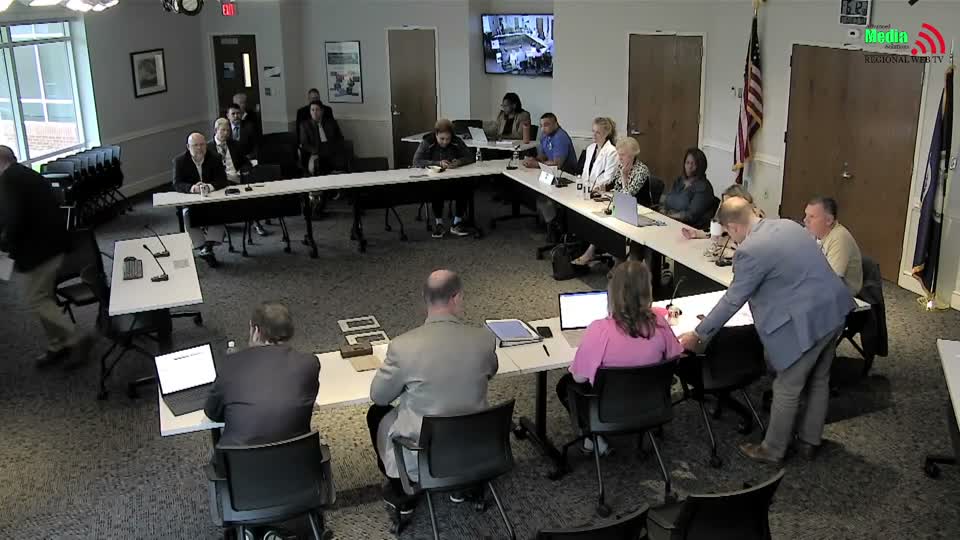
Staff from Community Development summarized the county's noise regulations at the May 15 work session and recommended using the existing zoning process and on-call consultants to handle technical reviews when large projects, including data centers, come forward.
"We do have a noise ordinance currently. It's chapter 16 in the county code," Paul Sante, chief director of community development, told the board. He said the current noise ordinance is basic, enforced by the sheriff's office, and does not specifically carve out uses such as data centers, asphalt plants or commercial kennels. Separately, Sante said, the county adopted special provisions for data centers in its zoning ordinance in an amendment passed last fall, and those provisions require developer-submitted noise reports and post-occupancy and 10-year reviews.
Several supervisors said the county needs a clearer scope for what must be included in a developer's noise study and when the county should automatically trigger a consultant review. One board member cautioned that noise impacts from data centers are not limited to daytime decibel readings: "When you look at, let's say we lose power at a data center at 03:00 in the morning... they lose power for a week, and they're on backup generators that are very loud... We need to have something in there that's 24/7, not just looking at the daytime hours," the member said, urging standards that address frequencies and persistent low-level sounds as well as decibel levels.
Staff said the county already has on-call consultants who can review reports and gave an example fee of about $2,700 for a consultant review of a developer's proffered report; a proffer tied to the Potomac Church/AWS site also included $25,000 for sound meters or county review resources. Staff recommended bringing a consultant to advise on the specific content and triggers for a sound-study requirement and to present recommended language and costs back to the board.
Board members debated whether noise-study triggers should be tied to submission of a GDP/site plan, proximity to housing, square footage, or a zoning district designation. Staff warned an application-stage requirement could add review time and workload and said legal questions about authority and administrative vs. board-level actions would require county attorney input.
Next steps: staff recommended asking consultants to draft recommended scope and trigger language and return with cost estimates and proposed administrative steps for implementing reviews, including using proffered funds when available.
"We do have a noise ordinance currently. It's chapter 16 in the county code," Paul Sante, chief director of community development, told the board. He said the current noise ordinance is basic, enforced by the sheriff's office, and does not specifically carve out uses such as data centers, asphalt plants or commercial kennels. Separately, Sante said, the county adopted special provisions for data centers in its zoning ordinance in an amendment passed last fall, and those provisions require developer-submitted noise reports and post-occupancy and 10-year reviews.
Several supervisors said the county needs a clearer scope for what must be included in a developer's noise study and when the county should automatically trigger a consultant review. One board member cautioned that noise impacts from data centers are not limited to daytime decibel readings: "When you look at, let's say we lose power at a data center at 03:00 in the morning... they lose power for a week, and they're on backup generators that are very loud... We need to have something in there that's 24/7, not just looking at the daytime hours," the member said, urging standards that address frequencies and persistent low-level sounds as well as decibel levels.
Staff said the county already has on-call consultants who can review reports and gave an example fee of about $2,700 for a consultant review of a developer's proffered report; a proffer tied to the Potomac Church/AWS site also included $25,000 for sound meters or county review resources. Staff recommended bringing a consultant to advise on the specific content and triggers for a sound-study requirement and to present recommended language and costs back to the board.
Board members debated whether noise-study triggers should be tied to submission of a GDP/site plan, proximity to housing, square footage, or a zoning district designation. Staff warned an application-stage requirement could add review time and workload and said legal questions about authority and administrative vs. board-level actions would require county attorney input.
Next steps: staff recommended asking consultants to draft recommended scope and trigger language and return with cost estimates and proposed administrative steps for implementing reviews, including using proffered funds when available.
Don't Miss a Word: See the Full Meeting!
Go beyond summaries. Unlock every video, transcript, and key insight with a Founder Membership.
✓
Get instant access to full meeting videos
✓
Search and clip any phrase from complete transcripts
✓
Receive AI-powered summaries & custom alerts
✓
Enjoy lifetime, unrestricted access to government data
30-day money-back guarantee
