Summit County Board of Health upholds denial of wastewater variance for undersized lot
February 05, 2024 | Summit County Health Department, Summit County Commission and Boards, Summit County, Utah
This article was created by AI summarizing key points discussed. AI makes mistakes, so for full details and context, please refer to the video of the full meeting. Please report any errors so we can fix them. Report an error »
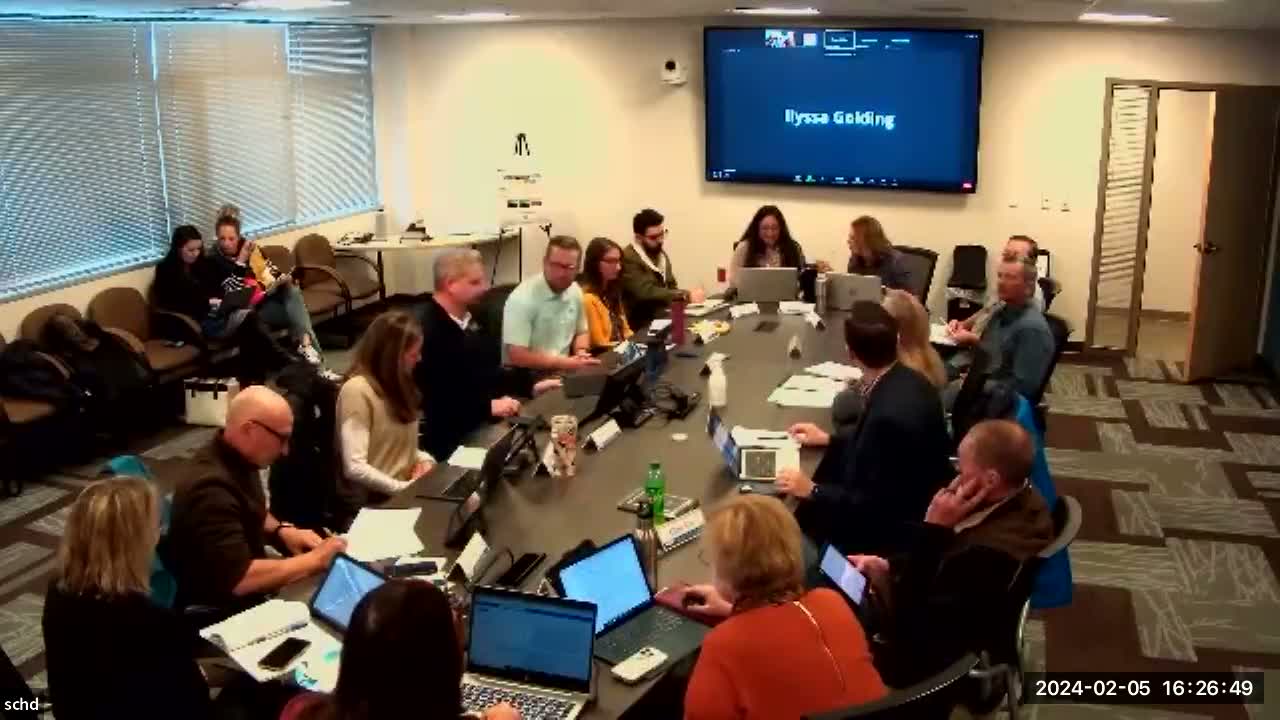
The Summit County Board of Health voted 5-1 on Feb. 5 to uphold the health department's decision denying a variance request for an undersized lot at KK-4A that sought a new well and an on-site Level 3 wastewater system.
The motion to uphold the department's denial was made by board member Chris Cherniak and seconded; the board recorded five votes in favor and one opposed. The decision leaves the department's written denial and its findings in place.
Why it matters: The appeal centered on whether modern alternative on-site wastewater treatment systems that treat effluent more intensively than conventional septic systems can justify an exception to the county's minimum lot-size restrictions. The county's health code and the state on-site wastewater rules establish minimum lot sizes and setbacks meant to protect groundwater and neighboring properties; department staff argued the applicant's parcel did not meet those protections even with advanced treatment.
What department staff said: Nathan Brooks of the Summit County Health Department summarized the department's position and its denial letter, saying the lot is too small under county code and state rules when soil type, trench placement and groundwater depth are considered. "The lot is too small according to the code of health as well as what's outlined in the Utah on-site wastewater code," Brooks stated, noting soils are cobbly and groundwater conditions increase uncertainty about long-term migration.
Applicant's technical case: The applicants, represented by hydrologist-engineer Tori Kopfra of Wilding Engineering, described the proposed Level 3 (alternative) system they called an "easy treat" pod system. Kopfra said the system uses a conventional septic tank followed by treatment pods filled with media that increase biological surface area, recirculate effluent and reduce nitrogen before discharge to an absorption field. "This type of a system will recirculate the water ... and it reduces the nitrogen and it cleans essentially cleans the water before it is discharged into that absorption field," Kopfra said. The applicants also proposed additional safeguards such as dual trenches, splitter valves or UV disinfection and emphasized that state-approved Level 3 systems have been used elsewhere in the county and state.
Neighbors' concerns: Nearby residents raised concerns during public comment about the proximity of the proposed leach field to an existing well and about whether the applicants could or would connect to an existing shared system. Susan Sullivan (Lot 6) said a recorded joint well and septic agreement exists and that neighbors have denied requests to tie in: "They're 14 feet from their property line ... I don't know if there's enough room," she said, urging the board to consider well separation and neighborhood impacts.
Board deliberations and precedent: Several board members said they were sympathetic to advancing newer treatment technologies but worried about setting a countywide precedent that could effectively override the lot-size rule. One member summarized the tension: approving a variance could open the door to many similar requests on other small lots in older subdivisions. Other members urged legislative or code revisions at the county or state level instead of resolving the broader policy question in a single appeal.
Outcome and next steps: By upholding the health department's denial, the board left the department's findings intact. The board did not adopt alternate conditions as part of the appeal. The record indicates applicants retain the ability to pursue other administrative or legislative options (for example, presenting new evidence to staff, seeking a different permit pathway, or requesting a code change), but no additional approvals were granted at the meeting. The board adjourned after final procedural items.
Provenance: Topic introduced at SEG 703 and concluded with the vote in SEG 2724.
The motion to uphold the department's denial was made by board member Chris Cherniak and seconded; the board recorded five votes in favor and one opposed. The decision leaves the department's written denial and its findings in place.
Why it matters: The appeal centered on whether modern alternative on-site wastewater treatment systems that treat effluent more intensively than conventional septic systems can justify an exception to the county's minimum lot-size restrictions. The county's health code and the state on-site wastewater rules establish minimum lot sizes and setbacks meant to protect groundwater and neighboring properties; department staff argued the applicant's parcel did not meet those protections even with advanced treatment.
What department staff said: Nathan Brooks of the Summit County Health Department summarized the department's position and its denial letter, saying the lot is too small under county code and state rules when soil type, trench placement and groundwater depth are considered. "The lot is too small according to the code of health as well as what's outlined in the Utah on-site wastewater code," Brooks stated, noting soils are cobbly and groundwater conditions increase uncertainty about long-term migration.
Applicant's technical case: The applicants, represented by hydrologist-engineer Tori Kopfra of Wilding Engineering, described the proposed Level 3 (alternative) system they called an "easy treat" pod system. Kopfra said the system uses a conventional septic tank followed by treatment pods filled with media that increase biological surface area, recirculate effluent and reduce nitrogen before discharge to an absorption field. "This type of a system will recirculate the water ... and it reduces the nitrogen and it cleans essentially cleans the water before it is discharged into that absorption field," Kopfra said. The applicants also proposed additional safeguards such as dual trenches, splitter valves or UV disinfection and emphasized that state-approved Level 3 systems have been used elsewhere in the county and state.
Neighbors' concerns: Nearby residents raised concerns during public comment about the proximity of the proposed leach field to an existing well and about whether the applicants could or would connect to an existing shared system. Susan Sullivan (Lot 6) said a recorded joint well and septic agreement exists and that neighbors have denied requests to tie in: "They're 14 feet from their property line ... I don't know if there's enough room," she said, urging the board to consider well separation and neighborhood impacts.
Board deliberations and precedent: Several board members said they were sympathetic to advancing newer treatment technologies but worried about setting a countywide precedent that could effectively override the lot-size rule. One member summarized the tension: approving a variance could open the door to many similar requests on other small lots in older subdivisions. Other members urged legislative or code revisions at the county or state level instead of resolving the broader policy question in a single appeal.
Outcome and next steps: By upholding the health department's denial, the board left the department's findings intact. The board did not adopt alternate conditions as part of the appeal. The record indicates applicants retain the ability to pursue other administrative or legislative options (for example, presenting new evidence to staff, seeking a different permit pathway, or requesting a code change), but no additional approvals were granted at the meeting. The board adjourned after final procedural items.
Provenance: Topic introduced at SEG 703 and concluded with the vote in SEG 2724.
Don't Miss a Word: See the Full Meeting!
Go beyond summaries. Unlock every video, transcript, and key insight with a Founder Membership.
✓
Get instant access to full meeting videos
✓
Search and clip any phrase from complete transcripts
✓
Receive AI-powered summaries & custom alerts
✓
Enjoy lifetime, unrestricted access to government data
30-day money-back guarantee
