Summit County and Dakota Pacific continue negotiations on Kimball Junction plan amid split over density, affordable housing and traffic mitigation
February 13, 2024 | Summit County Council, Summit County Commission and Boards, Summit County, Utah
This article was created by AI summarizing key points discussed. AI makes mistakes, so for full details and context, please refer to the video of the full meeting. Please report any errors so we can fix them. Report an error »
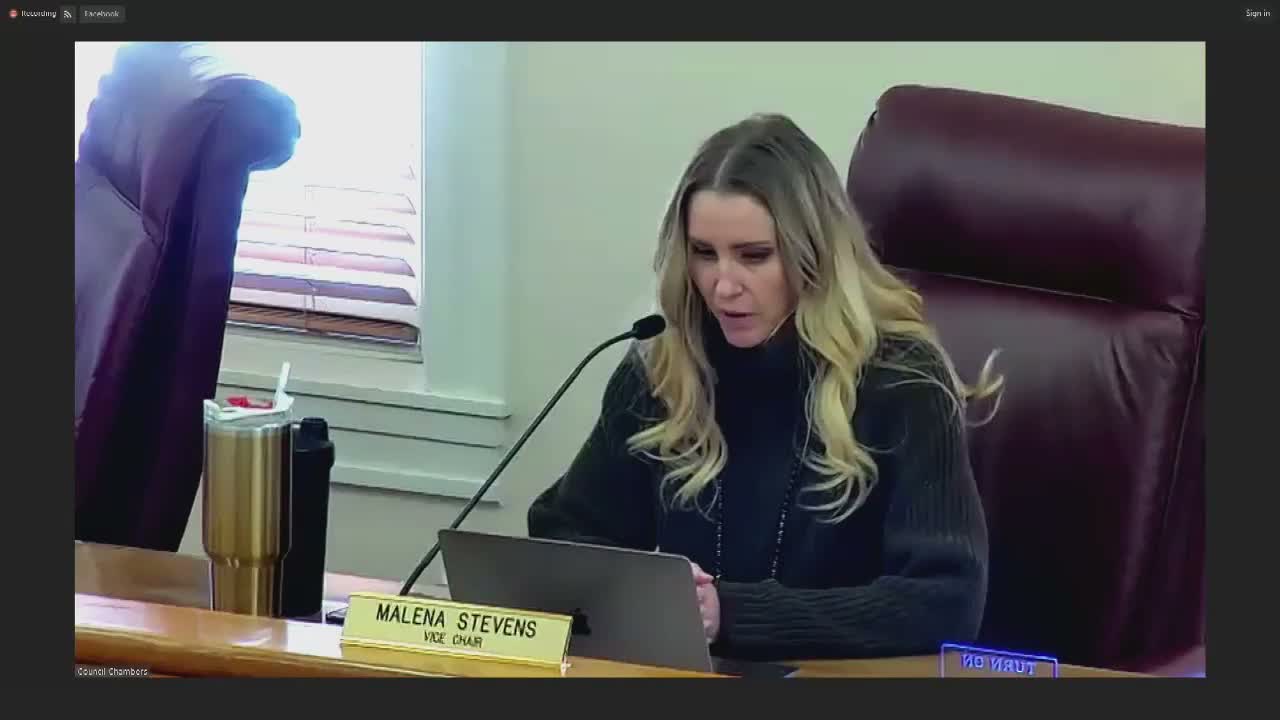
A continuation of Summit County Council deliberations with Dakota Pacific on a proposed amendment to the Kimball Junction development agreement on Tuesday underscored a wide gap between the council's housing and traffic priorities and the developer's assessment of what is financially feasible. Developers said the council's 500-unit, 50%-affordable target would be economically untenable without major offsets; council members pressed developers for a term sheet of concrete options and prioritized metrics for phasing and traffic mitigation.
Why it matters: The outcome will shape how the county balances long-term traffic fixes at Kimball Junction with the immediate need for more affordable housing. The project site is adjacent to critical parcels (including the Richards parcel and the Richards Building area) and the county has signaled it expects a package of mitigations—some reliant on UDOT and STIP funding—before significant occupancy occurs.
Developers said Plan C remains the economically viable baseline. A Dakota Pacific principal summarized the constraints by saying, “Long story short, as expected, there is no way, there is no way we'll ever get anywhere close to that type of a program,” and asked the council to recognize the trade-offs among unit count, affordability bands and infrastructure costs. The presenters described a set of levers they are studying: changes to building typology, parking design and commercial mix, plus tax-credit strategies for deeper affordability.
On financing and tax credits: The developer asked the council to allow staff time to analyze requested AMI bands against Utah Housing Corp tax-credit rules, noting the difference between 9% and 4% tax-credit programs can materially alter financing. The developers described one banding the council discussed as roughly one-third at 40% AMI, one-third at 60% AMI and one-third at 80% AMI, and said they target an average of about 60% AMI in some 4% scenarios and around 44% for other buildings depending on program rules.
On costs and typology: Developers quantified a major cost driver: structured parking (cited in the discussion at roughly $30,000–$35,000 per stall) versus surface parking (~$5,000 per stall). They said reducing structured parking could lower per-unit costs but would require more land and affect open space and unit layout—trade-offs that could change but not eliminate the fundamental gap with the council's proposals.
On phasing and traffic: Dakota Pacific said obligating most project delivery to be back-ended until all improvements are complete is impractical because of holding costs and investor requirements. Instead, the developer proposed a phased approach tied to getting the project onto the STIP/ step process to secure capital; they emphasized much of the worst traffic effects occur late in build-out and that mitigations tied to UDOT sequencing could allow earlier phases to proceed without triggering intersection failures.
Council questions and priorities: Council members repeatedly pressed for specifics. Candice asked the developers to return with a tax-credit analysis and clarified that the original neighborhood-plan goals for Kimball Junction emphasize a walkable downtown center. Tanya sought a path to meet the council's 500-unit request and was told that reducing units materially below Plan C (developers referenced a 727-unit baseline in the discussion) would require substantial redesign or additional subsidy. Roger asked the developer to quantify how different commercial uses (hotel, senior care, retail, office) would contribute to the pro forma and whether commercial substitutions could offset reductions in market-rate housing.
Next steps and public process: Developers said they can return with multiple conceptual options (three scenarios were discussed as plausible) and recommended a subcommittee to prioritize trade-offs rapidly rather than attempt detailed design work in the full council forum. Council members asked staff to prepare a public FAQ to correct circulating misinformation about entitlements, traffic impacts and unit counts. The council set a follow-up meeting for Thursday at 3 p.m. at the Richards Building for further work; the meeting closed on a motion to adjourn that passed by voice vote.
What remains unresolved: Whether the county and developer can agree on phasing metrics (what counts as sufficient UDOT/STIP mitigation to trigger later phases), the final mix of affordable AMIs that preserves tax-credit eligibility, and the extent to which commercial uses can substitute for market-rate residential to preserve infrastructure funding. Developers said feasible unit reductions are likely in the tens rather than the hundreds.
The council and Dakota Pacific agreed to continue talks, with developers returning to provide more tangible term-sheet options and an updated pro forma and tax-credit analysis at the next public session.
Why it matters: The outcome will shape how the county balances long-term traffic fixes at Kimball Junction with the immediate need for more affordable housing. The project site is adjacent to critical parcels (including the Richards parcel and the Richards Building area) and the county has signaled it expects a package of mitigations—some reliant on UDOT and STIP funding—before significant occupancy occurs.
Developers said Plan C remains the economically viable baseline. A Dakota Pacific principal summarized the constraints by saying, “Long story short, as expected, there is no way, there is no way we'll ever get anywhere close to that type of a program,” and asked the council to recognize the trade-offs among unit count, affordability bands and infrastructure costs. The presenters described a set of levers they are studying: changes to building typology, parking design and commercial mix, plus tax-credit strategies for deeper affordability.
On financing and tax credits: The developer asked the council to allow staff time to analyze requested AMI bands against Utah Housing Corp tax-credit rules, noting the difference between 9% and 4% tax-credit programs can materially alter financing. The developers described one banding the council discussed as roughly one-third at 40% AMI, one-third at 60% AMI and one-third at 80% AMI, and said they target an average of about 60% AMI in some 4% scenarios and around 44% for other buildings depending on program rules.
On costs and typology: Developers quantified a major cost driver: structured parking (cited in the discussion at roughly $30,000–$35,000 per stall) versus surface parking (~$5,000 per stall). They said reducing structured parking could lower per-unit costs but would require more land and affect open space and unit layout—trade-offs that could change but not eliminate the fundamental gap with the council's proposals.
On phasing and traffic: Dakota Pacific said obligating most project delivery to be back-ended until all improvements are complete is impractical because of holding costs and investor requirements. Instead, the developer proposed a phased approach tied to getting the project onto the STIP/ step process to secure capital; they emphasized much of the worst traffic effects occur late in build-out and that mitigations tied to UDOT sequencing could allow earlier phases to proceed without triggering intersection failures.
Council questions and priorities: Council members repeatedly pressed for specifics. Candice asked the developers to return with a tax-credit analysis and clarified that the original neighborhood-plan goals for Kimball Junction emphasize a walkable downtown center. Tanya sought a path to meet the council's 500-unit request and was told that reducing units materially below Plan C (developers referenced a 727-unit baseline in the discussion) would require substantial redesign or additional subsidy. Roger asked the developer to quantify how different commercial uses (hotel, senior care, retail, office) would contribute to the pro forma and whether commercial substitutions could offset reductions in market-rate housing.
Next steps and public process: Developers said they can return with multiple conceptual options (three scenarios were discussed as plausible) and recommended a subcommittee to prioritize trade-offs rapidly rather than attempt detailed design work in the full council forum. Council members asked staff to prepare a public FAQ to correct circulating misinformation about entitlements, traffic impacts and unit counts. The council set a follow-up meeting for Thursday at 3 p.m. at the Richards Building for further work; the meeting closed on a motion to adjourn that passed by voice vote.
What remains unresolved: Whether the county and developer can agree on phasing metrics (what counts as sufficient UDOT/STIP mitigation to trigger later phases), the final mix of affordable AMIs that preserves tax-credit eligibility, and the extent to which commercial uses can substitute for market-rate residential to preserve infrastructure funding. Developers said feasible unit reductions are likely in the tens rather than the hundreds.
The council and Dakota Pacific agreed to continue talks, with developers returning to provide more tangible term-sheet options and an updated pro forma and tax-credit analysis at the next public session.
View the Full Meeting & All Its Details
This article offers just a summary. Unlock complete video, transcripts, and insights as a Founder Member.
✓
Watch full, unedited meeting videos
✓
Search every word spoken in unlimited transcripts
✓
AI summaries & real-time alerts (all government levels)
✓
Permanent access to expanding government content
30-day money-back guarantee
