Summit County reviews Dakota Pacific’s revised Kimball Junction proposal, weighing density, traffic and affordability
February 01, 2024 | Summit County Council, Summit County Commission and Boards, Summit County, Utah
This article was created by AI summarizing key points discussed. AI makes mistakes, so for full details and context, please refer to the video of the full meeting. Please report any errors so we can fix them. Report an error »
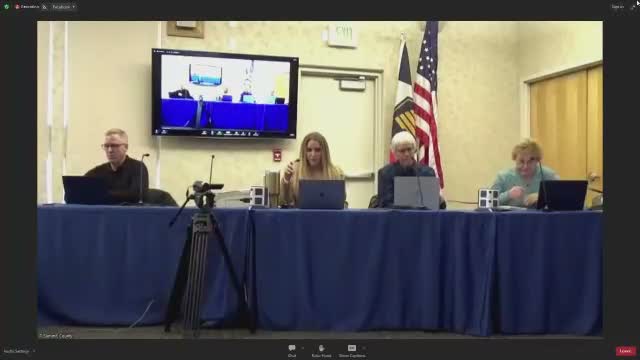
Dakota Pacific representatives presented a scaled-back version of their Kimball Junction proposal and spent more than two hours answering council questions about density, traffic and affordability.
Mark Stanworth, the developer’s lead presenter, said the return to a high-level “Plan C” was intended to test whether the council agreed with the project’s broad elements before investing in detailed design. "This is very much a public process," he said, "...our intent in bringing this plan back in front of the council was not some plan C plus or D or E or F. This was a reiteration of what we had presented before." He described Plan C as a sizable reduction from earlier proposals — removing a 120-key hotel, trimming commercial square footage and lowering total built area from roughly 1.7 million square feet to about 1.3 million.
The developer said the revised plan would deliver roughly 727 residential units and estimated those units would translate to about 1,500–1,600 full‑time resident equivalents using HUD occupancy standards and local survey data. Council member Tanya summarized the underlying entitlement scale for context: the original tech-park entitlement equated to about 1,300,000 square feet (which she said the public could think of as roughly "24 school-building equivalents") and approximately 3,500 parking spaces.
Stanworth and the project team framed the density decision as a balance between community objectives and project viability. Reducing unit counts, they said, can make structured parking and podium construction economically infeasible and often forces a different building typology that increases land consumption. "You can't just take off a couple of units," Stanworth said, noting economies of scale for the types of buildings proposed.
The council focused intensively on traffic. Several members said even with state-led interchange improvements on SR‑224 (UDOT’s project), adding the proposed population to Kimball Junction would generate substantial vehicle trips. The developer repeatedly tied density to prospects for state HDRZ (higher-density) tax‑increment capture, saying HDRZ qualification could allow the county discretion over up to 80% of incremental property tax to fund transit, centralized parking or other mitigations — but that reaching HDRZ thresholds requires a certain density.
Affordability was another central concern. Presenters described a targeted affordability mix under Plan C that increases the proportional share of restricted units while reducing total units overall; the team cited 65 units at deeper affordability bands (around 44% AMI), 152 units near 60% AMI and other bands for a combined affordable share that edged higher as overall density decreased. Council members asked whether deed‑restricting townhomes or condos (for ownership) was feasible and whether shifting unit types or deed‑restriction levels could increase deeper affordability without undermining the project's economics.
Council members also pressed for clearer near‑term levers the developer could exercise between now and the next meeting: for-sale versus rental product, AMI targets for deed restrictions, how many units could be converted to deeper affordability without redoing the concept plan, and parking strategies that avoid more surface lots. The developer said some levers (AMI mixes or deed restrictions) are economic exercises that can be modeled, but changing block layout, structured parking and major massing is a months‑long planning effort because of topography, existing roads, wetlands and grading constraints.
The developer provided a high‑level delivery timeline: entitlements and infrastructure design work in 2024, potential permitting and early construction steps in 2025, heavier construction in 2026 and initial deliveries in 2027 under a best‑case scenario. Jeff Jones (market analyst scheduled to present at the next meeting) was asked to return with market‑survey results that would show which AMI bands and product types have local demand today and how that availability might change over time.
Council members concluded by asking the developer to come back with a clearer accounting of the specific economic trade‑offs (what counts can shift, what must remain, and how deed restrictions would affect the project's viability). The council scheduled follow-ups: two density sessions, one meeting focused on affordable housing details and an agenda item about civic uses, seniors housing and transit. The meeting adjourned by voice motion.
Mark Stanworth, the developer’s lead presenter, said the return to a high-level “Plan C” was intended to test whether the council agreed with the project’s broad elements before investing in detailed design. "This is very much a public process," he said, "...our intent in bringing this plan back in front of the council was not some plan C plus or D or E or F. This was a reiteration of what we had presented before." He described Plan C as a sizable reduction from earlier proposals — removing a 120-key hotel, trimming commercial square footage and lowering total built area from roughly 1.7 million square feet to about 1.3 million.
The developer said the revised plan would deliver roughly 727 residential units and estimated those units would translate to about 1,500–1,600 full‑time resident equivalents using HUD occupancy standards and local survey data. Council member Tanya summarized the underlying entitlement scale for context: the original tech-park entitlement equated to about 1,300,000 square feet (which she said the public could think of as roughly "24 school-building equivalents") and approximately 3,500 parking spaces.
Stanworth and the project team framed the density decision as a balance between community objectives and project viability. Reducing unit counts, they said, can make structured parking and podium construction economically infeasible and often forces a different building typology that increases land consumption. "You can't just take off a couple of units," Stanworth said, noting economies of scale for the types of buildings proposed.
The council focused intensively on traffic. Several members said even with state-led interchange improvements on SR‑224 (UDOT’s project), adding the proposed population to Kimball Junction would generate substantial vehicle trips. The developer repeatedly tied density to prospects for state HDRZ (higher-density) tax‑increment capture, saying HDRZ qualification could allow the county discretion over up to 80% of incremental property tax to fund transit, centralized parking or other mitigations — but that reaching HDRZ thresholds requires a certain density.
Affordability was another central concern. Presenters described a targeted affordability mix under Plan C that increases the proportional share of restricted units while reducing total units overall; the team cited 65 units at deeper affordability bands (around 44% AMI), 152 units near 60% AMI and other bands for a combined affordable share that edged higher as overall density decreased. Council members asked whether deed‑restricting townhomes or condos (for ownership) was feasible and whether shifting unit types or deed‑restriction levels could increase deeper affordability without undermining the project's economics.
Council members also pressed for clearer near‑term levers the developer could exercise between now and the next meeting: for-sale versus rental product, AMI targets for deed restrictions, how many units could be converted to deeper affordability without redoing the concept plan, and parking strategies that avoid more surface lots. The developer said some levers (AMI mixes or deed restrictions) are economic exercises that can be modeled, but changing block layout, structured parking and major massing is a months‑long planning effort because of topography, existing roads, wetlands and grading constraints.
The developer provided a high‑level delivery timeline: entitlements and infrastructure design work in 2024, potential permitting and early construction steps in 2025, heavier construction in 2026 and initial deliveries in 2027 under a best‑case scenario. Jeff Jones (market analyst scheduled to present at the next meeting) was asked to return with market‑survey results that would show which AMI bands and product types have local demand today and how that availability might change over time.
Council members concluded by asking the developer to come back with a clearer accounting of the specific economic trade‑offs (what counts can shift, what must remain, and how deed restrictions would affect the project's viability). The council scheduled follow-ups: two density sessions, one meeting focused on affordable housing details and an agenda item about civic uses, seniors housing and transit. The meeting adjourned by voice motion.
View the Full Meeting & All Its Details
This article offers just a summary. Unlock complete video, transcripts, and insights as a Founder Member.
✓
Watch full, unedited meeting videos
✓
Search every word spoken in unlimited transcripts
✓
AI summaries & real-time alerts (all government levels)
✓
Permanent access to expanding government content
30-day money-back guarantee
