Summit County, UDOT and Dakota Pacific review three SR‑224 alternatives; council asks for hybrid cost and timing analysis
January 25, 2024 | Summit County Council, Summit County Commission and Boards, Summit County, Utah
This article was created by AI summarizing key points discussed. AI makes mistakes, so for full details and context, please refer to the video of the full meeting. Please report any errors so we can fix them. Report an error »
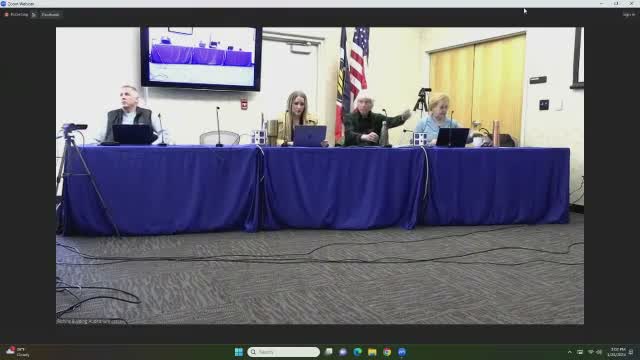
UDOT and county consultants presented draft findings on three alternatives to ease congestion on State Route 224 on Tuesday, telling the Summit County Council that each option would materially reduce projected 2050 travel times but differ sharply in footprint, pedestrian impacts and cost.
Why it matters: SR‑224 is a seasonal and weekend bottleneck for commuters and resort traffic. The council signaled it wants a clearer recommendation on which elements to pursue — and a rapid follow‑up with UDOT — because funding programming windows and the length of the environmental review could affect when construction could begin.
UDOT Region 2 Director Robert Stewart said the project remains in the alternatives stage and cautioned the council not to expect immediate construction: "We haven't even got to a draft environmental impact statement," he said, adding that a draft is hoped for by year‑end but that the record of decision and funding decisions follow at a later date. He emphasized that money for construction is not yet identified and that funding decisions rest with the Utah Transportation Commission and statewide prioritization programs.
Consultants from HDR and Parametrix explained the technical review. Heidi Spore of HDR summarized how three alternatives were screened from the 2021 Kimball Junction area plan into the current Level‑3 and Level‑4 NEPA analyses. Charles Allen, lead traffic engineer with Parametrix, described the traffic modeling: "We focus our analysis and our criteria around the effects within that study area," he said, noting the team used a 2050 horizon year and modeled winter conditions when delays are worst. Allen reported draft results showing that each alternative cut modeled 2050 travel times substantially — in the examples presented, projected northbound or southbound travel times drop from roughly 9–11 minutes under no‑action to about 2–4 minutes under the build alternatives.
Key differences: According to the consultants, Alternatives A and C include undercrossings or pedestrian connections that improve pedestrian level‑of‑traffic stress, while the B alternative as originally configured did not improve pedestrian connectivity and produced longer queuing at the I‑80 off‑ramp in some scenarios. The consultants described the geometry of each option: A includes a split‑diamond interchange and frontage work along Landmark Drive; B uses depressed (trench) lanes under some intersections with a covered deck concept to 're‑stitch' neighborhoods; C focuses on SR‑224 widening and intersection improvements with a smaller footprint than B.
Preliminary cost discussion: On the record, council and consultants discussed order‑of‑magnitude costs presented during the meeting (described by presenters as preliminary and subject to change): A was discussed in the meeting as roughly $90 million, B as roughly $64 million, and C as roughly $35 million. Consultants and staff repeatedly cautioned those are conceptual, early estimates that will change with design and market conditions.
Council direction and next steps: Several council members asked whether combining features of A and C would materially improve performance and how much additional cost that would add. Staff suggested there is substantial overlap between A and C’s SR‑224 fixes and agreed to return with a clearer comparison and a cost delta for an A+C hybrid. Council members also asked staff to prioritize: (1) a follow‑up focused meeting on A/C features and costs; (2) refining how a transit center or park‑and‑ride at the site would change model results; and (3) consideration of how alternatives affect nearby development density. The council emphasized urgency, noting that getting the project into programming (the state’s transportation improvement program) earlier increases the chance of securing funds.
What was not decided: No preferred alternative was chosen. UDOT reiterated that the environmental review and the State funding decision process will take additional months to more than a year, and construction schedules will depend on funding decisions and delivery method.
The council scheduled follow‑up work: staff agreed to prepare an overlap/combination analysis for A and C, updated cost estimates, and clarifications about how an adopted park‑and‑ride or transit center could alter the screening results. UDOT and consultants asked the public and council to submit ideas and 'betterments' early in the NEPA process to allow them to be screened and, if appropriate, incorporated without derailing the schedule.
Why it matters: SR‑224 is a seasonal and weekend bottleneck for commuters and resort traffic. The council signaled it wants a clearer recommendation on which elements to pursue — and a rapid follow‑up with UDOT — because funding programming windows and the length of the environmental review could affect when construction could begin.
UDOT Region 2 Director Robert Stewart said the project remains in the alternatives stage and cautioned the council not to expect immediate construction: "We haven't even got to a draft environmental impact statement," he said, adding that a draft is hoped for by year‑end but that the record of decision and funding decisions follow at a later date. He emphasized that money for construction is not yet identified and that funding decisions rest with the Utah Transportation Commission and statewide prioritization programs.
Consultants from HDR and Parametrix explained the technical review. Heidi Spore of HDR summarized how three alternatives were screened from the 2021 Kimball Junction area plan into the current Level‑3 and Level‑4 NEPA analyses. Charles Allen, lead traffic engineer with Parametrix, described the traffic modeling: "We focus our analysis and our criteria around the effects within that study area," he said, noting the team used a 2050 horizon year and modeled winter conditions when delays are worst. Allen reported draft results showing that each alternative cut modeled 2050 travel times substantially — in the examples presented, projected northbound or southbound travel times drop from roughly 9–11 minutes under no‑action to about 2–4 minutes under the build alternatives.
Key differences: According to the consultants, Alternatives A and C include undercrossings or pedestrian connections that improve pedestrian level‑of‑traffic stress, while the B alternative as originally configured did not improve pedestrian connectivity and produced longer queuing at the I‑80 off‑ramp in some scenarios. The consultants described the geometry of each option: A includes a split‑diamond interchange and frontage work along Landmark Drive; B uses depressed (trench) lanes under some intersections with a covered deck concept to 're‑stitch' neighborhoods; C focuses on SR‑224 widening and intersection improvements with a smaller footprint than B.
Preliminary cost discussion: On the record, council and consultants discussed order‑of‑magnitude costs presented during the meeting (described by presenters as preliminary and subject to change): A was discussed in the meeting as roughly $90 million, B as roughly $64 million, and C as roughly $35 million. Consultants and staff repeatedly cautioned those are conceptual, early estimates that will change with design and market conditions.
Council direction and next steps: Several council members asked whether combining features of A and C would materially improve performance and how much additional cost that would add. Staff suggested there is substantial overlap between A and C’s SR‑224 fixes and agreed to return with a clearer comparison and a cost delta for an A+C hybrid. Council members also asked staff to prioritize: (1) a follow‑up focused meeting on A/C features and costs; (2) refining how a transit center or park‑and‑ride at the site would change model results; and (3) consideration of how alternatives affect nearby development density. The council emphasized urgency, noting that getting the project into programming (the state’s transportation improvement program) earlier increases the chance of securing funds.
What was not decided: No preferred alternative was chosen. UDOT reiterated that the environmental review and the State funding decision process will take additional months to more than a year, and construction schedules will depend on funding decisions and delivery method.
The council scheduled follow‑up work: staff agreed to prepare an overlap/combination analysis for A and C, updated cost estimates, and clarifications about how an adopted park‑and‑ride or transit center could alter the screening results. UDOT and consultants asked the public and council to submit ideas and 'betterments' early in the NEPA process to allow them to be screened and, if appropriate, incorporated without derailing the schedule.
Don't Miss a Word: See the Full Meeting!
Go beyond summaries. Unlock every video, transcript, and key insight with a Founder Membership.
✓
Get instant access to full meeting videos
✓
Search and clip any phrase from complete transcripts
✓
Receive AI-powered summaries & custom alerts
✓
Enjoy lifetime, unrestricted access to government data
30-day money-back guarantee
