Summit County pauses proposed tax hikes after heated public hearing on valuations and Service Area 6
December 06, 2023 | Summit County Council, Summit County Commission and Boards, Summit County, Utah
This article was created by AI summarizing key points discussed. AI makes mistakes, so for full details and context, please refer to the video of the full meeting. Please report any errors so we can fix them. Report an error »
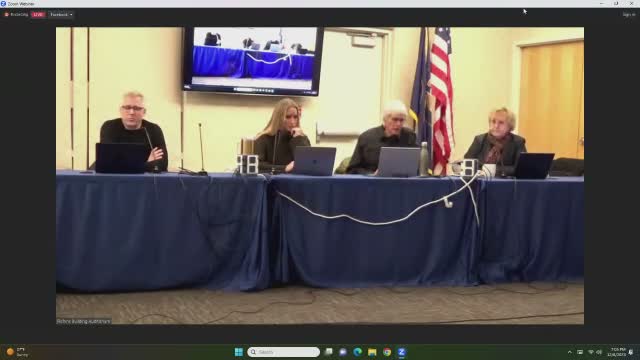
The Summit County Council opened a multilayered truth‑in‑taxation discussion on Dec. 6, drawing dozens of residents who said recent property revaluations delivered sudden, painful tax bills.
Staff had placed a maximum revenue request on the agenda to be considered under state truth‑in‑taxation rules, and the packet initially showed a total figure that included several items (general fund, assessing and collecting, and Service Area 6). After extended council discussion and public testimony about property valuations and appeals backlogs, staff and council agreed to withhold final votes and continue related hearings to Dec. 13 in Colville so staff can model how recently annexed parcels change the tax base.
Why it matters: Residents said double‑ and triple‑digit increases in assessed values have produced tax bills they could not afford and that the assessor’s office had not been able to explain in detail. Council members and staff said part of the spike reflected broad valuation changes across neighborhoods, combined with other taxing entities (school districts, water districts and special districts) that set their own rates. Council said the county’s general fund has been balanced this year without a general fund tax increase, but two narrower items remain under consideration: a 4%–5% increase proposed for the assessing and collecting fund (roughly $1.4 million in revenue) and a Service Area 6 adjustment intended to cover road maintenance and snow removal in unincorporated subdivisions.
What happened at the meeting: Officials explained the technical steps required by state law: valuations are set by the assessor and the county sets rates in June; truth‑in‑taxation procedures require public notice if the county proposes to exceed its certified revenue level. Council members asked staff for updated calculations that include values of properties recently annexed into Service Area 6, and staff said those parcels — many commercial or large residential blocks recorded this year — are still being processed by the recorder’s office and assessor. Because annexations increase the tax base, the actual rate needed to raise a given dollar amount (staff cited roughly $750,000 for Service Area 6) could be lower once the new values are incorporated. Council therefore continued the hearings and asked staff to post revised materials before the next meeting.
From the public: More than two dozen residents spoke. Common themes were that assessor notices relied on limited or self‑reported information, appealed values were difficult to resolve quickly, and county services (road clearing on side streets, trash service, firefighting presence in some rural areas) had not kept pace with higher bills. Several people asked the council to press the legislature and the state tax commission for procedural changes; council members encouraged appeals where appropriate and offered staff help in facilitating conversations with the assessor’s office.
What’s next: Council continued the truth‑in‑taxation and budget hearings to Dec. 13 in Colville, directing staff to produce updated, parcel‑level modeling of annexations and revised proposed rates that show how new growth will affect the rate required to reach the Service Area 6 revenue target.
Staff had placed a maximum revenue request on the agenda to be considered under state truth‑in‑taxation rules, and the packet initially showed a total figure that included several items (general fund, assessing and collecting, and Service Area 6). After extended council discussion and public testimony about property valuations and appeals backlogs, staff and council agreed to withhold final votes and continue related hearings to Dec. 13 in Colville so staff can model how recently annexed parcels change the tax base.
Why it matters: Residents said double‑ and triple‑digit increases in assessed values have produced tax bills they could not afford and that the assessor’s office had not been able to explain in detail. Council members and staff said part of the spike reflected broad valuation changes across neighborhoods, combined with other taxing entities (school districts, water districts and special districts) that set their own rates. Council said the county’s general fund has been balanced this year without a general fund tax increase, but two narrower items remain under consideration: a 4%–5% increase proposed for the assessing and collecting fund (roughly $1.4 million in revenue) and a Service Area 6 adjustment intended to cover road maintenance and snow removal in unincorporated subdivisions.
What happened at the meeting: Officials explained the technical steps required by state law: valuations are set by the assessor and the county sets rates in June; truth‑in‑taxation procedures require public notice if the county proposes to exceed its certified revenue level. Council members asked staff for updated calculations that include values of properties recently annexed into Service Area 6, and staff said those parcels — many commercial or large residential blocks recorded this year — are still being processed by the recorder’s office and assessor. Because annexations increase the tax base, the actual rate needed to raise a given dollar amount (staff cited roughly $750,000 for Service Area 6) could be lower once the new values are incorporated. Council therefore continued the hearings and asked staff to post revised materials before the next meeting.
From the public: More than two dozen residents spoke. Common themes were that assessor notices relied on limited or self‑reported information, appealed values were difficult to resolve quickly, and county services (road clearing on side streets, trash service, firefighting presence in some rural areas) had not kept pace with higher bills. Several people asked the council to press the legislature and the state tax commission for procedural changes; council members encouraged appeals where appropriate and offered staff help in facilitating conversations with the assessor’s office.
What’s next: Council continued the truth‑in‑taxation and budget hearings to Dec. 13 in Colville, directing staff to produce updated, parcel‑level modeling of annexations and revised proposed rates that show how new growth will affect the rate required to reach the Service Area 6 revenue target.
View the Full Meeting & All Its Details
This article offers just a summary. Unlock complete video, transcripts, and insights as a Founder Member.
✓
Watch full, unedited meeting videos
✓
Search every word spoken in unlimited transcripts
✓
AI summaries & real-time alerts (all government levels)
✓
Permanent access to expanding government content
30-day money-back guarantee
