Summit County council debates targeted budget cuts, considers postponing landfill to limit Truth in Taxation ask
November 27, 2023 | Summit County Council, Summit County Commission and Boards, Summit County, Utah
This article was created by AI summarizing key points discussed. AI makes mistakes, so for full details and context, please refer to the video of the full meeting. Please report any errors so we can fix them. Report an error »
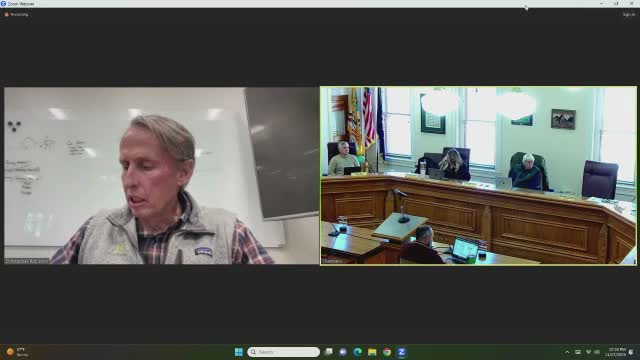
At a budget workshop, the Summit County Council asked staff to refine proposals for targeted spending reductions and to analyze whether postponing a planned landfill cell could reduce or avoid a Truth in Taxation (TNT) property-tax increase.
Staff presented options that would reduce the TNT request by focusing on three operating funds the council controls: the general fund ($2,800,000 proposed via TNT), the municipal services fund ($450,000) and the assessing-and-collecting fund ($1,400,000). Staff noted those funds are constrained by how revenues can be used and that a simple “10% cut across the board” is not viable because many line items are restricted to particular purposes (Speaker 8).
Why it matters: property-tax increases would affect county homeowners directly, and several council members said they want to avoid or minimize new TNT levies after recent increases across other taxing entities. The staff’s initial package totaled roughly $4,069,000 in first-consideration cuts, with additional personnel and line-item options bringing the total options presented to about $5.65 million.
Key details and proposals
- Staff breakdown and constraints: Speaker 8 explained the three operating funds and why some costs (for example, assessor-related charges) are required deposits to specific funds and can’t be reallocated freely.
- Largest single deferral considered: Councilmembers repeatedly flagged postponing the $2.5 million landfill cell construction as a high-impact option to reduce immediate TNT exposure. Staff and members cautioned postponement shifts the cost into later years, risks higher inflation or fines, and may require a small preparatory allocation (e.g., $250,000) to keep the project viable (Speakers 8, 2, 9).
- Personnel, COLA and merit: Every 1% change to the proposed cost-of-living/merit package equals about $340,000 in savings; staff estimate a 4% COLA plus a 3% merit was the baseline under consideration. Councilmembers generally preferred preserving COLA/merit and avoiding cuts that would remove staff who meet statutory mandates or produce grant revenue (Speakers 5, 2, 1).
- First-consideration cut list: Staff outlined a mix of options including trimming proposed COLA/merit increases, pausing optional Code Blue funding, reducing a proposed litigation increase from $400,000 toward $200,000, a $60,000 facility study, a 25% reduction in travel and training, scaling back overtime assumptions, modest fuel-budget reductions, and limiting childcare-assistance line items for employees. Staff said those initial items add to roughly $4,069,000 (Speaker 5).
- Line-item and contract reviews: Council discussed about $950,000 of potential line-item cuts. Speaker 1 asked about the federal lobbying contract; county counsel/staff (Speaker 10) said the county’s portion of the Squire Patton Boggs contract is $5,000 per month (shared with High Valley Transit) and that the lobbyists are pursuing federal funding for projects such as the Justice Center forensics lab, watershed projects and transit facility needs.
Council direction and next steps
Councilmembers asked staff to produce scenario analyses that show tax-bill impacts for specific choices (for example: if landfill is deferred, how much TNT remains). Speaker 9 offered a live spreadsheet exercise that illustrated how a mix of deferrals, program reductions and line-item cuts could reduce the TNT ask to the mid-$3 million range while preserving most personnel and benefits.
Members also identified priorities to protect when staff rework numbers: COLA/merit, housing-authority contributions tied to the joint Park City-Summit County initiative, childcare assistance for staff, planning for new properties, key Land & Natural Resources capacity (to support large open-space commitments), and building-inspection funding.
Staff flagged that some lines are constrained by state code or previous decisions (for example, Service Area 6 must list a maximum TNT amount in the notice even if actual revenues will be lower) and that using one-time fund balances for recurring operating costs displaces other capital projects.
Procedural development and closed session
Council directed staff to research (a) the precise cost and timeline implications of postponing the landfill cell, including any fines or bond considerations, and (b) alternative revenue sources such as rural-hospital sales taxes or other sales-tax-based options discussed in principle. The meeting concluded with a motion to enter a closed session on litigation (Speaker 3 moved; Speaker 4 seconded) and the council voted to go into closed session.
What remains open: staff will return with revised scenarios showing the tax-bill impact of the council’s prioritized keeps and the effect of deferring capital projects; they will also clarify any legal or penalty exposure for delaying the landfill cell. No formal TNT decision was taken at this meeting.
Staff presented options that would reduce the TNT request by focusing on three operating funds the council controls: the general fund ($2,800,000 proposed via TNT), the municipal services fund ($450,000) and the assessing-and-collecting fund ($1,400,000). Staff noted those funds are constrained by how revenues can be used and that a simple “10% cut across the board” is not viable because many line items are restricted to particular purposes (Speaker 8).
Why it matters: property-tax increases would affect county homeowners directly, and several council members said they want to avoid or minimize new TNT levies after recent increases across other taxing entities. The staff’s initial package totaled roughly $4,069,000 in first-consideration cuts, with additional personnel and line-item options bringing the total options presented to about $5.65 million.
Key details and proposals
- Staff breakdown and constraints: Speaker 8 explained the three operating funds and why some costs (for example, assessor-related charges) are required deposits to specific funds and can’t be reallocated freely.
- Largest single deferral considered: Councilmembers repeatedly flagged postponing the $2.5 million landfill cell construction as a high-impact option to reduce immediate TNT exposure. Staff and members cautioned postponement shifts the cost into later years, risks higher inflation or fines, and may require a small preparatory allocation (e.g., $250,000) to keep the project viable (Speakers 8, 2, 9).
- Personnel, COLA and merit: Every 1% change to the proposed cost-of-living/merit package equals about $340,000 in savings; staff estimate a 4% COLA plus a 3% merit was the baseline under consideration. Councilmembers generally preferred preserving COLA/merit and avoiding cuts that would remove staff who meet statutory mandates or produce grant revenue (Speakers 5, 2, 1).
- First-consideration cut list: Staff outlined a mix of options including trimming proposed COLA/merit increases, pausing optional Code Blue funding, reducing a proposed litigation increase from $400,000 toward $200,000, a $60,000 facility study, a 25% reduction in travel and training, scaling back overtime assumptions, modest fuel-budget reductions, and limiting childcare-assistance line items for employees. Staff said those initial items add to roughly $4,069,000 (Speaker 5).
- Line-item and contract reviews: Council discussed about $950,000 of potential line-item cuts. Speaker 1 asked about the federal lobbying contract; county counsel/staff (Speaker 10) said the county’s portion of the Squire Patton Boggs contract is $5,000 per month (shared with High Valley Transit) and that the lobbyists are pursuing federal funding for projects such as the Justice Center forensics lab, watershed projects and transit facility needs.
Council direction and next steps
Councilmembers asked staff to produce scenario analyses that show tax-bill impacts for specific choices (for example: if landfill is deferred, how much TNT remains). Speaker 9 offered a live spreadsheet exercise that illustrated how a mix of deferrals, program reductions and line-item cuts could reduce the TNT ask to the mid-$3 million range while preserving most personnel and benefits.
Members also identified priorities to protect when staff rework numbers: COLA/merit, housing-authority contributions tied to the joint Park City-Summit County initiative, childcare assistance for staff, planning for new properties, key Land & Natural Resources capacity (to support large open-space commitments), and building-inspection funding.
Staff flagged that some lines are constrained by state code or previous decisions (for example, Service Area 6 must list a maximum TNT amount in the notice even if actual revenues will be lower) and that using one-time fund balances for recurring operating costs displaces other capital projects.
Procedural development and closed session
Council directed staff to research (a) the precise cost and timeline implications of postponing the landfill cell, including any fines or bond considerations, and (b) alternative revenue sources such as rural-hospital sales taxes or other sales-tax-based options discussed in principle. The meeting concluded with a motion to enter a closed session on litigation (Speaker 3 moved; Speaker 4 seconded) and the council voted to go into closed session.
What remains open: staff will return with revised scenarios showing the tax-bill impact of the council’s prioritized keeps and the effect of deferring capital projects; they will also clarify any legal or penalty exposure for delaying the landfill cell. No formal TNT decision was taken at this meeting.
Don't Miss a Word: See the Full Meeting!
Go beyond summaries. Unlock every video, transcript, and key insight with a Founder Membership.
✓
Get instant access to full meeting videos
✓
Search and clip any phrase from complete transcripts
✓
Receive AI-powered summaries & custom alerts
✓
Enjoy lifetime, unrestricted access to government data
30-day money-back guarantee
