Local judges, prosecution and partners urge council to back drug court as cost‑effective alternative to incarceration
November 01, 2023 | Summit County Council, Summit County Commission and Boards, Summit County, Utah
This article was created by AI summarizing key points discussed. AI makes mistakes, so for full details and context, please refer to the video of the full meeting. Please report any errors so we can fix them. Report an error »
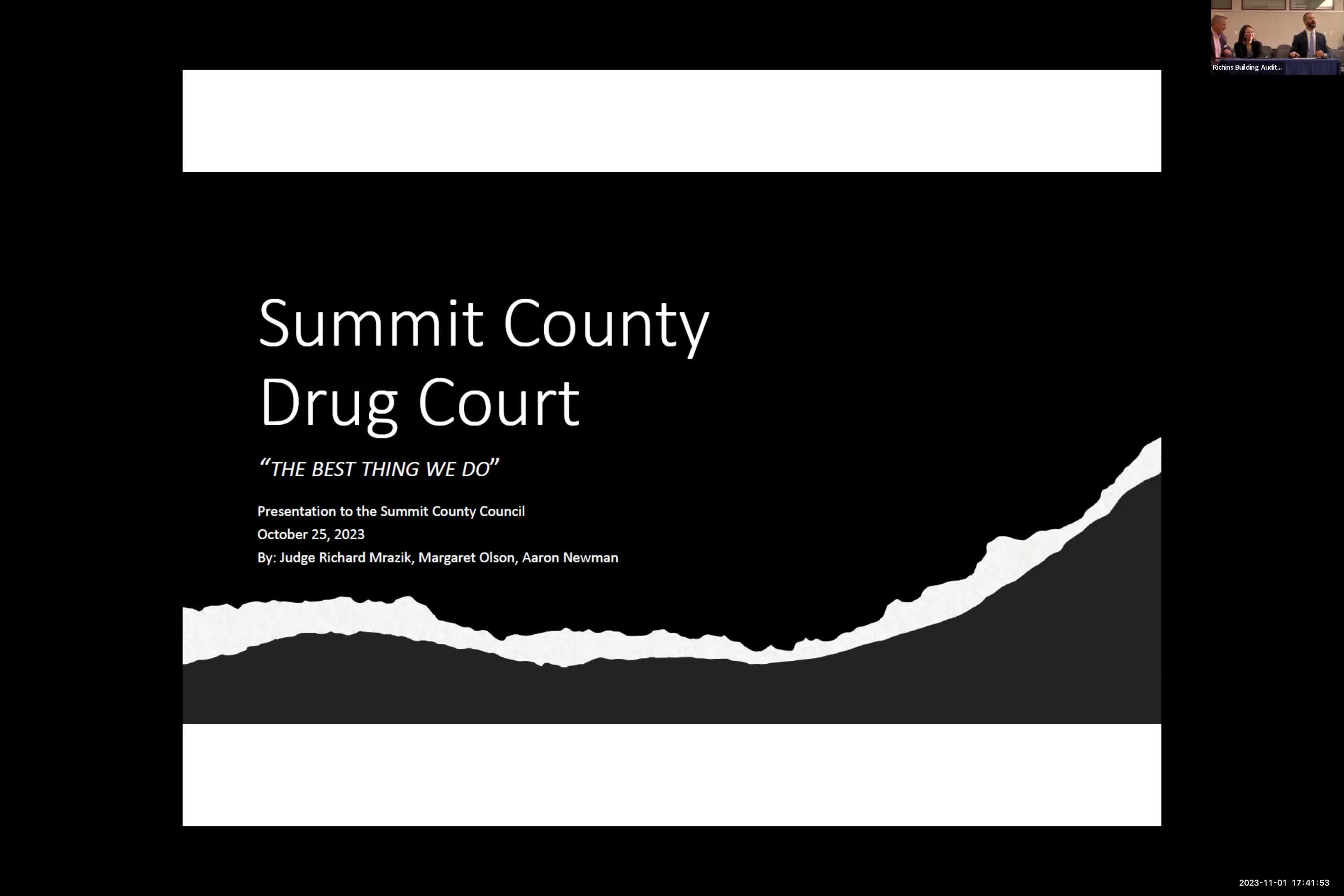
Judges, prosecutors and treatment partners presented the county’s drug court model and results to the Summit County Council, urging continued support and funding. The presentation described drug court as an intensive, multi‑disciplinary supervision program for high‑risk people with substance‑use disorders that combines frequent court contact, treatment, drug testing and community support.
Presenters said 53 participants have graduated from the local drug court, 17 are currently enrolled, and national studies show reductions in recidivism of roughly 35%–70% for drug‑court participants; presenters argued the model produces long‑term cost savings by avoiding reoffending and repeated incarceration. Court staff emphasized the intensive, humane supervision model and noted that many participants maintain contact with the program and its police/probation mentors after graduation.
Why it mattered: Council members heard evidence that drug‑court investments can lower long‑term justice system costs and deliver public‑safety benefits. Presenters requested stable funding given rising operations costs and limited growth in state reimbursement rates.
What comes next: County staff signaled that the behavioral‑health contract is up for negotiation; they recommended the council consider drug court priorities as part of the broader behavioral‑health procurement discussion.
Ending: Council members expressed support for the program’s outcomes and asked staff to provide more detailed budget and contract options for continued and possibly expanded funding.
Presenters said 53 participants have graduated from the local drug court, 17 are currently enrolled, and national studies show reductions in recidivism of roughly 35%–70% for drug‑court participants; presenters argued the model produces long‑term cost savings by avoiding reoffending and repeated incarceration. Court staff emphasized the intensive, humane supervision model and noted that many participants maintain contact with the program and its police/probation mentors after graduation.
Why it mattered: Council members heard evidence that drug‑court investments can lower long‑term justice system costs and deliver public‑safety benefits. Presenters requested stable funding given rising operations costs and limited growth in state reimbursement rates.
What comes next: County staff signaled that the behavioral‑health contract is up for negotiation; they recommended the council consider drug court priorities as part of the broader behavioral‑health procurement discussion.
Ending: Council members expressed support for the program’s outcomes and asked staff to provide more detailed budget and contract options for continued and possibly expanded funding.
Don't Miss a Word: See the Full Meeting!
Go beyond summaries. Unlock every video, transcript, and key insight with a Founder Membership.
✓
Get instant access to full meeting videos
✓
Search and clip any phrase from complete transcripts
✓
Receive AI-powered summaries & custom alerts
✓
Enjoy lifetime, unrestricted access to government data
30-day money-back guarantee
