Summit County and Park City councils consider regional housing authority but ask for feasibility study
October 10, 2023 | Summit County Council, Summit County Commission and Boards, Summit County, Utah
This article was created by AI summarizing key points discussed. AI makes mistakes, so for full details and context, please refer to the video of the full meeting. Please report any errors so we can fix them. Report an error »
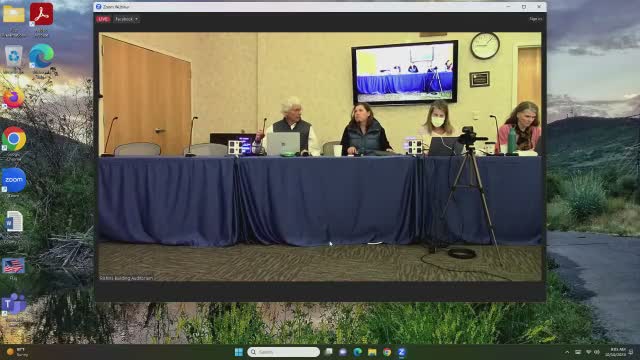
At a joint Summit County Council and Park City Council meeting on Oct. 10, staff and committee members presented research and stakeholder feedback on creating a regional housing authority aimed at expanding affordable rental and workforce housing. Presenters said they interviewed more than 20 organizations and ran a council survey that found majority support for development-focused activities and for public-private partnerships.
"We completed interviews with 21 different groups," said Ching Angstrong, a member of the presentation team, listing nonprofits, developers, school districts and private employers among respondents. He summarized top priorities as producing rental units, providing vouchers and serving vulnerable populations.
Dan Ackerman, who described himself as having led multiple housing authorities, told the councils that mid- and large-size housing authorities typically operate as separate legal entities and often rely on grant-linked administrative funds rather than ongoing direct municipal subsidies. "Most mid- to large-size housing authorities don't really get subsidy from the city or county directly," he said, adding smaller agencies sometimes require special local support.
Council members pressed for clarity on how a regional authority would be structured, what funding it could realistically access and whether the same outcomes could be achieved by enhancing in-house capacity or boosting existing nonprofits. "We need to decide what kind we really want," said an unnamed meeting chair, asking whether an umbrella regional authority or separate but cooperating municipal authorities would better meet local needs.
Several speakers emphasized trade-offs. Some favored an umbrella model to capture economies of scale and consolidated expertise; others warned of creating another layer of administration that could duplicate existing work and consume staff resources. One council member noted that creating a new authority could cost on the order of hundreds of thousands of dollars annually in staffing and overhead and asked whether the county could instead retain ownership of projects to create an evergreen revolving fund.
Presenters reported a key constraint: Housing Choice Vouchers (formerly Section 8) appear not to be available for immediate allocation to a newly formed authority in the current circumstances, though other federal vouchers and grants remain options. "It's just the choice vouchers that we can't get," a presenter said when council members raised funding questions.
Council members asked the joint committee to: (1) compile a pros-and-cons analysis comparing a regional housing authority to in-house models and interlocal agreements; (2) inventory which federal and state funding streams would be available to each structure; and (3) clarify governance, ownership and how contributed assets would be treated. The chair asked the joint committee to continue its work to "tease out the feasibility issues" and return with data and recommendations.
The councils did not vote on a final structure at the meeting. Instead, they directed the committee to continue refining the plan and scheduled a follow-up meeting to review feasibility findings.
"We completed interviews with 21 different groups," said Ching Angstrong, a member of the presentation team, listing nonprofits, developers, school districts and private employers among respondents. He summarized top priorities as producing rental units, providing vouchers and serving vulnerable populations.
Dan Ackerman, who described himself as having led multiple housing authorities, told the councils that mid- and large-size housing authorities typically operate as separate legal entities and often rely on grant-linked administrative funds rather than ongoing direct municipal subsidies. "Most mid- to large-size housing authorities don't really get subsidy from the city or county directly," he said, adding smaller agencies sometimes require special local support.
Council members pressed for clarity on how a regional authority would be structured, what funding it could realistically access and whether the same outcomes could be achieved by enhancing in-house capacity or boosting existing nonprofits. "We need to decide what kind we really want," said an unnamed meeting chair, asking whether an umbrella regional authority or separate but cooperating municipal authorities would better meet local needs.
Several speakers emphasized trade-offs. Some favored an umbrella model to capture economies of scale and consolidated expertise; others warned of creating another layer of administration that could duplicate existing work and consume staff resources. One council member noted that creating a new authority could cost on the order of hundreds of thousands of dollars annually in staffing and overhead and asked whether the county could instead retain ownership of projects to create an evergreen revolving fund.
Presenters reported a key constraint: Housing Choice Vouchers (formerly Section 8) appear not to be available for immediate allocation to a newly formed authority in the current circumstances, though other federal vouchers and grants remain options. "It's just the choice vouchers that we can't get," a presenter said when council members raised funding questions.
Council members asked the joint committee to: (1) compile a pros-and-cons analysis comparing a regional housing authority to in-house models and interlocal agreements; (2) inventory which federal and state funding streams would be available to each structure; and (3) clarify governance, ownership and how contributed assets would be treated. The chair asked the joint committee to continue its work to "tease out the feasibility issues" and return with data and recommendations.
The councils did not vote on a final structure at the meeting. Instead, they directed the committee to continue refining the plan and scheduled a follow-up meeting to review feasibility findings.
View the Full Meeting & All Its Details
This article offers just a summary. Unlock complete video, transcripts, and insights as a Founder Member.
✓
Watch full, unedited meeting videos
✓
Search every word spoken in unlimited transcripts
✓
AI summaries & real-time alerts (all government levels)
✓
Permanent access to expanding government content
30-day money-back guarantee
