Summit County updates moderate-income housing plans after state noncompliance notice; council approves ordinance with clarifications
September 20, 2023 | Summit County Council, Summit County Commission and Boards, Summit County, Utah
This article was created by AI summarizing key points discussed. AI makes mistakes, so for full details and context, please refer to the video of the full meeting. Please report any errors so we can fix them. Report an error »
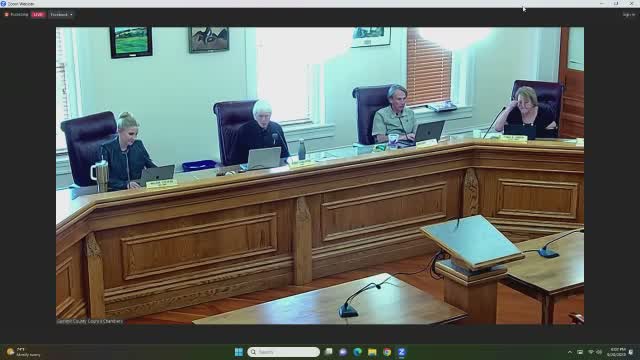
The Summit County Council on Tuesday adopted amendments to its moderate-income housing plans for the Snyderville Basin and Eastern Summit County after a public hearing and discussion prompted by a notice of noncompliance from the State Housing and Community Development Division.
Staff said the state requires certain strategies to "match the language in the state statute word for word" and asked the council to approve clarifying edits and add implementation timelines in a few places. The amendments are intended to standardize plan language statewide and to provide more explicit timing for implementation measures so that strategies are not indefinitely deferred.
During the public hearing, residents asked for clarity about the plans priorities (for example, whether new housing strategies primarily serve seasonal employees or long-term, year-round essential workers). Staff and councilors emphasized that the moderate-income housing plan is a statutorily prescribed compliance document focused on the list of state strategies and implementation measures; other county policies and deed-restriction mechanisms govern eligibility priorities for deed-restricted units.
Councilors also flagged that the state noncompliance letter referred to strategy identifiers and phrasing that did not map cleanly to the countys plan exhibits. Staff told the council they had met with state representatives and would add an additional "whereas" phrase and minor edits in the ordinance so the countys exhibits explicitly cross-reference the state strategy wording; the chair and the county attorney will review and finalize those clarifications before recordation. The council voted to adopt Ordinance 968 subject to those clerical clarifications and county attorney review.
Why it mattered: the statutory moderate-income housing plans are a prerequisite for certain state programs and eligibility; the state review requested word-for-word alignment and demonstration of planned implementation timelines. Council members said the changes are largely technical but important to preserve program eligibility and ensure the county can document annual implementation progress.
Whats next: the county attorney will finalize ordinance language to ensure the exhibits and the ordinance match the state strategies where required, and staff will prepare the implementation report the state requested documenting actions taken in the prior 12 months.
Who said it: county planning staff presented the changes (Jennifer Strader referenced as staff lead); members of the public including Susan Kutcher and Renee Camerota spoke during the public hearing.
Staff said the state requires certain strategies to "match the language in the state statute word for word" and asked the council to approve clarifying edits and add implementation timelines in a few places. The amendments are intended to standardize plan language statewide and to provide more explicit timing for implementation measures so that strategies are not indefinitely deferred.
During the public hearing, residents asked for clarity about the plans priorities (for example, whether new housing strategies primarily serve seasonal employees or long-term, year-round essential workers). Staff and councilors emphasized that the moderate-income housing plan is a statutorily prescribed compliance document focused on the list of state strategies and implementation measures; other county policies and deed-restriction mechanisms govern eligibility priorities for deed-restricted units.
Councilors also flagged that the state noncompliance letter referred to strategy identifiers and phrasing that did not map cleanly to the countys plan exhibits. Staff told the council they had met with state representatives and would add an additional "whereas" phrase and minor edits in the ordinance so the countys exhibits explicitly cross-reference the state strategy wording; the chair and the county attorney will review and finalize those clarifications before recordation. The council voted to adopt Ordinance 968 subject to those clerical clarifications and county attorney review.
Why it mattered: the statutory moderate-income housing plans are a prerequisite for certain state programs and eligibility; the state review requested word-for-word alignment and demonstration of planned implementation timelines. Council members said the changes are largely technical but important to preserve program eligibility and ensure the county can document annual implementation progress.
Whats next: the county attorney will finalize ordinance language to ensure the exhibits and the ordinance match the state strategies where required, and staff will prepare the implementation report the state requested documenting actions taken in the prior 12 months.
Who said it: county planning staff presented the changes (Jennifer Strader referenced as staff lead); members of the public including Susan Kutcher and Renee Camerota spoke during the public hearing.
View the Full Meeting & All Its Details
This article offers just a summary. Unlock complete video, transcripts, and insights as a Founder Member.
✓
Watch full, unedited meeting videos
✓
Search every word spoken in unlimited transcripts
✓
AI summaries & real-time alerts (all government levels)
✓
Permanent access to expanding government content
30-day money-back guarantee
