Council opens public hearing on allowing multifamily housing in Park City Business Center; directs legal review
April 26, 2023 | Summit County Council, Summit County Commission and Boards, Summit County, Utah
This article was created by AI summarizing key points discussed. AI makes mistakes, so for full details and context, please refer to the video of the full meeting. Please report any errors so we can fix them. Report an error »
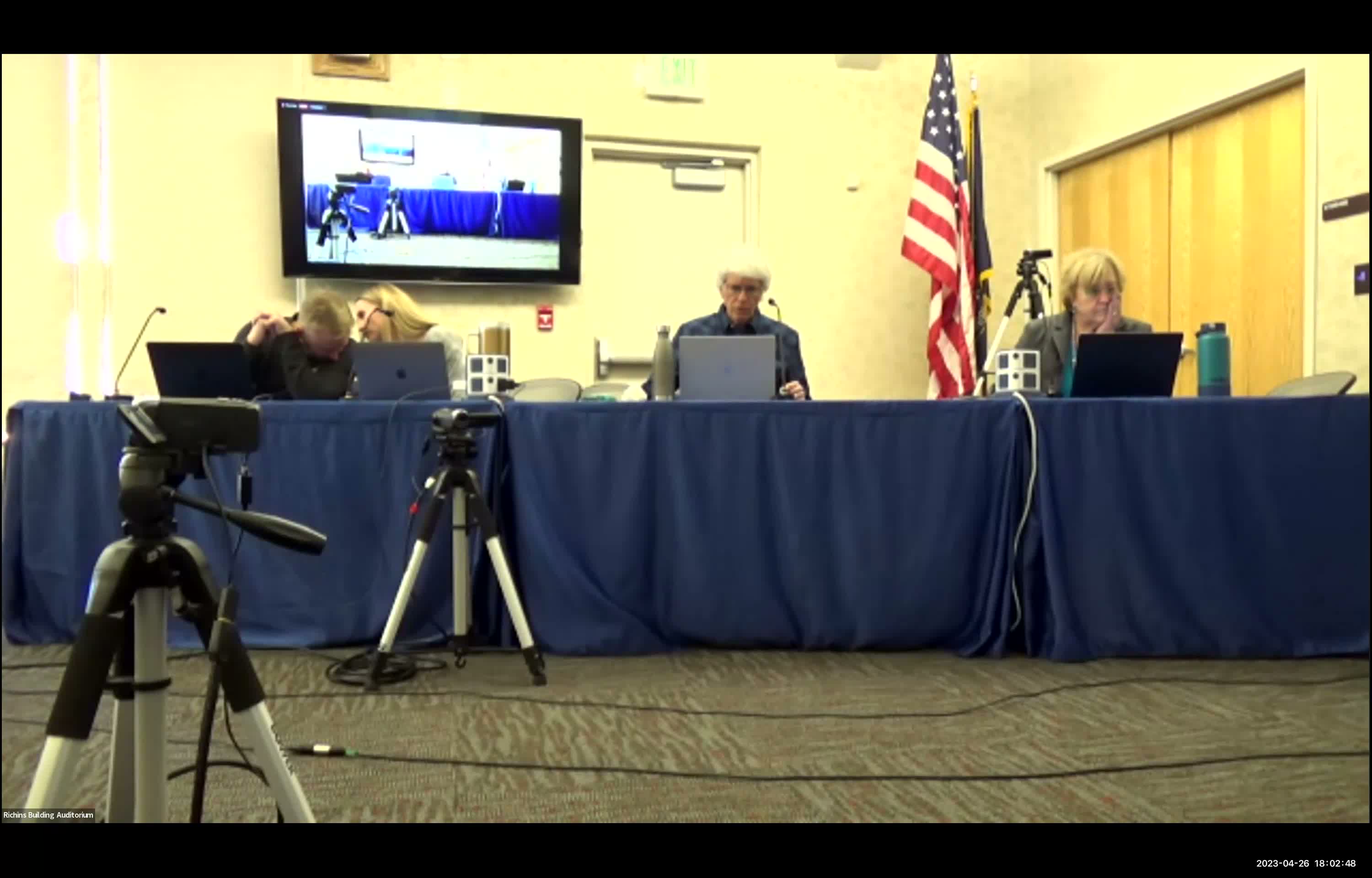
The Summit County Council held a public hearing April 26 on a proposal to permit "dwelling unit, multifamily as part of a commercial development" in the Park City Business Center service commercial zone, a change the applicant says is needed to build a climbing gym and an on-site affordable housing component.
Ray Milner, county planning staff, said the application asks for three code changes: raising the maximum height in the zone from 32 to 45 feet, adding multifamily as a permitted use within a commercial development, and reducing the front-yard setback from 30 to 20 feet. Milner said the Planning Commission forwarded a positive recommendation after lengthy review but the county attorney raised questions about how state law constrains local requirements for mandatory affordable units.
Developer Grady Kohler (speaking through project representatives) described a mixed-use concept that would keep about 55% of the project commercial and make the residential portion "affordable." Kohler and project spokespersons said the development could include roughly "45 to 50 units of affordable housing" integrated into the same building with the gym, and that the proposal copied many elements of the county's Neighborhood Mixed Use (NMU) package — setbacks, height, and parking standards — to achieve the design.
Council members pressed two central issues. First, they asked whether county law or state statute limits the council's ability to require more than the standard affordable-housing percentage. Staff cited a Utah Code section referenced in the packet and said the council may impose certain requirements only within specified constraints; staff and attorneys must reconcile how a voluntary developer commitment would interact with county-wide rules. Second, members raised traffic, transit access and neighborhood impacts: several members said the site is not yet transit-rich and questioned whether the frontage-road and roundabout traffic patterns could absorb additional residents and trips.
Council members also discussed enforcement and permanence of affordability. Commissioners noted that the MPD (master planned development) and development-agreement processes provide a mechanism to place binding obligations on a project that will "run with the land" even if the seller changes. Several council members said an MPD-driven development agreement — not a mere code amendment alone — would be the appropriate tool to lock in deeper affordability beyond baseline code requirements.
No formal vote was taken on the ordinance amending the service commercial use table. Instead, council members supported directing staff and the county attorney to draft ordinance language and development-agreement options that address state statutory limits and protections for long-term affordability, and to return with a noticed public hearing once the legal language is complete. Ray Milner said he would consult with attorneys and bring refined language back to the council.
What happens next: Council members asked staff to pursue legal analysis and to schedule a subsequent public hearing; the council did not adopt the code change on April 26.
Ray Milner, county planning staff, said the application asks for three code changes: raising the maximum height in the zone from 32 to 45 feet, adding multifamily as a permitted use within a commercial development, and reducing the front-yard setback from 30 to 20 feet. Milner said the Planning Commission forwarded a positive recommendation after lengthy review but the county attorney raised questions about how state law constrains local requirements for mandatory affordable units.
Developer Grady Kohler (speaking through project representatives) described a mixed-use concept that would keep about 55% of the project commercial and make the residential portion "affordable." Kohler and project spokespersons said the development could include roughly "45 to 50 units of affordable housing" integrated into the same building with the gym, and that the proposal copied many elements of the county's Neighborhood Mixed Use (NMU) package — setbacks, height, and parking standards — to achieve the design.
Council members pressed two central issues. First, they asked whether county law or state statute limits the council's ability to require more than the standard affordable-housing percentage. Staff cited a Utah Code section referenced in the packet and said the council may impose certain requirements only within specified constraints; staff and attorneys must reconcile how a voluntary developer commitment would interact with county-wide rules. Second, members raised traffic, transit access and neighborhood impacts: several members said the site is not yet transit-rich and questioned whether the frontage-road and roundabout traffic patterns could absorb additional residents and trips.
Council members also discussed enforcement and permanence of affordability. Commissioners noted that the MPD (master planned development) and development-agreement processes provide a mechanism to place binding obligations on a project that will "run with the land" even if the seller changes. Several council members said an MPD-driven development agreement — not a mere code amendment alone — would be the appropriate tool to lock in deeper affordability beyond baseline code requirements.
No formal vote was taken on the ordinance amending the service commercial use table. Instead, council members supported directing staff and the county attorney to draft ordinance language and development-agreement options that address state statutory limits and protections for long-term affordability, and to return with a noticed public hearing once the legal language is complete. Ray Milner said he would consult with attorneys and bring refined language back to the council.
What happens next: Council members asked staff to pursue legal analysis and to schedule a subsequent public hearing; the council did not adopt the code change on April 26.
View the Full Meeting & All Its Details
This article offers just a summary. Unlock complete video, transcripts, and insights as a Founder Member.
✓
Watch full, unedited meeting videos
✓
Search every word spoken in unlimited transcripts
✓
AI summaries & real-time alerts (all government levels)
✓
Permanent access to expanding government content
30-day money-back guarantee
