Summit County staff and lobbyists review 2023 Utah legislative session, flagging housing, water and elections changes
April 19, 2023 | Summit County Council, Summit County Commission and Boards, Summit County, Utah
This article was created by AI summarizing key points discussed. AI makes mistakes, so for full details and context, please refer to the video of the full meeting. Please report any errors so we can fix them. Report an error »
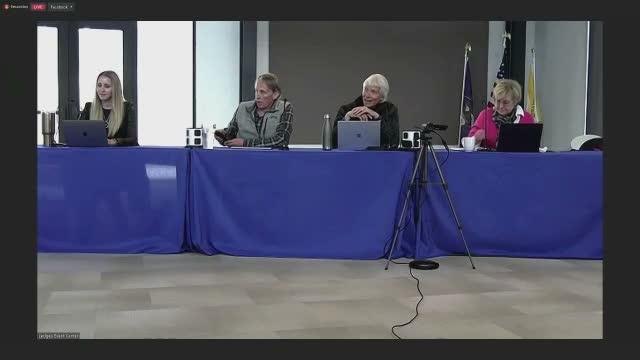
Summit County's lobbying team on April 19 gave the County Council a wide-ranging wrap-up of the 2023 Utah legislative session, flagging several bills that county staff say will require code updates, new reporting, and closer coordination with state agencies.
Jeff Jones, the county's economic development and housing director, told the council that House Bill 364 tightened timelines and reporting for moderate-income housing plans and added an appeal process. The bill also introduces penalties for noncompliance that could make counties ineligible for tax-increment financing and other state funding if deficiencies are not cured.
"We now have to submit the plan two months earlier and demonstrate real actions taken," Jones said, summarizing the law's requirement that jurisdictions report on progress for a five-year implementation period. He warned that local staff will need to document how strategies produced measurable results, not just list them.
County behavioral health staff described several health- and justice-related bills. Aaron Newman said changes to telehealth licensure and to medically assisted treatment in jails should help local service delivery; he also called HB 2208, which in his view "basically brings back conversion therapy," a priority for reversal or clarification.
Water and land-use bills drew extensive attention. Steve Stuyler and other staff outlined HB 150 (emergency water shortage amendments) and SB 158 (local government water amendments), both of which shape how municipalities and counties can require water for development and how the state engineer may operate in emergencies. Stuyler described SB 277 as a major policy shift that creates incentives and funding (roughly $150200 million reported by staff) to reward agricultural water conservation and to permit saved water to be repurposed for other beneficial uses.
Elections staff briefed the council on multiple administrative changes that increase documentation and technical duties at the county level, including signature-verification procedures, expanded audit access for the legislative auditor, rolling 1% signature audits during processing, and new video and logging requirements for ballot processing.
County attorneys and staff said several bills will require local code and policy updates, including changes to development agreements, accessory dwelling unit rules and subdivision review timeframes under SB 174. Staff flagged procurement- and ESG-related legislation that may constrain contracting and investment policies for public entities.
Why it matters: County staff said the new laws increase administrative burdens, tighten reporting deadlines, and create new penalties or funding conditions that could affect local projects, from BRT and housing grant eligibility to water infrastructure and conservation funding. The council asked staff to return with proposed code amendments and implementation plans for council review.
Next steps: Staff said they will prepare a prioritized list of required county code changes, budget implications for new administrative duties (for example, video equipment and retention for elections), and recommended outreach to state agencies and legislators to secure clarifications or seek technical fixes where local authority is affected.
Jeff Jones, the county's economic development and housing director, told the council that House Bill 364 tightened timelines and reporting for moderate-income housing plans and added an appeal process. The bill also introduces penalties for noncompliance that could make counties ineligible for tax-increment financing and other state funding if deficiencies are not cured.
"We now have to submit the plan two months earlier and demonstrate real actions taken," Jones said, summarizing the law's requirement that jurisdictions report on progress for a five-year implementation period. He warned that local staff will need to document how strategies produced measurable results, not just list them.
County behavioral health staff described several health- and justice-related bills. Aaron Newman said changes to telehealth licensure and to medically assisted treatment in jails should help local service delivery; he also called HB 2208, which in his view "basically brings back conversion therapy," a priority for reversal or clarification.
Water and land-use bills drew extensive attention. Steve Stuyler and other staff outlined HB 150 (emergency water shortage amendments) and SB 158 (local government water amendments), both of which shape how municipalities and counties can require water for development and how the state engineer may operate in emergencies. Stuyler described SB 277 as a major policy shift that creates incentives and funding (roughly $150200 million reported by staff) to reward agricultural water conservation and to permit saved water to be repurposed for other beneficial uses.
Elections staff briefed the council on multiple administrative changes that increase documentation and technical duties at the county level, including signature-verification procedures, expanded audit access for the legislative auditor, rolling 1% signature audits during processing, and new video and logging requirements for ballot processing.
County attorneys and staff said several bills will require local code and policy updates, including changes to development agreements, accessory dwelling unit rules and subdivision review timeframes under SB 174. Staff flagged procurement- and ESG-related legislation that may constrain contracting and investment policies for public entities.
Why it matters: County staff said the new laws increase administrative burdens, tighten reporting deadlines, and create new penalties or funding conditions that could affect local projects, from BRT and housing grant eligibility to water infrastructure and conservation funding. The council asked staff to return with proposed code amendments and implementation plans for council review.
Next steps: Staff said they will prepare a prioritized list of required county code changes, budget implications for new administrative duties (for example, video equipment and retention for elections), and recommended outreach to state agencies and legislators to secure clarifications or seek technical fixes where local authority is affected.
View the Full Meeting & All Its Details
This article offers just a summary. Unlock complete video, transcripts, and insights as a Founder Member.
✓
Watch full, unedited meeting videos
✓
Search every word spoken in unlimited transcripts
✓
AI summaries & real-time alerts (all government levels)
✓
Permanent access to expanding government content
30-day money-back guarantee
