County pitches Weaver Watershed resilience, biomass and BRT projects for federal support
April 24, 2023 | Summit County Council, Summit County Commission and Boards, Summit County, Utah
This article was created by AI summarizing key points discussed. AI makes mistakes, so for full details and context, please refer to the video of the full meeting. Please report any errors so we can fix them. Report an error »
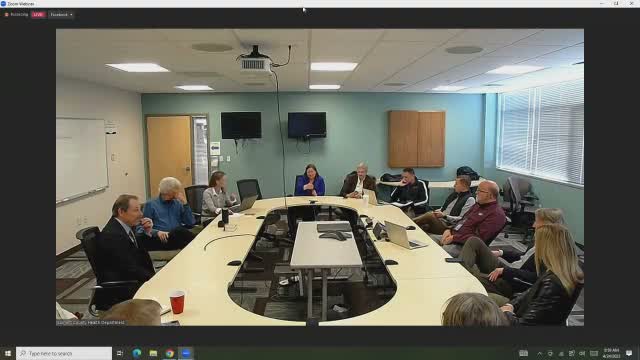
Summit County staff and leaders used a meeting with a congressional delegation to ask for federal support on several environmental and infrastructure priorities: watershed restoration, wildfire mitigation through biomass utilization, and transit and NEPA work at Kimball Junction.
Jess Kirby and other staff described the Weaver Watershed resilience effort and asked for congressional letters of support and help connecting federal program officers. "Our congressional delegation has been very supportive of trying to get funding for that," an official said, and staff noted opportunities through the Inflation Reduction Act and other federal sources (SEG 933–939).
On biomass, a staff speaker reported a draft 'A' rating for a project that could produce roughly 50,000 dry tons of biomass per year for uses such as biochar; a 10-person working group is vetting technical details prior to a council vote on project participation (SEG 956–966). "We're not talking jet fuel," the speaker clarified while describing biochar options (SEG 965–969).
Transportation and NEPA: officials outlined NEPA work on Kimball Junction and a bus-rapid-transit (BRT) corridor; contractors have faced delays (bedrock/blasting) at a bus barn project, but county leaders said they expect to advance work in the coming months and requested federal coordination on transportation and congestion solutions (SEG 1250–1254, SEG 1130–1136).
County staff asked the delegation for help persuading federal agencies to visit and evaluate local projects (U.S. Forest Service and other federal partners were singled out) and for assistance making the local case that Utah landscapes warrant additional federal prioritization in wildfire and resilience funding.
Next steps: staff said they would follow up with congressional staff to coordinate site tours and grant advocacy; the working group will complete technical vetting for the biomass proposal and bring recommendations to the council.
Jess Kirby and other staff described the Weaver Watershed resilience effort and asked for congressional letters of support and help connecting federal program officers. "Our congressional delegation has been very supportive of trying to get funding for that," an official said, and staff noted opportunities through the Inflation Reduction Act and other federal sources (SEG 933–939).
On biomass, a staff speaker reported a draft 'A' rating for a project that could produce roughly 50,000 dry tons of biomass per year for uses such as biochar; a 10-person working group is vetting technical details prior to a council vote on project participation (SEG 956–966). "We're not talking jet fuel," the speaker clarified while describing biochar options (SEG 965–969).
Transportation and NEPA: officials outlined NEPA work on Kimball Junction and a bus-rapid-transit (BRT) corridor; contractors have faced delays (bedrock/blasting) at a bus barn project, but county leaders said they expect to advance work in the coming months and requested federal coordination on transportation and congestion solutions (SEG 1250–1254, SEG 1130–1136).
County staff asked the delegation for help persuading federal agencies to visit and evaluate local projects (U.S. Forest Service and other federal partners were singled out) and for assistance making the local case that Utah landscapes warrant additional federal prioritization in wildfire and resilience funding.
Next steps: staff said they would follow up with congressional staff to coordinate site tours and grant advocacy; the working group will complete technical vetting for the biomass proposal and bring recommendations to the council.
Don't Miss a Word: See the Full Meeting!
Go beyond summaries. Unlock every video, transcript, and key insight with a Founder Membership.
✓
Get instant access to full meeting videos
✓
Search and clip any phrase from complete transcripts
✓
Receive AI-powered summaries & custom alerts
✓
Enjoy lifetime, unrestricted access to government data
30-day money-back guarantee
