County assessor outlines conversion of condos and commercial properties to new valuation model; warns some owners may see large changes
March 29, 2023 | Summit County Council, Summit County Commission and Boards, Summit County, Utah
This article was created by AI summarizing key points discussed. AI makes mistakes, so for full details and context, please refer to the video of the full meeting. Please report any errors so we can fix them. Report an error »
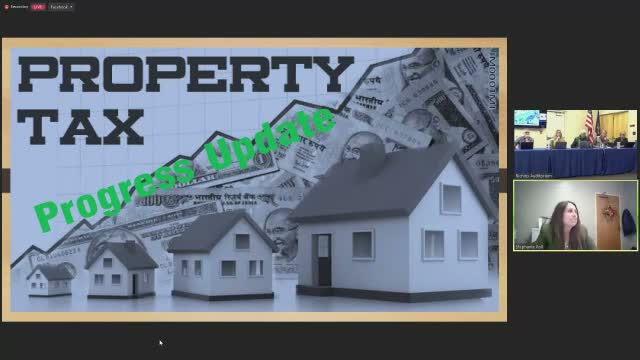
Stephanie, the assessor’s office presenter, told the Summit County Council the office is converting its condominium and commercial records to a new valuation module and addressing persistent data gaps that have driven public concern. She said about 9,400 condos exist in the county and only roughly 30% currently have full market data (bedroom/bath/amenity/placement). The office also has completed conversion for about 2,200 commercial accounts.
The assessor’s team will use a two‑track approach for 2023: where complete market data exist they will apply multiple regression modeling and neighborhood‑level adjustments; where market data are missing they will rely on a mass update using age and gross/net square footage and then extrapolate bedroom/bath counts from comparable historic sales. "We are going to take now every 1,200 square foot condo in that development and give it the same number of bedroom, the same number of bath," the presenter said, noting the team will base such assumptions on historic sales rather than arbitrary defaults.
Why this matters: many property owners complained last year when some parcels faced very large valuation increases while others did not. The assessor acknowledged that pattern and said the office has been pushing appraisers to extrapolate sales more broadly across like properties and to reduce hyper‑local idiosyncrasies that previously left gaps. The office also acknowledged that a typical, statutorily required detailed review covers roughly 20% of parcels each year and that mass updates and sales studies are intended to affect all parcels annually.
Details and next steps: the assessor described staffing and technical steps already under way — transit to a cloud valuation module, hiring a data analyst to build models and working to add market attributes (bedrooms, bathrooms, parking, amenities). Where bedroom/bath counts are missing the office is conducting historical research, reaching out to property managers and HOAs, and deploying digital forms and targeted outreach to increase response rates. For large commercial or conglomerate properties the office may fund outside appraisals and legal defense if appeals arise.
Council concerns and response: council members asked whether the approach will cause another sharp spike for roughly 20% of taxpayers and whether modeling could smooth increases. The assessor replied that a 5‑year rolling detailed review remains the baseline but emphasized that sales‑ratio studies and extrapolation are meant to update values countywide each year. "You can't assume just because you have no sales that the value hasn't been going up," the presenter told council.
What property owners should do: the office said it will publish information, engage with HOAs and property managers, and expects an appeals process through the Board of Equalization for disputed values. The assessor noted the state code requires annual updates and that the office will continue outreach and publish further details ahead of final valuations.
The council did not act on valuations at this meeting; the assessor said the conversion and data collection work will continue through the spring and into the 2023 roll cycle.
The assessor’s team will use a two‑track approach for 2023: where complete market data exist they will apply multiple regression modeling and neighborhood‑level adjustments; where market data are missing they will rely on a mass update using age and gross/net square footage and then extrapolate bedroom/bath counts from comparable historic sales. "We are going to take now every 1,200 square foot condo in that development and give it the same number of bedroom, the same number of bath," the presenter said, noting the team will base such assumptions on historic sales rather than arbitrary defaults.
Why this matters: many property owners complained last year when some parcels faced very large valuation increases while others did not. The assessor acknowledged that pattern and said the office has been pushing appraisers to extrapolate sales more broadly across like properties and to reduce hyper‑local idiosyncrasies that previously left gaps. The office also acknowledged that a typical, statutorily required detailed review covers roughly 20% of parcels each year and that mass updates and sales studies are intended to affect all parcels annually.
Details and next steps: the assessor described staffing and technical steps already under way — transit to a cloud valuation module, hiring a data analyst to build models and working to add market attributes (bedrooms, bathrooms, parking, amenities). Where bedroom/bath counts are missing the office is conducting historical research, reaching out to property managers and HOAs, and deploying digital forms and targeted outreach to increase response rates. For large commercial or conglomerate properties the office may fund outside appraisals and legal defense if appeals arise.
Council concerns and response: council members asked whether the approach will cause another sharp spike for roughly 20% of taxpayers and whether modeling could smooth increases. The assessor replied that a 5‑year rolling detailed review remains the baseline but emphasized that sales‑ratio studies and extrapolation are meant to update values countywide each year. "You can't assume just because you have no sales that the value hasn't been going up," the presenter told council.
What property owners should do: the office said it will publish information, engage with HOAs and property managers, and expects an appeals process through the Board of Equalization for disputed values. The assessor noted the state code requires annual updates and that the office will continue outreach and publish further details ahead of final valuations.
The council did not act on valuations at this meeting; the assessor said the conversion and data collection work will continue through the spring and into the 2023 roll cycle.
Don't Miss a Word: See the Full Meeting!
Go beyond summaries. Unlock every video, transcript, and key insight with a Founder Membership.
✓
Get instant access to full meeting videos
✓
Search and clip any phrase from complete transcripts
✓
Receive AI-powered summaries & custom alerts
✓
Enjoy lifetime, unrestricted access to government data
30-day money-back guarantee
