County hears detailed briefing on Housing and Transit Reinvestment Zones and asks tough questions on costs and beneficiaries
February 15, 2023 | Summit County Council, Summit County Commission and Boards, Summit County, Utah
This article was created by AI summarizing key points discussed. AI makes mistakes, so for full details and context, please refer to the video of the full meeting. Please report any errors so we can fix them. Report an error »
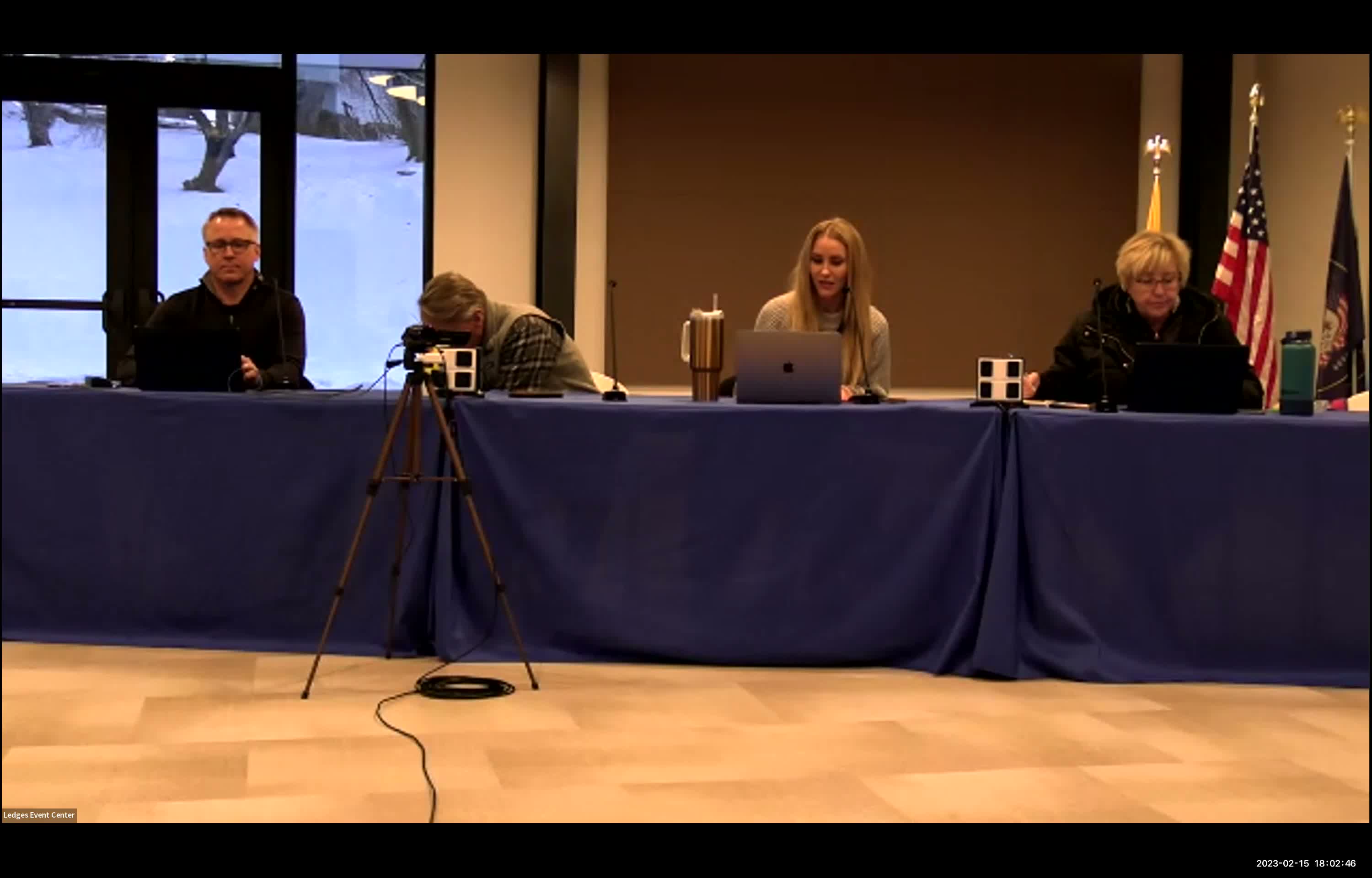
Brian Baker, a presenter from the Governor's Office of Economic Opportunity, told the Summit County Council that Housing and Transit Reinvestment Zones (HTRZs) are designed to encourage transit-oriented development, increase housing and conserve resources by using incremental tax revenues and state support to close finance gaps. "It's a reasonably robust analysis," Baker said, describing the gap analysis GoEO commissions to test whether additional HTRZ funding is necessary for a project to proceed.
Baker explained that the HTRZ funding pool can include incremental property and sales taxes generated inside designated boundaries and that the state's review often engages outside financial advisers. "GoEO actually contracts out and looks and does the gap analysis and would charge the applicant up to $20,000 to kind of analyze and really make sure that the funding is necessary," he said. He added that the applicant must be a governmental entity but in practice the application is usually driven by a landowner or developer who provides detailed pro forma financials.
Council members repeatedly asked who benefits from an HTRZ. Baker said the tool is intended to produce public benefits that would not otherwise occur: more housing at lower AMIs, greater transit use, air-quality improvements and infrastructure needed to support denser development. He acknowledged that if the funding is unnecessary the primary beneficiary could be the developer, but if the gap analysis shows the subsidy is required the benefits should flow to the community as well: "If the funding is necessary to make that project of that scope and size and density happen, then the beneficiaries are essentially everybody," Baker said.
The council pressed on technical details. Members asked whether a transit stop must be established before an HTRZ application can proceed; staff and council legal review pointed to statutory timing and said transit facilities typically must already be identified. Questions also focused on boundary mechanics (quarter-mile vs. one-third-mile radii, acreage caps), parcel contiguity and whether existing improvements generate tax increment. "You can't just capture random appreciation," Baker said, explaining that tax increment is calculated on new investment rather than market appreciation alone.
Local planning staff and the county planning director, Peter Barnes, flagged complications around mixed stations and overlapping radius rules and asked for map-based legal review of candidate parcels. Baker recommended that the county and a willing landowner work together on a detailed application because much of the pro forma and cost modeling relies on landowner-supplied financial information.
Next steps noted in the meeting: staff offered to circulate a white paper (Wasatch Front Regional Council) and recommended legal and mapping review of candidate parcels before pursuing a formal HTRZ application. The council did not take formal action on any HTRZ application during the meeting.
Baker explained that the HTRZ funding pool can include incremental property and sales taxes generated inside designated boundaries and that the state's review often engages outside financial advisers. "GoEO actually contracts out and looks and does the gap analysis and would charge the applicant up to $20,000 to kind of analyze and really make sure that the funding is necessary," he said. He added that the applicant must be a governmental entity but in practice the application is usually driven by a landowner or developer who provides detailed pro forma financials.
Council members repeatedly asked who benefits from an HTRZ. Baker said the tool is intended to produce public benefits that would not otherwise occur: more housing at lower AMIs, greater transit use, air-quality improvements and infrastructure needed to support denser development. He acknowledged that if the funding is unnecessary the primary beneficiary could be the developer, but if the gap analysis shows the subsidy is required the benefits should flow to the community as well: "If the funding is necessary to make that project of that scope and size and density happen, then the beneficiaries are essentially everybody," Baker said.
The council pressed on technical details. Members asked whether a transit stop must be established before an HTRZ application can proceed; staff and council legal review pointed to statutory timing and said transit facilities typically must already be identified. Questions also focused on boundary mechanics (quarter-mile vs. one-third-mile radii, acreage caps), parcel contiguity and whether existing improvements generate tax increment. "You can't just capture random appreciation," Baker said, explaining that tax increment is calculated on new investment rather than market appreciation alone.
Local planning staff and the county planning director, Peter Barnes, flagged complications around mixed stations and overlapping radius rules and asked for map-based legal review of candidate parcels. Baker recommended that the county and a willing landowner work together on a detailed application because much of the pro forma and cost modeling relies on landowner-supplied financial information.
Next steps noted in the meeting: staff offered to circulate a white paper (Wasatch Front Regional Council) and recommended legal and mapping review of candidate parcels before pursuing a formal HTRZ application. The council did not take formal action on any HTRZ application during the meeting.
Don't Miss a Word: See the Full Meeting!
Go beyond summaries. Unlock every video, transcript, and key insight with a Founder Membership.
✓
Get instant access to full meeting videos
✓
Search and clip any phrase from complete transcripts
✓
Receive AI-powered summaries & custom alerts
✓
Enjoy lifetime, unrestricted access to government data
30-day money-back guarantee
