Hundreds speak at Summit County public hearing on Dakota Pacific’s revised 'Plan C'; council sets continuation dates amid SB 84 dispute
March 01, 2023 | Summit County Council, Summit County Commission and Boards, Summit County, Utah
This article was created by AI summarizing key points discussed. AI makes mistakes, so for full details and context, please refer to the video of the full meeting. Please report any errors so we can fix them. Report an error »
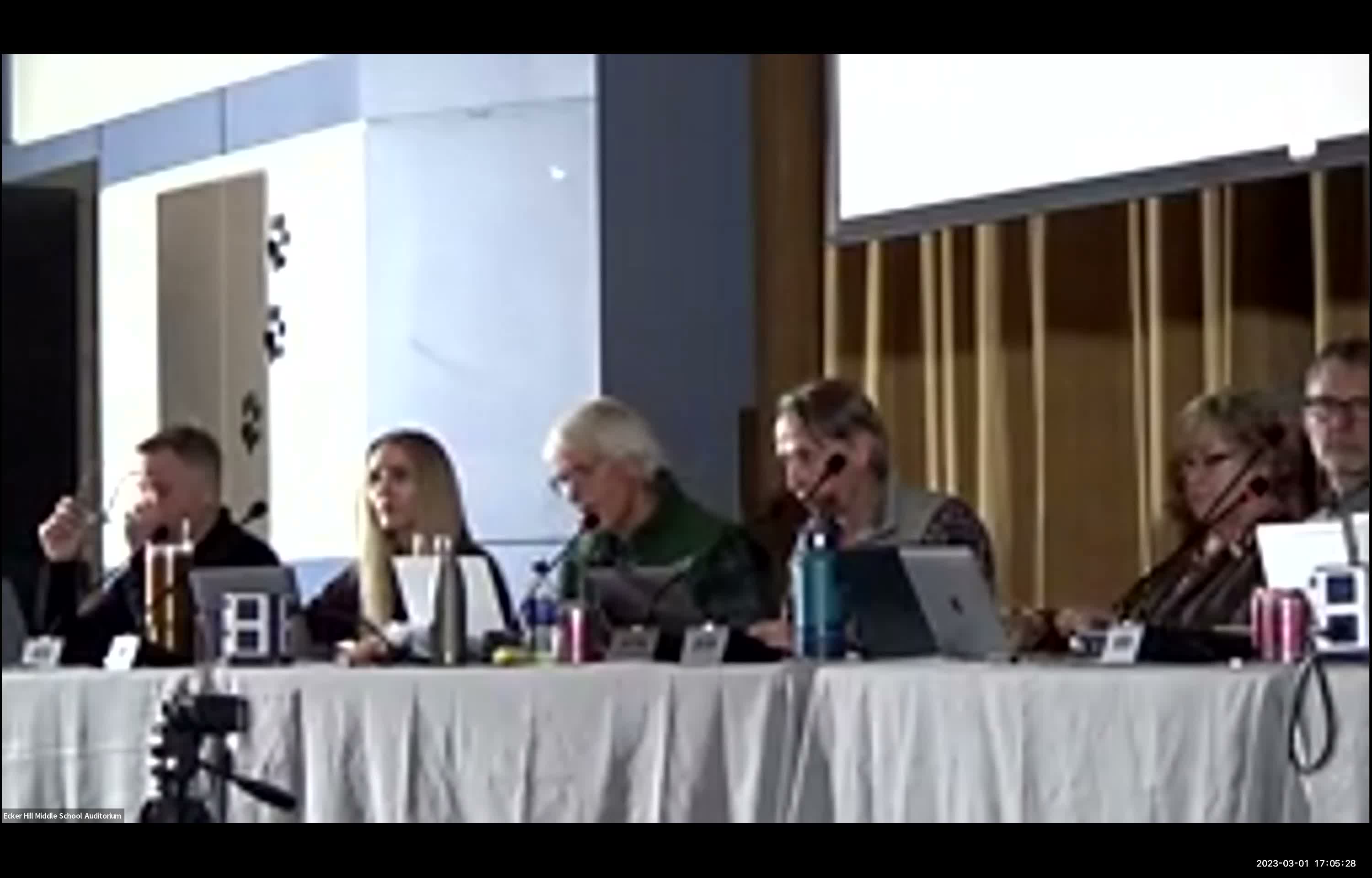
A standing‑room public hearing on March 1 drew large public turnout and hours of testimony on Dakota Pacific’s amended proposal for the Kimball Junction Tech Park (Plan C). County staff summarized the revised plan and numerous residents voiced opposition, citing traffic, infrastructure, water supply, housing outcomes and legislative intervention that they said undercuts local control.
Patrick Pott, Summit County’s Community Development Director, reviewed Plan C’s program and numbers, saying the current proposal comprises about 1,320,000 square feet and "there are 727 residential units proposed under this plan, 490 market, 230 deed restricted workforce housing units," and roughly 341,000 square feet of commercial space. He listed amenities the developer has proposed, including a 2‑acre central park, a 15,000‑square‑foot "experience retail" building, amphitheater space, courts and trails, and potential senior housing and continuing care components.
Public testimony was overwhelmingly critical. Several residents charged that recent state legislation known in testimony as SB 84 (and related House bill references raised during public remarks) was tailored to the project and would allow the developer to bypass county land‑use authority. Gary Hancock said, "This isn't how it's supposed to work," and urged the council to defend local control. Other speakers urged legal challenges, asked the county to use tax dollars to litigate if necessary, and characterized the developer’s tactics as "backroom" or "sleazy." Several commenters asked the council to "tell the governor to veto SB 84." Testimony also raised specific local impacts: school capacity (one speaker noted the Park City School District owns land and could need a new school for incoming students), water supply and drought vulnerability, and worsening daily traffic congestion at Kimball Junction during peak periods.
Some speakers supported aspects of the plan or emphasized the housing shortage. A housing advocate, Megan McKenna of the Housing Resource Center, described workforce needs and urged the council to weigh the project’s potential to reduce commuter pressure, while advising skepticism about marketing claims and asking for enforceable protections on deed restrictions.
County officials and staff repeatedly stressed the difference between the legislative debate and the land‑use decision before the council. The chair said he would not let legislative feelings derail the council’s land‑use analysis and committed to conducting due process. He scheduled follow‑up public hearing time next Wednesday, March 8 at 6 p.m., and signaled a council final discussion and likely vote for March 15. Regarding SB 84, the chair said the bill had passed both houses and was before the governor, and he outlined the possible executive actions (sign, veto, or passively become law after 60 days) and said the county would evaluate legal options in private if needed.
The applicant’s representative, Mark Stanworth, told the council the developer disagreed with some characterizations in testimony and stands by the project’s technical analyses; he said detailed rebuttals would be better addressed at the March 15 discussion. The council closed the March 1 portion of public testimony and set dates to reconvene; no vote on Plan C occurred on March 1.
Patrick Pott, Summit County’s Community Development Director, reviewed Plan C’s program and numbers, saying the current proposal comprises about 1,320,000 square feet and "there are 727 residential units proposed under this plan, 490 market, 230 deed restricted workforce housing units," and roughly 341,000 square feet of commercial space. He listed amenities the developer has proposed, including a 2‑acre central park, a 15,000‑square‑foot "experience retail" building, amphitheater space, courts and trails, and potential senior housing and continuing care components.
Public testimony was overwhelmingly critical. Several residents charged that recent state legislation known in testimony as SB 84 (and related House bill references raised during public remarks) was tailored to the project and would allow the developer to bypass county land‑use authority. Gary Hancock said, "This isn't how it's supposed to work," and urged the council to defend local control. Other speakers urged legal challenges, asked the county to use tax dollars to litigate if necessary, and characterized the developer’s tactics as "backroom" or "sleazy." Several commenters asked the council to "tell the governor to veto SB 84." Testimony also raised specific local impacts: school capacity (one speaker noted the Park City School District owns land and could need a new school for incoming students), water supply and drought vulnerability, and worsening daily traffic congestion at Kimball Junction during peak periods.
Some speakers supported aspects of the plan or emphasized the housing shortage. A housing advocate, Megan McKenna of the Housing Resource Center, described workforce needs and urged the council to weigh the project’s potential to reduce commuter pressure, while advising skepticism about marketing claims and asking for enforceable protections on deed restrictions.
County officials and staff repeatedly stressed the difference between the legislative debate and the land‑use decision before the council. The chair said he would not let legislative feelings derail the council’s land‑use analysis and committed to conducting due process. He scheduled follow‑up public hearing time next Wednesday, March 8 at 6 p.m., and signaled a council final discussion and likely vote for March 15. Regarding SB 84, the chair said the bill had passed both houses and was before the governor, and he outlined the possible executive actions (sign, veto, or passively become law after 60 days) and said the county would evaluate legal options in private if needed.
The applicant’s representative, Mark Stanworth, told the council the developer disagreed with some characterizations in testimony and stands by the project’s technical analyses; he said detailed rebuttals would be better addressed at the March 15 discussion. The council closed the March 1 portion of public testimony and set dates to reconvene; no vote on Plan C occurred on March 1.
Don't Miss a Word: See the Full Meeting!
Go beyond summaries. Unlock every video, transcript, and key insight with a Founder Membership.
✓
Get instant access to full meeting videos
✓
Search and clip any phrase from complete transcripts
✓
Receive AI-powered summaries & custom alerts
✓
Enjoy lifetime, unrestricted access to government data
30-day money-back guarantee
