Council grills Dakota Pacific over Kimball Junction amendment; traffic, housing mix and financing loom large
February 22, 2023 | Summit County Council, Summit County Commission and Boards, Summit County, Utah
This article was created by AI summarizing key points discussed. AI makes mistakes, so for full details and context, please refer to the video of the full meeting. Please report any errors so we can fix them. Report an error »
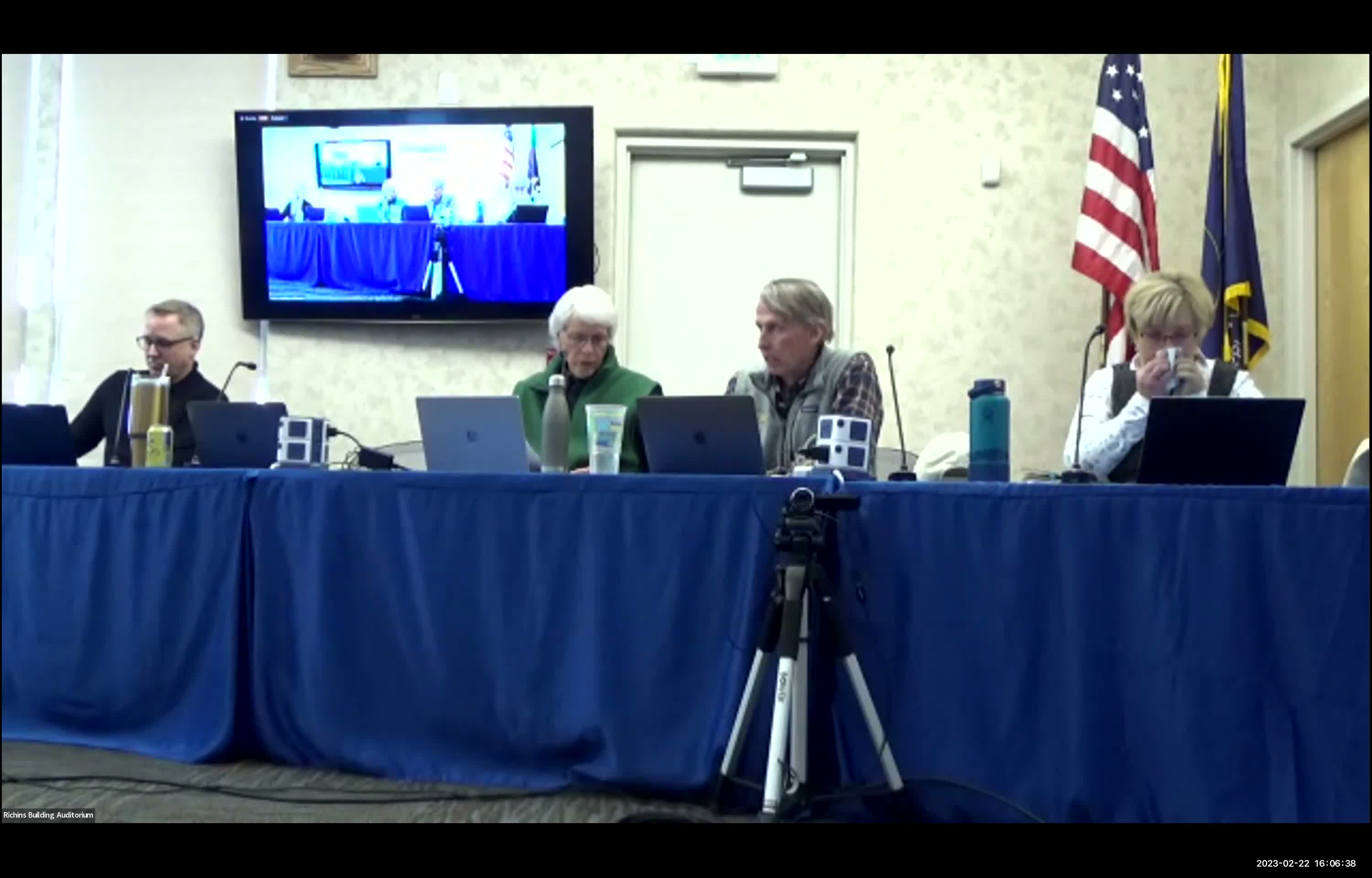
The Summit County Council held an extended work session with Dakota Pacific and its consultants on a proposed amendment to the Park City Tech Center development agreement. The amendment would loosen the original tech‑park‑only use mix and add residential and mixed‑use elements; Dakota Pacific presented a revised plan it said reduces density from prior versions and adds affordable housing, walkability and commercial space intended to attract employers.
Staff outlined the long history of the agreement (original 2008 development agreement, two buildings constructed) and the iterative review process dating back to a 2019 application. Dakota Pacific representatives said they spent significant time and money revising the plan in response to public comments and peer reviews. The developer argued the project would deliver multiple public benefits — affordable units, senior housing options, walkable mixed‑use streets and potential jobs — that help the county's broader housing and economic goals.
Council members repeatedly pressed the applicant on traffic impacts to State Route 224 and Kimball Junction. Multiple members said congestion already strains the junction and cited traffic modeling showing the corridor projected to fail with or without the project by 2028. The developer said it cannot fix SR‑224 alone but proposed mitigation measures and said it supports state/county projects; the firm said some “band‑aid” improvements are possible but the main fixes require UDOT and state involvement.
Housing ratios were a central point of dispute. The applicant’s plan includes a mix of market‑rate and deed‑restricted affordable housing; council members asked whether a higher share of deed‑restricted units, senior units and tighter rules to avoid nightly rentals could be secured. Dakota Pacific said making a much higher affordable share (for example, converting the majority of market units to deed‑restricted affordable) would threaten the project's financial feasibility unless additional subsidy or tax‑increment support were available. The council discussed the potential use of the state's Housing Taxation/HTRZ tool or other tax‑increment mechanisms to close that gap, and staff and the applicant said further modeling and short technical discussions would be required.
Council members and staff requested clearer, short responses for the public hearings scheduled at Ecker Hill Middle School and asked the applicant to provide more detailed water‑use, construction‑traffic and phasing plans. The council did not vote on the amendment; two public hearings are scheduled, and the council set a March date to decide whether the amendment would move forward.
Staff outlined the long history of the agreement (original 2008 development agreement, two buildings constructed) and the iterative review process dating back to a 2019 application. Dakota Pacific representatives said they spent significant time and money revising the plan in response to public comments and peer reviews. The developer argued the project would deliver multiple public benefits — affordable units, senior housing options, walkable mixed‑use streets and potential jobs — that help the county's broader housing and economic goals.
Council members repeatedly pressed the applicant on traffic impacts to State Route 224 and Kimball Junction. Multiple members said congestion already strains the junction and cited traffic modeling showing the corridor projected to fail with or without the project by 2028. The developer said it cannot fix SR‑224 alone but proposed mitigation measures and said it supports state/county projects; the firm said some “band‑aid” improvements are possible but the main fixes require UDOT and state involvement.
Housing ratios were a central point of dispute. The applicant’s plan includes a mix of market‑rate and deed‑restricted affordable housing; council members asked whether a higher share of deed‑restricted units, senior units and tighter rules to avoid nightly rentals could be secured. Dakota Pacific said making a much higher affordable share (for example, converting the majority of market units to deed‑restricted affordable) would threaten the project's financial feasibility unless additional subsidy or tax‑increment support were available. The council discussed the potential use of the state's Housing Taxation/HTRZ tool or other tax‑increment mechanisms to close that gap, and staff and the applicant said further modeling and short technical discussions would be required.
Council members and staff requested clearer, short responses for the public hearings scheduled at Ecker Hill Middle School and asked the applicant to provide more detailed water‑use, construction‑traffic and phasing plans. The council did not vote on the amendment; two public hearings are scheduled, and the council set a March date to decide whether the amendment would move forward.
Don't Miss a Word: See the Full Meeting!
Go beyond summaries. Unlock every video, transcript, and key insight with a Founder Membership.
✓
Get instant access to full meeting videos
✓
Search and clip any phrase from complete transcripts
✓
Receive AI-powered summaries & custom alerts
✓
Enjoy lifetime, unrestricted access to government data
30-day money-back guarantee
