Summit County Council upholds conditional‑use permit for cidery after appeal, adds conditions to limit food service
February 01, 2023 | Summit County Council, Summit County Commission and Boards, Summit County, Utah
This article was created by AI summarizing key points discussed. AI makes mistakes, so for full details and context, please refer to the video of the full meeting. Please report any errors so we can fix them. Report an error »
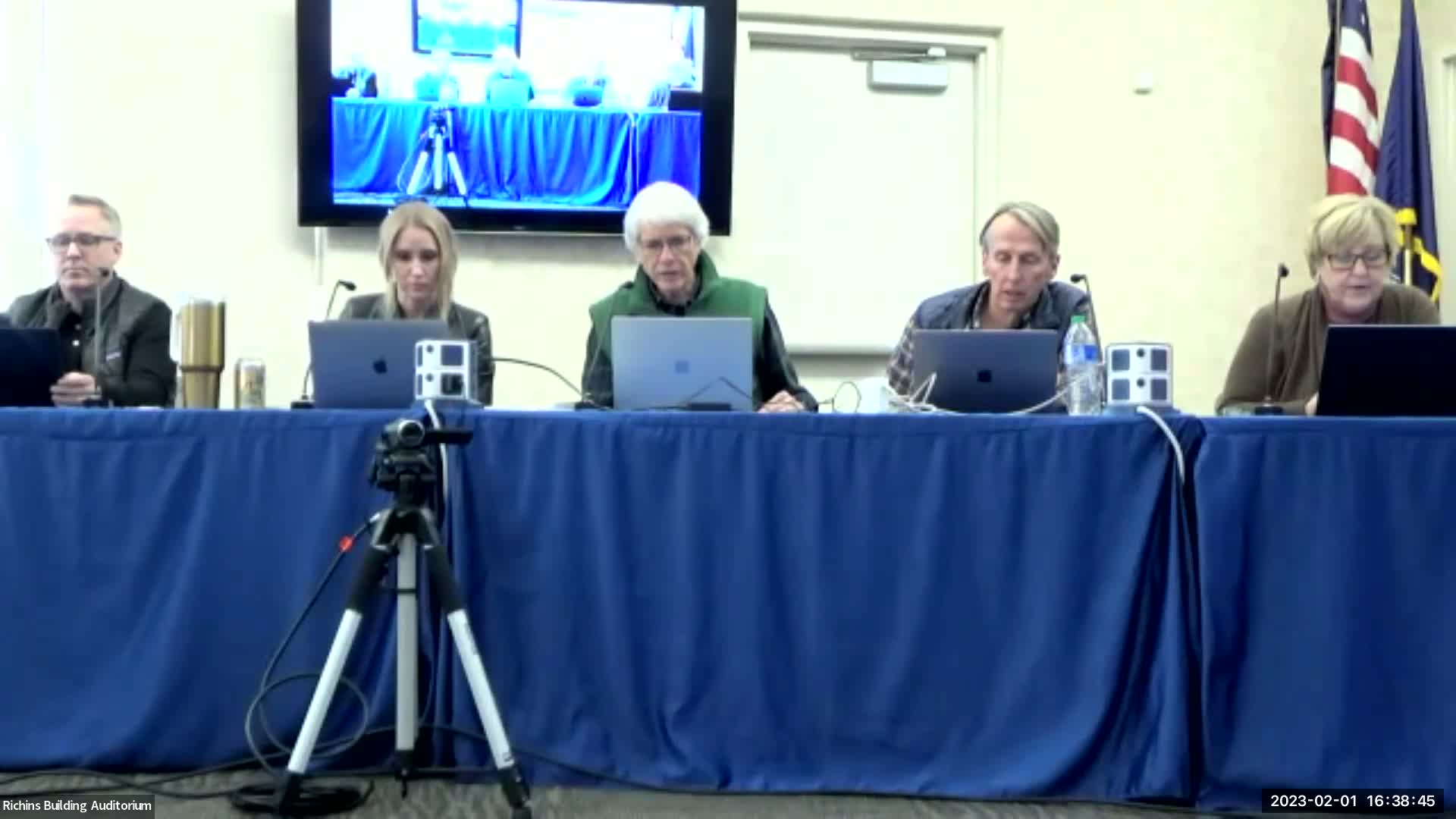
The Summit County Council on Feb. 1 denied an appeal of the Eastern Summit County Planning Commission’s conditional‑use permit for a proposed distillery, tasting room and guest lodge at 2617 State Road 32, effectively upholding the permit while directing county counsel to draft additional findings and conditions.
The appeal was brought by nearby residents, represented by attorney Dallin Peterson, who argued the project had been pitched as a small cidery and tasting room but, in their view, the site plans and building sizes indicated a restaurant or event center — a use they said is not allowed in the AG‑10 zone. Peterson said the planning commission’s record lacked specific findings of fact on several concerns, including potential flooding, traffic and the adequacy of the UDOT access permit, and urged the council to remand the decision to the planning commission or reject the permit.
Applicant counsel responded that the record — including written correspondence, site plans and staff review — supported approval and that many of the appellant’s claims were not raised below. The applicant’s attorney argued that the planning commission had applied the correct standards and cautioned that “public clamor is not an acceptable reason to not grant an allowed use in a zone with appropriate conditions.”
County staff and a planning commission representative told the council the application was reviewed by community development and engineering staff, that a UDOT access permit was included in the record (characterized as a level‑1 permit), and that the commission imposed conditions addressing hours, parking and noise. Staff read relevant code definitions and described the commission’s view that the tasting room and event uses were accessory to the permitted distillery/guest‑ranch uses.
After extended questions from council members about where the line is drawn between a tasting room and a restaurant, and whether required findings of fact were sufficiently specific, Chair (unnamed) moved to deny the appellants’ request to overturn the planning commission decision and to require the county attorney’s office to prepare final findings of fact, conclusions of law and conditions that explicitly clarify that on‑site food service will be operated as an accessory tasting room and not a full‑service restaurant. The motion passed on a voice vote.
The council’s action preserves the planning commission’s approval but directs staff to tighten the written findings and conditions (for example, by describing allowable food service and limiting conversion to full‑service restaurant operations) before a final order is issued. The decision means the applicants may proceed under the CUP subject to the revised findings and conditions; the council also noted that when specific impacts (flooding, traffic) are alleged, the planning commission needs factual evidence in the record sufficient to support a specific finding.
The county did not adopt any new engineering or traffic mitigation at the hearing; council members said they expect the clarified conditions to specify limits on events, on‑site parking requirements and the nature of allowed food service. The council indicated it would rely on the record and the requested supplemental findings rather than reopening the public‑hearing record.
The appeal was brought by nearby residents, represented by attorney Dallin Peterson, who argued the project had been pitched as a small cidery and tasting room but, in their view, the site plans and building sizes indicated a restaurant or event center — a use they said is not allowed in the AG‑10 zone. Peterson said the planning commission’s record lacked specific findings of fact on several concerns, including potential flooding, traffic and the adequacy of the UDOT access permit, and urged the council to remand the decision to the planning commission or reject the permit.
Applicant counsel responded that the record — including written correspondence, site plans and staff review — supported approval and that many of the appellant’s claims were not raised below. The applicant’s attorney argued that the planning commission had applied the correct standards and cautioned that “public clamor is not an acceptable reason to not grant an allowed use in a zone with appropriate conditions.”
County staff and a planning commission representative told the council the application was reviewed by community development and engineering staff, that a UDOT access permit was included in the record (characterized as a level‑1 permit), and that the commission imposed conditions addressing hours, parking and noise. Staff read relevant code definitions and described the commission’s view that the tasting room and event uses were accessory to the permitted distillery/guest‑ranch uses.
After extended questions from council members about where the line is drawn between a tasting room and a restaurant, and whether required findings of fact were sufficiently specific, Chair (unnamed) moved to deny the appellants’ request to overturn the planning commission decision and to require the county attorney’s office to prepare final findings of fact, conclusions of law and conditions that explicitly clarify that on‑site food service will be operated as an accessory tasting room and not a full‑service restaurant. The motion passed on a voice vote.
The council’s action preserves the planning commission’s approval but directs staff to tighten the written findings and conditions (for example, by describing allowable food service and limiting conversion to full‑service restaurant operations) before a final order is issued. The decision means the applicants may proceed under the CUP subject to the revised findings and conditions; the council also noted that when specific impacts (flooding, traffic) are alleged, the planning commission needs factual evidence in the record sufficient to support a specific finding.
The county did not adopt any new engineering or traffic mitigation at the hearing; council members said they expect the clarified conditions to specify limits on events, on‑site parking requirements and the nature of allowed food service. The council indicated it would rely on the record and the requested supplemental findings rather than reopening the public‑hearing record.
Don't Miss a Word: See the Full Meeting!
Go beyond summaries. Unlock every video, transcript, and key insight with a Founder Membership.
✓
Get instant access to full meeting videos
✓
Search and clip any phrase from complete transcripts
✓
Receive AI-powered summaries & custom alerts
✓
Enjoy lifetime, unrestricted access to government data
30-day money-back guarantee
