Border‑city cigarette tax bill prompts testimony from mayors and DFA; committee defers vote
March 31, 2021 | REVENUE & TAX - SENATE, Senate, Committees, Legislative, Arkansas
This article was created by AI summarizing key points discussed. AI makes mistakes, so for full details and context, please refer to the video of the full meeting. Please report any errors so we can fix them. Report an error »
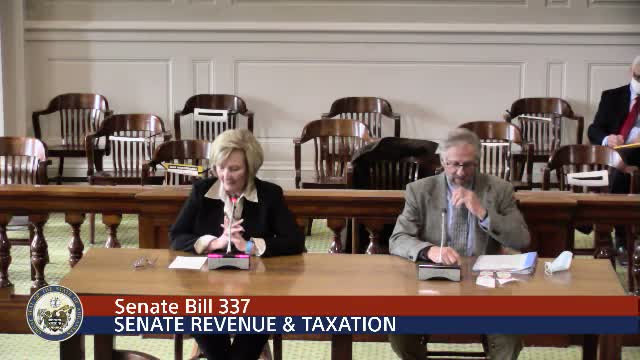
Senate Bill 337, introduced by Senator Bledsoe, seeks to restore the 'border zone' cigarette excise rates that were repealed in the 2019 legislation. The sponsor said the change would provide parity with nearby Missouri rates for small border towns and help stem lost retail traffic.
Gary Blackburn, mayor of Garfield, told the Senate Revenue and Tax Committee that his town and a village retailer lost cigarette sales after the 2019 change, with customers driving to Seligman, Missouri, to buy cheaper cigarettes. He supplied wholesaler printouts and municipal receipts that he said show a real decline in local sales and sales tax returns. Jack Critcher of the Arkansas Municipal League said a sample retail outlet experienced a 34% drop in tobacco sales after the change and framed restoration as a fairness issue for stores built around the previous exemption.
Paul Gehring of DFA presented a fiscal impact based on the last year the border rates were in effect (2018). DFA estimated approximately $2.0 million in cigarette tax loss for FY2022 (partial year) and about $3.1 million for a full FY2023 if the border zones were reinstated; most of that loss would hit general revenue. Gehring noted a drafting discrepancy compared with prior law (a 3¢ differential), said DFA would correct a typographical error in the fiscal exhibit, and judged the drafting difference unlikely to materially change the total revenue estimate.
Committee members asked how broadly the border exemption would apply and sought data on statewide cigarette purchase trends; several members said they were sympathetic to small towns but concerned about creating unequal tax treatment across the state. Because the committee has a rule not to vote on bills that have fiscal impacts at the time of the hearing, the chair said SB337 would be taken under consideration and not voted on that day.
What happens next: DFA has provided fiscal estimates; SB337 was not advanced at this hearing because of its revenue impact. Further committee action would require a formal vote when the committee is prepared to take up fiscal measures.
Gary Blackburn, mayor of Garfield, told the Senate Revenue and Tax Committee that his town and a village retailer lost cigarette sales after the 2019 change, with customers driving to Seligman, Missouri, to buy cheaper cigarettes. He supplied wholesaler printouts and municipal receipts that he said show a real decline in local sales and sales tax returns. Jack Critcher of the Arkansas Municipal League said a sample retail outlet experienced a 34% drop in tobacco sales after the change and framed restoration as a fairness issue for stores built around the previous exemption.
Paul Gehring of DFA presented a fiscal impact based on the last year the border rates were in effect (2018). DFA estimated approximately $2.0 million in cigarette tax loss for FY2022 (partial year) and about $3.1 million for a full FY2023 if the border zones were reinstated; most of that loss would hit general revenue. Gehring noted a drafting discrepancy compared with prior law (a 3¢ differential), said DFA would correct a typographical error in the fiscal exhibit, and judged the drafting difference unlikely to materially change the total revenue estimate.
Committee members asked how broadly the border exemption would apply and sought data on statewide cigarette purchase trends; several members said they were sympathetic to small towns but concerned about creating unequal tax treatment across the state. Because the committee has a rule not to vote on bills that have fiscal impacts at the time of the hearing, the chair said SB337 would be taken under consideration and not voted on that day.
What happens next: DFA has provided fiscal estimates; SB337 was not advanced at this hearing because of its revenue impact. Further committee action would require a formal vote when the committee is prepared to take up fiscal measures.
Don't Miss a Word: See the Full Meeting!
Go beyond summaries. Unlock every video, transcript, and key insight with a Founder Membership.
✓
Get instant access to full meeting videos
✓
Search and clip any phrase from complete transcripts
✓
Receive AI-powered summaries & custom alerts
✓
Enjoy lifetime, unrestricted access to government data
30-day money-back guarantee
