Senate committee advances sweeping SB 1 tax‑cut package after debate over law‑enforcement credit
December 07, 2021 | REVENUE & TAX - SENATE, Senate, Committees, Legislative, Arkansas
This article was created by AI summarizing key points discussed. AI makes mistakes, so for full details and context, please refer to the video of the full meeting. Please report any errors so we can fix them. Report an error »
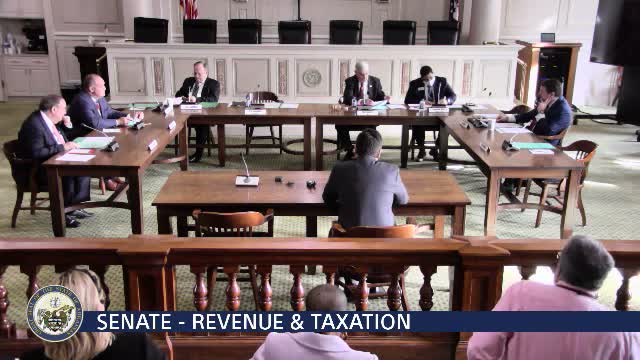
LITTLE ROCK — The Senate Revenue and Tax Committee voted to advance Senate Bill 1 on a party‑line style committee decision after a daylong debate over the scope and consequences of sweeping income‑tax reductions.
Sponsor remarks framed SB 1 as built on "fairness, simplification, and competitiveness," saying the proposal would combine the low and middle tax tables, reduce the top individual rate in stages and index the standard deduction to inflation. The sponsor said the immediate income‑tax cut would total "nearly a quarter of a billion dollars," rising to roughly a half‑billion when fully implemented, and would include "a nonrefundable $60 tax credit" phased out beginning at about $23,600.
Paul Goring of the Department of Finance and Administration told senators DFA is "very confident" the phased reductions can be absorbed through economic growth and budget management, but committee members pressed him and the sponsor about the probability that trigger provisions might be reached and about five‑year cost estimates.
A contentious portion of the meeting centered on a motion to add an amendment that would create a refundable $3,000 law‑enforcement tax credit. Proponent Senator Rapert argued the $3,000 refundable credit, estimated in testimony at about $25.2 million in the first year, would help recruit and retain rank‑and‑file officers. "These people are out here serving us every day, running into danger," the senator said while pressing for the amendment.
Opponents questioned the policy design and scope. One senator warned the amendment would effectively establish an earned‑income‑style refundable credit that could encourage local governments to avoid raises; another raised concerns that the amendment as written would include a broad set of law‑enforcement employees — from park wardens to some federal officers — possibly diluting benefits for municipal and county staff. Committee discussion also flagged that DFNA had advised federal full‑time law enforcement could not be excluded under the drafted language.
After debate, the committee held a roll call and the amendment motion failed, with the chair announcing the motion had not passed (committee tally reported in the hearing: 4 nay, 2 yea, 1 not voting). The committee then moved on and, after closing statements and a motion to pass, advanced SB 1 out of committee.
Public testimony highlighted the bill's expected downstream impacts. Ally Tomlinson of the Arkansas Alliance for Disability Advocacy said "this is actually disability policy," warning cuts to revenue risk reducing services for people on waiting lists for home‑and‑community‑based supports. Ashley Simmons, a mother and project coordinator at Community of Champions, said she was concerned that those earning under about $22,000 "would see no benefit at all." Rich Huddleston of Arkansas Advocates for Children and Families cited an Institute on Taxation and Economic Policy analysis estimating a higher fiscal cost and argued the plan disproportionately benefits the wealthiest Arkansans and out‑of‑state shareholders.
Sponsor and supporters defended the package as targeted relief that would simplify Arkansas' tax code, lower the top rate over several years and provide some targeted credits to working families. The bill also renames the state's long‑term reserve as a "catastrophic reserve" with a 20% floor and includes trigger language that would stop cuts if the reserve were tapped.
The committee advanced SB 1; the measure will proceed to the full Senate calendar for further consideration.
What comes next: SB 1 moves to the Senate calendar. Any final changes, fiscal estimates or amendments at that stage will further shape the bill's cost and scope.
Sponsor remarks framed SB 1 as built on "fairness, simplification, and competitiveness," saying the proposal would combine the low and middle tax tables, reduce the top individual rate in stages and index the standard deduction to inflation. The sponsor said the immediate income‑tax cut would total "nearly a quarter of a billion dollars," rising to roughly a half‑billion when fully implemented, and would include "a nonrefundable $60 tax credit" phased out beginning at about $23,600.
Paul Goring of the Department of Finance and Administration told senators DFA is "very confident" the phased reductions can be absorbed through economic growth and budget management, but committee members pressed him and the sponsor about the probability that trigger provisions might be reached and about five‑year cost estimates.
A contentious portion of the meeting centered on a motion to add an amendment that would create a refundable $3,000 law‑enforcement tax credit. Proponent Senator Rapert argued the $3,000 refundable credit, estimated in testimony at about $25.2 million in the first year, would help recruit and retain rank‑and‑file officers. "These people are out here serving us every day, running into danger," the senator said while pressing for the amendment.
Opponents questioned the policy design and scope. One senator warned the amendment would effectively establish an earned‑income‑style refundable credit that could encourage local governments to avoid raises; another raised concerns that the amendment as written would include a broad set of law‑enforcement employees — from park wardens to some federal officers — possibly diluting benefits for municipal and county staff. Committee discussion also flagged that DFNA had advised federal full‑time law enforcement could not be excluded under the drafted language.
After debate, the committee held a roll call and the amendment motion failed, with the chair announcing the motion had not passed (committee tally reported in the hearing: 4 nay, 2 yea, 1 not voting). The committee then moved on and, after closing statements and a motion to pass, advanced SB 1 out of committee.
Public testimony highlighted the bill's expected downstream impacts. Ally Tomlinson of the Arkansas Alliance for Disability Advocacy said "this is actually disability policy," warning cuts to revenue risk reducing services for people on waiting lists for home‑and‑community‑based supports. Ashley Simmons, a mother and project coordinator at Community of Champions, said she was concerned that those earning under about $22,000 "would see no benefit at all." Rich Huddleston of Arkansas Advocates for Children and Families cited an Institute on Taxation and Economic Policy analysis estimating a higher fiscal cost and argued the plan disproportionately benefits the wealthiest Arkansans and out‑of‑state shareholders.
Sponsor and supporters defended the package as targeted relief that would simplify Arkansas' tax code, lower the top rate over several years and provide some targeted credits to working families. The bill also renames the state's long‑term reserve as a "catastrophic reserve" with a 20% floor and includes trigger language that would stop cuts if the reserve were tapped.
The committee advanced SB 1; the measure will proceed to the full Senate calendar for further consideration.
What comes next: SB 1 moves to the Senate calendar. Any final changes, fiscal estimates or amendments at that stage will further shape the bill's cost and scope.
View the Full Meeting & All Its Details
This article offers just a summary. Unlock complete video, transcripts, and insights as a Founder Member.
✓
Watch full, unedited meeting videos
✓
Search every word spoken in unlimited transcripts
✓
AI summaries & real-time alerts (all government levels)
✓
Permanent access to expanding government content
30-day money-back guarantee
