Senate Revenue & Tax committee adopts rules; DFA outlines fiscal-impact process
January 18, 2023 | REVENUE & TAX - SENATE, Senate, Committees, Legislative, Arkansas
This article was created by AI summarizing key points discussed. AI makes mistakes, so for full details and context, please refer to the video of the full meeting. Please report any errors so we can fix them. Report an error »
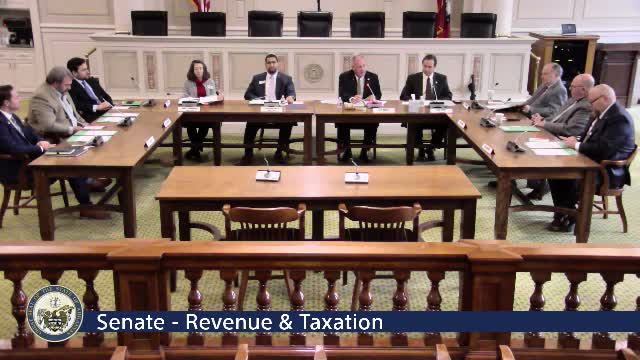
The Arkansas Senate Revenue and Tax Committee convened Wednesday, adopted committee rules by voice vote, and heard officials from the Department of Finance and Administration explain how fiscal-impact statements will be prepared for bills and amendments during the 2023 session.
Sen. Jimmy Hickey, chair of the committee, emphasized the new operating standard: "everything that we do has to have a revenue impact statement," and asked members to review the rules before the committee adopted them without objection. The chair also said the committee will generally meet Wednesdays and Fridays at 10 a.m. in the same room.
Department of Finance and Administration Secretary Larry Walter and revenue division officials introduced their teams to the committee. Charlie Collins, commissioner of revenue, introduced income-tax managers Autumn Hemphill, Judy Bowers and Scott Fryer and said the income-tax leadership "know this stuff very, very well." He also introduced sales-tax and miscellaneous-tax leadership, tax-credit staff and the department audit team.
Paul Gehring, assistant revenue commissioner and administrator for the Office of Revenue Legal Counsel, described the fiscal-impact statement process. "When a bill is filed, at the General Assembly, we are constantly reviewing every single bill or amendment that gets filed to see if a fiscal impact statement will be needed," Gehring said. He told the committee statements are assigned to an administrator and to revenue legal counsel or assessment coordination and that DFA works quickly to post fiscal impacts to the BLR website. Gehring said DFA personnel expect to be present in committee during the session to discuss those statements.
Collins and staff also described tax-credit oversight and audits. He noted that tax-credit tracking is maintained and audited annually by legislative audit; a committee member referenced a 10-year tracking document and mentioned a $684,000,000 figure in the context of AEDC credits. Collins introduced Amanda Land, a recent hire from the attorney general's office, and Rob Allen as additions to audit and fiscal-impact work.
Chair Hickey thanked DFA staff for prior pandemic-related work administering CARES and ARPA funds and closed the meeting. The committee adjourned and will reconvene per its schedule to consider bills accompanied by the required fiscal-impact statements.
Sen. Jimmy Hickey, chair of the committee, emphasized the new operating standard: "everything that we do has to have a revenue impact statement," and asked members to review the rules before the committee adopted them without objection. The chair also said the committee will generally meet Wednesdays and Fridays at 10 a.m. in the same room.
Department of Finance and Administration Secretary Larry Walter and revenue division officials introduced their teams to the committee. Charlie Collins, commissioner of revenue, introduced income-tax managers Autumn Hemphill, Judy Bowers and Scott Fryer and said the income-tax leadership "know this stuff very, very well." He also introduced sales-tax and miscellaneous-tax leadership, tax-credit staff and the department audit team.
Paul Gehring, assistant revenue commissioner and administrator for the Office of Revenue Legal Counsel, described the fiscal-impact statement process. "When a bill is filed, at the General Assembly, we are constantly reviewing every single bill or amendment that gets filed to see if a fiscal impact statement will be needed," Gehring said. He told the committee statements are assigned to an administrator and to revenue legal counsel or assessment coordination and that DFA works quickly to post fiscal impacts to the BLR website. Gehring said DFA personnel expect to be present in committee during the session to discuss those statements.
Collins and staff also described tax-credit oversight and audits. He noted that tax-credit tracking is maintained and audited annually by legislative audit; a committee member referenced a 10-year tracking document and mentioned a $684,000,000 figure in the context of AEDC credits. Collins introduced Amanda Land, a recent hire from the attorney general's office, and Rob Allen as additions to audit and fiscal-impact work.
Chair Hickey thanked DFA staff for prior pandemic-related work administering CARES and ARPA funds and closed the meeting. The committee adjourned and will reconvene per its schedule to consider bills accompanied by the required fiscal-impact statements.
View the Full Meeting & All Its Details
This article offers just a summary. Unlock complete video, transcripts, and insights as a Founder Member.
✓
Watch full, unedited meeting videos
✓
Search every word spoken in unlimited transcripts
✓
AI summaries & real-time alerts (all government levels)
✓
Permanent access to expanding government content
30-day money-back guarantee
