Committee approves Secretary of State plan to bring franchise-tax processing in-house and codify online convenience fee
February 22, 2023 | REVENUE & TAX - SENATE, Senate, Committees, Legislative, Arkansas
This article was created by AI summarizing key points discussed. AI makes mistakes, so for full details and context, please refer to the video of the full meeting. Please report any errors so we can fix them. Report an error »
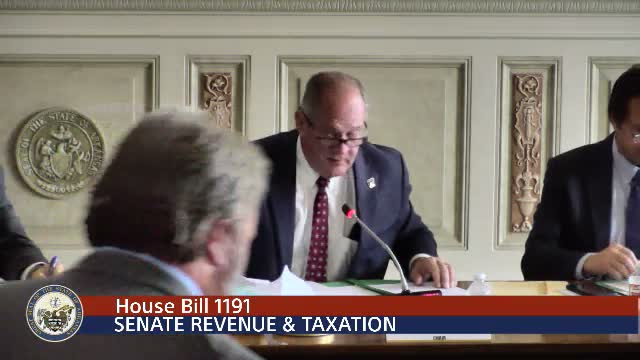
Senate Bill 207, introduced and explained by Senator Johnson and Sid Rosenbaum of the Secretary of State's office, passed the Senate Revenue & Tax Committee by voice vote. The bill would move franchise-tax processing currently handled by a third-party vendor into the Secretary of State's office and codify the convenience or processing fee that online filers pay.
Sid Rosenbaum, director of business and commercial services for the Secretary of State, explained the current arrangement: since 2009 an outside vendor has processed franchise tax filings and collected a convenience fee for online payments. SB207 would allow the Secretary of State to bring processing in-house and collect the fee directly to support a new, in-house IT system and ongoing maintenance.
Members asked whether batch filers (accountants or firms that file multiple entities at once) would be affected and whether the fee cap applies per entity or per batch. Rosenbaum said the fee is applied per entity; batch filers who use mailed coupons generally avoid the online convenience fee. Rosenbaum also said approximately 78% of filers filed online last year.
Senators raised fiscal and budget questions: whether the collected fees will simply be recorded as revenue in the Secretary of State's budget and whether the fees will be sufficient to cover the cost of building and maintaining the new system. Rosenbaum estimated that roughly half of the convenience fee would cover card/processor costs and the remainder would support IT maintenance and operations; the office plans to run an RFQ for a payment processor.
Members also discussed language changing references from "forfeiture" to "revoke" and reducing the time before a charter is treated as forfeited/revoked from seven years to five years, which Rosenbaum said would make more business names available sooner.
Senator Johnson moved and Senator Deese seconded passage. The committee approved SB207 by voice vote and recorded it as passed out of committee.
Next steps: SB207 advances in the legislative process; committee discussion focused on procurement, fee structure, and fiscal transparency for the secretary's office.
Sid Rosenbaum, director of business and commercial services for the Secretary of State, explained the current arrangement: since 2009 an outside vendor has processed franchise tax filings and collected a convenience fee for online payments. SB207 would allow the Secretary of State to bring processing in-house and collect the fee directly to support a new, in-house IT system and ongoing maintenance.
Members asked whether batch filers (accountants or firms that file multiple entities at once) would be affected and whether the fee cap applies per entity or per batch. Rosenbaum said the fee is applied per entity; batch filers who use mailed coupons generally avoid the online convenience fee. Rosenbaum also said approximately 78% of filers filed online last year.
Senators raised fiscal and budget questions: whether the collected fees will simply be recorded as revenue in the Secretary of State's budget and whether the fees will be sufficient to cover the cost of building and maintaining the new system. Rosenbaum estimated that roughly half of the convenience fee would cover card/processor costs and the remainder would support IT maintenance and operations; the office plans to run an RFQ for a payment processor.
Members also discussed language changing references from "forfeiture" to "revoke" and reducing the time before a charter is treated as forfeited/revoked from seven years to five years, which Rosenbaum said would make more business names available sooner.
Senator Johnson moved and Senator Deese seconded passage. The committee approved SB207 by voice vote and recorded it as passed out of committee.
Next steps: SB207 advances in the legislative process; committee discussion focused on procurement, fee structure, and fiscal transparency for the secretary's office.
Don't Miss a Word: See the Full Meeting!
Go beyond summaries. Unlock every video, transcript, and key insight with a Founder Membership.
✓
Get instant access to full meeting videos
✓
Search and clip any phrase from complete transcripts
✓
Receive AI-powered summaries & custom alerts
✓
Enjoy lifetime, unrestricted access to government data
30-day money-back guarantee
