State health officials report falling demand but adequate supply of COVID-19 monoclonal antibodies
November 01, 2021 | PUBLIC HEALTH, WELFARE AND LABOR COMMITTEE - SENATE, Senate, Committees, Legislative, Arkansas
This article was created by AI summarizing key points discussed. AI makes mistakes, so for full details and context, please refer to the video of the full meeting. Please report any errors so we can fix them. Report an error »
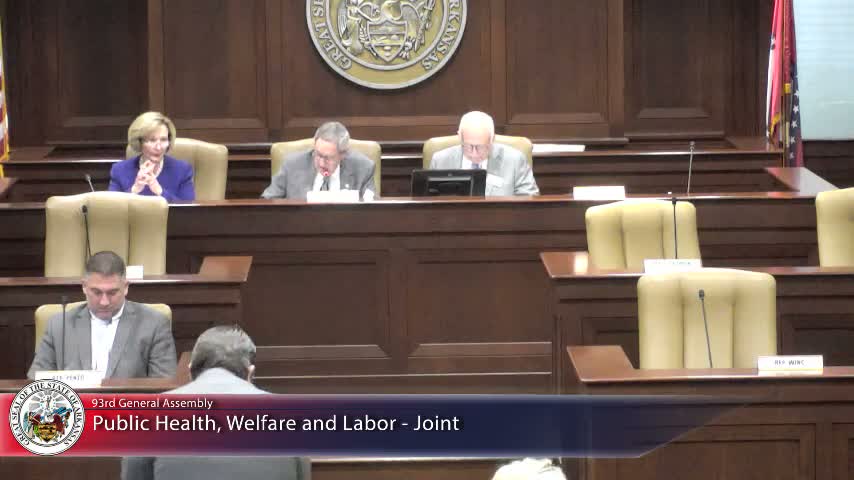
State public-health officials told the Senate Public Health, Welfare and Labor Committee that demand for COVID-19 monoclonal antibody treatments has fallen sharply since the summer but the state is managing allocations and has adequate supply.
Greg Brown, director of the Office of Preparedness and Emergency Response, said three monoclonal antibody products are being allocated to the state; two are infusion-only and one is for subcutaneous injection. He reported that utilization has “dropped about 62%” since the last briefing, from roughly 2,600 doses per week to about 990 doses, and that the state has “pushed out to pharmacies and hospitals and clinics almost 60,000 doses, so far of all 3.”
Dr. Naveen Patel, deputy state health officer, told the committee the state’s program has expanded access and is prioritizing outreach to long-term care facilities and correctional settings experiencing outbreaks. Patel described the difference between products: infusion requires about an hour of administration and observation, while subcutaneous Regeneron injections can be given in seconds and observed briefly, a logistical advantage that has led many providers to favor injections.
Officials said the treatments are intended for outpatient use and are not indicated for patients who are hospitalized for COVID-19 or who require oxygen. Dr. Patel noted the published clinical window is commonly five days but added the state is providing treatment up to 10 days after a positive test in practice.
On scope of practice, officials said pharmacists have been permitted to dispense monoclonal antibody products in pharmacies but whether they may prescribe an antiviral or other newly approved outpatient medications depends on the drug’s approval, federal distribution and the pharmacy board’s scope-of-practice rules.
The state described inventory-management practices: when allocations exceed immediate facility requests the remaining product is held at the health department to be redistributed in case of surges; officials cautioned that short expirations on some products require careful balancing of in-state holding versus sharing with other jurisdictions.
Next steps: officials will continue to monitor utilization, manage state inventory to guard against local shortages while minimizing waste from expiration, and provide follow-up data if available on effectiveness metrics requested by committee members.
Greg Brown, director of the Office of Preparedness and Emergency Response, said three monoclonal antibody products are being allocated to the state; two are infusion-only and one is for subcutaneous injection. He reported that utilization has “dropped about 62%” since the last briefing, from roughly 2,600 doses per week to about 990 doses, and that the state has “pushed out to pharmacies and hospitals and clinics almost 60,000 doses, so far of all 3.”
Dr. Naveen Patel, deputy state health officer, told the committee the state’s program has expanded access and is prioritizing outreach to long-term care facilities and correctional settings experiencing outbreaks. Patel described the difference between products: infusion requires about an hour of administration and observation, while subcutaneous Regeneron injections can be given in seconds and observed briefly, a logistical advantage that has led many providers to favor injections.
Officials said the treatments are intended for outpatient use and are not indicated for patients who are hospitalized for COVID-19 or who require oxygen. Dr. Patel noted the published clinical window is commonly five days but added the state is providing treatment up to 10 days after a positive test in practice.
On scope of practice, officials said pharmacists have been permitted to dispense monoclonal antibody products in pharmacies but whether they may prescribe an antiviral or other newly approved outpatient medications depends on the drug’s approval, federal distribution and the pharmacy board’s scope-of-practice rules.
The state described inventory-management practices: when allocations exceed immediate facility requests the remaining product is held at the health department to be redistributed in case of surges; officials cautioned that short expirations on some products require careful balancing of in-state holding versus sharing with other jurisdictions.
Next steps: officials will continue to monitor utilization, manage state inventory to guard against local shortages while minimizing waste from expiration, and provide follow-up data if available on effectiveness metrics requested by committee members.
View the Full Meeting & All Its Details
This article offers just a summary. Unlock complete video, transcripts, and insights as a Founder Member.
✓
Watch full, unedited meeting videos
✓
Search every word spoken in unlimited transcripts
✓
AI summaries & real-time alerts (all government levels)
✓
Permanent access to expanding government content
30-day money-back guarantee
