PACE Foundation urges Arkansas aid as national IVIG trial and incidence study for PANS/PANDAS begins
January 03, 2022 | PUBLIC HEALTH, WELFARE AND LABOR COMMITTEE - SENATE, Senate, Committees, Legislative, Arkansas
This article was created by AI summarizing key points discussed. AI makes mistakes, so for full details and context, please refer to the video of the full meeting. Please report any errors so we can fix them. Report an error »
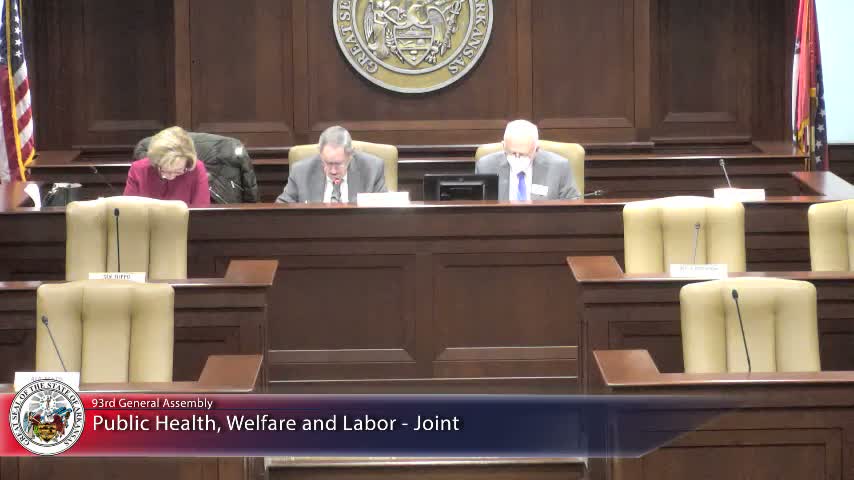
Paul Ryan, cofounder and president of the PACE Foundation, told the Senate Public Health, Welfare and Labor Committee that PACE and partner centers of excellence are running two national projects aimed at clarifying how many children have PANS/PANDAS and whether intravenous immunoglobulin (IVIG) reduces severe neuropsychiatric symptoms.
"This disease has very severe OCD," Ryan said in his presentation, describing the sudden onset of disabling symptoms that can follow common infections. He said the foundation is collaborating with UAMS and other academic centers and that a retrospective incidence study (2017–2019) and a large, FDA‑overseen IVIG trial are under way. Ryan told the committee the IVIG protocol runs to dozens of pages and that the trial — if it shows high efficacy — could change standards of care and insurance coverage for children who need IVIG.
Michael Keck of UAMS described Arkansas’s Center of Excellence and said the state is part of a network that includes centers at the University of Arizona, Stanford, Dartmouth, Harvard and the University of Wisconsin. Keck said the network follows shared intake forms and clinical standards and that Arkansas clinicians were trained at other centers before initiating services locally.
Ryan urged the committee to use state channels — the Department of Health, Medicaid communications, university and professional associations — to help identify and recruit children for the trial, noting that the pharma sponsor will pay travel expenses for families who participate. "We're looking for kids for this trial," Ryan said, asking lawmakers to use their community outreach to get clinicians to refer candidates.
Committee members asked practical questions about staging and the legislative role in outreach. Senator Kim Hammer said validating a rare‑disease designation could open significant funding streams and resources; Ryan noted that rare disease designation in the U.S. is defined as fewer than 200,000 people affected and that the designation can unlock research dollars and incentives.
The committee took no formal vote on the presentation but acknowledged the request and said legislators would pass information into their districts to help with recruitment.
The committee then moved to the next agenda item.
"This disease has very severe OCD," Ryan said in his presentation, describing the sudden onset of disabling symptoms that can follow common infections. He said the foundation is collaborating with UAMS and other academic centers and that a retrospective incidence study (2017–2019) and a large, FDA‑overseen IVIG trial are under way. Ryan told the committee the IVIG protocol runs to dozens of pages and that the trial — if it shows high efficacy — could change standards of care and insurance coverage for children who need IVIG.
Michael Keck of UAMS described Arkansas’s Center of Excellence and said the state is part of a network that includes centers at the University of Arizona, Stanford, Dartmouth, Harvard and the University of Wisconsin. Keck said the network follows shared intake forms and clinical standards and that Arkansas clinicians were trained at other centers before initiating services locally.
Ryan urged the committee to use state channels — the Department of Health, Medicaid communications, university and professional associations — to help identify and recruit children for the trial, noting that the pharma sponsor will pay travel expenses for families who participate. "We're looking for kids for this trial," Ryan said, asking lawmakers to use their community outreach to get clinicians to refer candidates.
Committee members asked practical questions about staging and the legislative role in outreach. Senator Kim Hammer said validating a rare‑disease designation could open significant funding streams and resources; Ryan noted that rare disease designation in the U.S. is defined as fewer than 200,000 people affected and that the designation can unlock research dollars and incentives.
The committee took no formal vote on the presentation but acknowledged the request and said legislators would pass information into their districts to help with recruitment.
The committee then moved to the next agenda item.
View the Full Meeting & All Its Details
This article offers just a summary. Unlock complete video, transcripts, and insights as a Founder Member.
✓
Watch full, unedited meeting videos
✓
Search every word spoken in unlimited transcripts
✓
AI summaries & real-time alerts (all government levels)
✓
Permanent access to expanding government content
30-day money-back guarantee
