Arkansas Minority Health Commission reports expanded outreach and mobile-unit screening metrics
November 01, 2021 | PUBLIC HEALTH, WELFARE AND LABOR COMMITTEE - SENATE, Senate, Committees, Legislative, Arkansas
This article was created by AI summarizing key points discussed. AI makes mistakes, so for full details and context, please refer to the video of the full meeting. Please report any errors so we can fix them. Report an error »
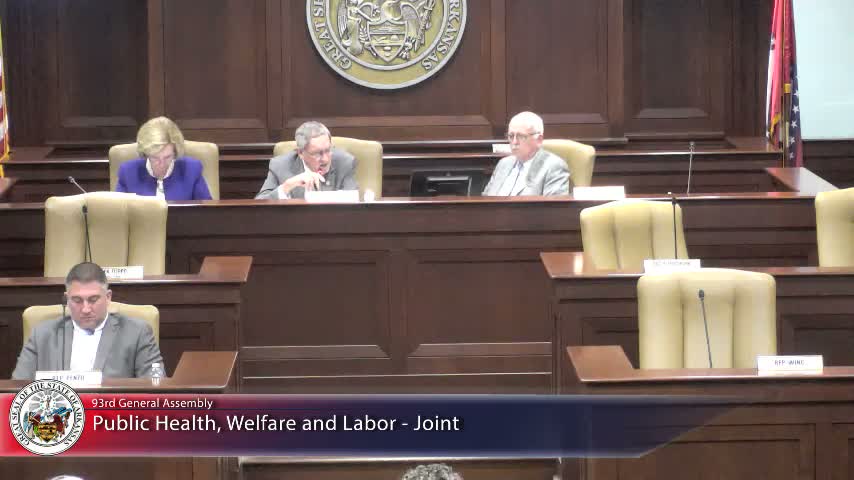
The Arkansas Minority Health Commission presented its fiscal-year report to the Senate Public Health, Welfare and Labor Committee, outlining outreach, screening, and communications efforts focused on reducing health disparities.
Interim director Estee Frazier said the AMHC’s mission is to ensure minority Arkansans have equitable access to preventive care and to reduce health disparities. Frazier reviewed the commission’s statutory history (Act 912 established AMHC) and FY21 funding lines, reporting general revenue of $219,101, a treasury account use of $25,949, and tobacco settlement operations funding of $1,092,343 to support salaries, travel, grants and outreach.
AMHC reported extensive outreach: the mobile health unit served 27 counties during the year; the commission documented 10,431 health screenings across sponsorships, partnerships and the mobile unit; and roughly 749 participants received referrals for additional services in a cited period. The commission’s COVID-19 web page had 9,514 page views during the year, and over-the-top streaming of awareness messages generated more than 1,100,000 impressions according to the presentation.
Frazier also summarized grant-supported initiatives including the Storch’s Nest maternal health partnership, CARES-funded community screening events, and training of community health workers. The commission outlined plans to continue mobile-unit deployments, hold a biennial minority health summit and launch programming on diabetes, maternal mortality and mental health.
When asked how abnormal screening results are handled, the AMHC said individuals with a primary care provider are referred back to them; those without are connected to low-income clinics and receive follow-up outreach at roughly 3, 9 and 12 months after initial screening.
Interim director Estee Frazier said the AMHC’s mission is to ensure minority Arkansans have equitable access to preventive care and to reduce health disparities. Frazier reviewed the commission’s statutory history (Act 912 established AMHC) and FY21 funding lines, reporting general revenue of $219,101, a treasury account use of $25,949, and tobacco settlement operations funding of $1,092,343 to support salaries, travel, grants and outreach.
AMHC reported extensive outreach: the mobile health unit served 27 counties during the year; the commission documented 10,431 health screenings across sponsorships, partnerships and the mobile unit; and roughly 749 participants received referrals for additional services in a cited period. The commission’s COVID-19 web page had 9,514 page views during the year, and over-the-top streaming of awareness messages generated more than 1,100,000 impressions according to the presentation.
Frazier also summarized grant-supported initiatives including the Storch’s Nest maternal health partnership, CARES-funded community screening events, and training of community health workers. The commission outlined plans to continue mobile-unit deployments, hold a biennial minority health summit and launch programming on diabetes, maternal mortality and mental health.
When asked how abnormal screening results are handled, the AMHC said individuals with a primary care provider are referred back to them; those without are connected to low-income clinics and receive follow-up outreach at roughly 3, 9 and 12 months after initial screening.
View the Full Meeting & All Its Details
This article offers just a summary. Unlock complete video, transcripts, and insights as a Founder Member.
✓
Watch full, unedited meeting videos
✓
Search every word spoken in unlimited transcripts
✓
AI summaries & real-time alerts (all government levels)
✓
Permanent access to expanding government content
30-day money-back guarantee
