Pharmacists tell Senate committee Medicaid preferred‑brand rules are straining small, rural pharmacies
July 05, 2022 | PUBLIC HEALTH, WELFARE AND LABOR COMMITTEE - SENATE, Senate, Committees, Legislative, Arkansas
This article was created by AI summarizing key points discussed. AI makes mistakes, so for full details and context, please refer to the video of the full meeting. Please report any errors so we can fix them. Report an error »
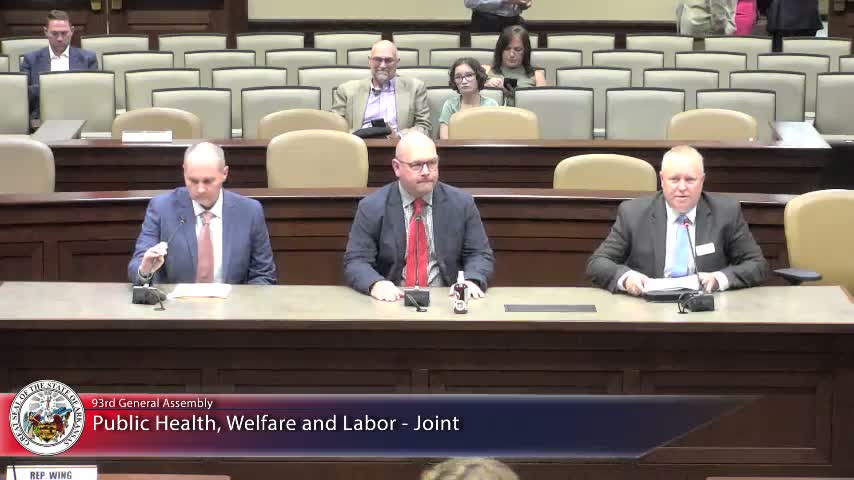
John Vincent, CEO of the Arkansas Pharmacists Association, told the Senate Public Health, Welfare and Labor Committee that independent pharmacies across the state are facing “the challenges of stocking some of these brand name drugs that are $1,500 or $1,600 to stock a bottle of a hundred,” and then may only dispense 30 tablets, leaving pharmacies with costly unused inventory.
Vincent and two independent pharmacists — Kyle Lomax of Northeast Arkansas and Brandon Cooper of Jonesboro — laid out examples they say highlight the problem. Lomax said a brand‑name prescription of Concerta recently cost “around $1,700 to purchase, and the generic equivalent cost about about $170,” creating a large disparity when Medicaid or other payers only reimburse the generic. Brandon Cooper explained that Arkansas Medicaid reimburses using NADAC (National Average Drug Acquisition Cost) plus a dispensing fee, and described difficulties when drugs are managed by private PBMs for some managed‑care plans, which can complicate access and approvals, especially after business hours.
The pharmacists said rebate arrangements make the state’s net cost less in some cases, but those rebates are proprietary and not visible to retail pharmacies. “We don't ever see any of that rebate and we're not able to purchase at those low prices,” Vincent said, summarizing why independent pharmacies carry the risk of purchasing expensive brand‑name bottles.
Department of Human Services officials responded at the committee. Mark White, of DHS, and Elizabeth Pittman, director of DHS’ Division of Medical Services, described the Drug Review Committee (a panel of state pharmacists and physicians) that recommends preferred drug list choices on clinical grounds; DHS then considers price and rebate arrangements when finalizing coverage. Pittman said the state claims federal rebates quarterly and reported that, for the anticonvulsant class discussed at the hearing, using the state’s negotiated approach “would actually look at, just for this class, about a million dollars in savings a year.”
Pittman also described prior‑authorization (PA) options for pharmacists who need to dispense a generic or alternative product. The PA system is run by DHS’s vendor Magellan and generally operates during business hours; Pittman said DHS can issue longer PAs — in some cases up to a year — and asked pharmacists to escalate problems to DHS so staff can help resolve vendor issues.
Committee members pressed for more transparency and oversight. Representative Peyton asked whether rebate arrangements resemble litigation now underway in other markets, such as insulin. Vincent said he was aware of federal and state investigations in private markets but not of Medicaid‑specific litigation, and asked DHS for a complete list of drugs and manufacturers so the committee could consider whether further review, including legal scrutiny, is warranted.
The committee also discussed practical fixes: Vincent and the pharmacists urged the committee to ask DHS to avoid requiring brand stocking for products that are multi‑hundred‑tablet bottles and not single‑use items (for example, prefer not to require brand for large bottles that lead to waste). Senator Wallace pressed whether neighboring states use similar policies; Vincent said state practices vary but that using rebates to justify brand preference is not uncommon nationally.
On the question of emergency contraception, Vincent said media reports had created confusion and that contraceptives remain legal to dispense under Arkansas law; he said the association is educating members about the 2019 state law that includes an exception for contraception.
Next steps: DHS said it will follow up with pharmacists to improve the PA/escalation process, consider longer PAs where appropriate, and provide additional documentation to the committee on rebate projections and specific drug/manufacturer lists upon request. The committee scheduled a follow‑up discussion in August and asked DHS to invite managed‑care plan representatives to answer questions about PBM processes.
Vincent and two independent pharmacists — Kyle Lomax of Northeast Arkansas and Brandon Cooper of Jonesboro — laid out examples they say highlight the problem. Lomax said a brand‑name prescription of Concerta recently cost “around $1,700 to purchase, and the generic equivalent cost about about $170,” creating a large disparity when Medicaid or other payers only reimburse the generic. Brandon Cooper explained that Arkansas Medicaid reimburses using NADAC (National Average Drug Acquisition Cost) plus a dispensing fee, and described difficulties when drugs are managed by private PBMs for some managed‑care plans, which can complicate access and approvals, especially after business hours.
The pharmacists said rebate arrangements make the state’s net cost less in some cases, but those rebates are proprietary and not visible to retail pharmacies. “We don't ever see any of that rebate and we're not able to purchase at those low prices,” Vincent said, summarizing why independent pharmacies carry the risk of purchasing expensive brand‑name bottles.
Department of Human Services officials responded at the committee. Mark White, of DHS, and Elizabeth Pittman, director of DHS’ Division of Medical Services, described the Drug Review Committee (a panel of state pharmacists and physicians) that recommends preferred drug list choices on clinical grounds; DHS then considers price and rebate arrangements when finalizing coverage. Pittman said the state claims federal rebates quarterly and reported that, for the anticonvulsant class discussed at the hearing, using the state’s negotiated approach “would actually look at, just for this class, about a million dollars in savings a year.”
Pittman also described prior‑authorization (PA) options for pharmacists who need to dispense a generic or alternative product. The PA system is run by DHS’s vendor Magellan and generally operates during business hours; Pittman said DHS can issue longer PAs — in some cases up to a year — and asked pharmacists to escalate problems to DHS so staff can help resolve vendor issues.
Committee members pressed for more transparency and oversight. Representative Peyton asked whether rebate arrangements resemble litigation now underway in other markets, such as insulin. Vincent said he was aware of federal and state investigations in private markets but not of Medicaid‑specific litigation, and asked DHS for a complete list of drugs and manufacturers so the committee could consider whether further review, including legal scrutiny, is warranted.
The committee also discussed practical fixes: Vincent and the pharmacists urged the committee to ask DHS to avoid requiring brand stocking for products that are multi‑hundred‑tablet bottles and not single‑use items (for example, prefer not to require brand for large bottles that lead to waste). Senator Wallace pressed whether neighboring states use similar policies; Vincent said state practices vary but that using rebates to justify brand preference is not uncommon nationally.
On the question of emergency contraception, Vincent said media reports had created confusion and that contraceptives remain legal to dispense under Arkansas law; he said the association is educating members about the 2019 state law that includes an exception for contraception.
Next steps: DHS said it will follow up with pharmacists to improve the PA/escalation process, consider longer PAs where appropriate, and provide additional documentation to the committee on rebate projections and specific drug/manufacturer lists upon request. The committee scheduled a follow‑up discussion in August and asked DHS to invite managed‑care plan representatives to answer questions about PBM processes.
Don't Miss a Word: See the Full Meeting!
Go beyond summaries. Unlock every video, transcript, and key insight with a Founder Membership.
✓
Get instant access to full meeting videos
✓
Search and clip any phrase from complete transcripts
✓
Receive AI-powered summaries & custom alerts
✓
Enjoy lifetime, unrestricted access to government data
30-day money-back guarantee
