Arkansas health officials: BA.2 dominant in region, BA.2.12.1 rising; system not stressed
May 02, 2022 | PUBLIC HEALTH, WELFARE AND LABOR COMMITTEE - SENATE, Senate, Committees, Legislative, Arkansas
This article was created by AI summarizing key points discussed. AI makes mistakes, so for full details and context, please refer to the video of the full meeting. Please report any errors so we can fix them. Report an error »
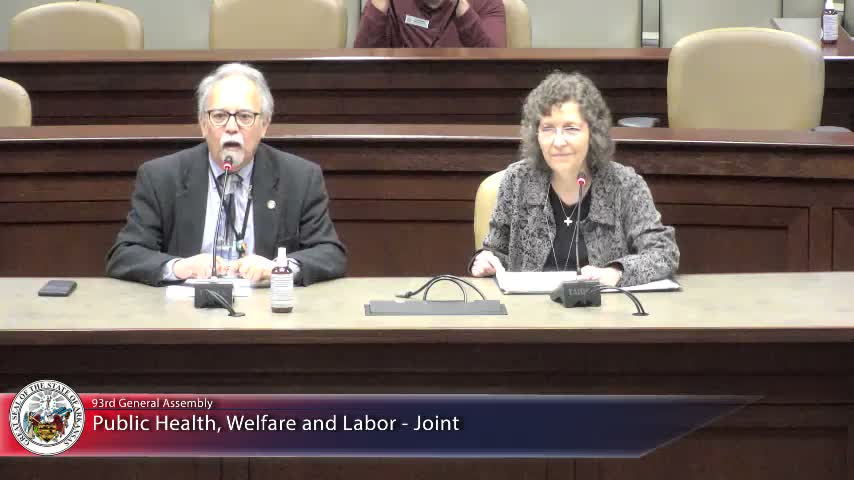
Jose Romero, secretary of health and director of the Arkansas Department of Health, told the Senate Public Health, Welfare and Labor Committee that BA.2 is the variant “currently occupying our attention,” making up 68% nationally and about 87% in Region 6, while BA.2.12.1 is increasing and accounts for roughly 9% in the region.
Romero said case counts are showing "small but consistent increases" but that those increases are not currently putting stress on Arkansas’ healthcare system: hospitalizations and ventilator use remain relatively low. "There is no stress on the healthcare system within our state," he said.
Dr. Jennifer Dillehay, chief medical officer at the Arkansas Department of Health, said direct climate links to variant emergence are not established, but she warned that ecological changes can increase opportunities for animal-to-human spillover and should be monitored.
On vaccines and treatment, Romero said the state has a sufficient vaccine supply and "a more than sufficient supply of antiviral agents for the treatment of COVID-19," but he added that the antiviral Paxlovid is the first-line drug of choice and must be given within five days of diagnosis to be effective. "We're not using [antivirals] as much as we should," he said, urging clinicians to prioritize rapid diagnosis and treatment.
Asked about a fourth booster, Romero said recommendations have evolved and that a fourth dose "is a consideration for individuals over 50 years of age who may have an immunizing-compromised condition" and should be discussed with a physician. He also said any mRNA vaccine (Moderna or Pfizer) is acceptable for boosting.
Romero reflected on the state's pandemic response, calling misinformation and disinformation the "biggest issue" the department faced and said the state will keep advocating for vaccinations and treatments as variants continue to circulate. He also noted ongoing concern about long COVID and potential long-term health burdens, saying published estimates elsewhere range "as high as 15–20%" for post‑infection sequelae and that Arkansas is still gathering state-specific prevalence data.
The committee additionally recognized Romero with a formal commendation and a commemorative coin after the briefing; the chair read a letter thanking him for his leadership and congratulating him on his new role at the U.S. Centers for Disease Control, National Center for Immunization and Respiratory Diseases.
Romero said case counts are showing "small but consistent increases" but that those increases are not currently putting stress on Arkansas’ healthcare system: hospitalizations and ventilator use remain relatively low. "There is no stress on the healthcare system within our state," he said.
Dr. Jennifer Dillehay, chief medical officer at the Arkansas Department of Health, said direct climate links to variant emergence are not established, but she warned that ecological changes can increase opportunities for animal-to-human spillover and should be monitored.
On vaccines and treatment, Romero said the state has a sufficient vaccine supply and "a more than sufficient supply of antiviral agents for the treatment of COVID-19," but he added that the antiviral Paxlovid is the first-line drug of choice and must be given within five days of diagnosis to be effective. "We're not using [antivirals] as much as we should," he said, urging clinicians to prioritize rapid diagnosis and treatment.
Asked about a fourth booster, Romero said recommendations have evolved and that a fourth dose "is a consideration for individuals over 50 years of age who may have an immunizing-compromised condition" and should be discussed with a physician. He also said any mRNA vaccine (Moderna or Pfizer) is acceptable for boosting.
Romero reflected on the state's pandemic response, calling misinformation and disinformation the "biggest issue" the department faced and said the state will keep advocating for vaccinations and treatments as variants continue to circulate. He also noted ongoing concern about long COVID and potential long-term health burdens, saying published estimates elsewhere range "as high as 15–20%" for post‑infection sequelae and that Arkansas is still gathering state-specific prevalence data.
The committee additionally recognized Romero with a formal commendation and a commemorative coin after the briefing; the chair read a letter thanking him for his leadership and congratulating him on his new role at the U.S. Centers for Disease Control, National Center for Immunization and Respiratory Diseases.
Don't Miss a Word: See the Full Meeting!
Go beyond summaries. Unlock every video, transcript, and key insight with a Founder Membership.
✓
Get instant access to full meeting videos
✓
Search and clip any phrase from complete transcripts
✓
Receive AI-powered summaries & custom alerts
✓
Enjoy lifetime, unrestricted access to government data
30-day money-back guarantee
