Managed‑care contractors tell Senate panel state preferred drug list constrains formulary choices but ensures consistency
September 06, 2022 | PUBLIC HEALTH, WELFARE AND LABOR COMMITTEE - SENATE, Senate, Committees, Legislative, Arkansas
This article was created by AI summarizing key points discussed. AI makes mistakes, so for full details and context, please refer to the video of the full meeting. Please report any errors so we can fix them. Report an error »
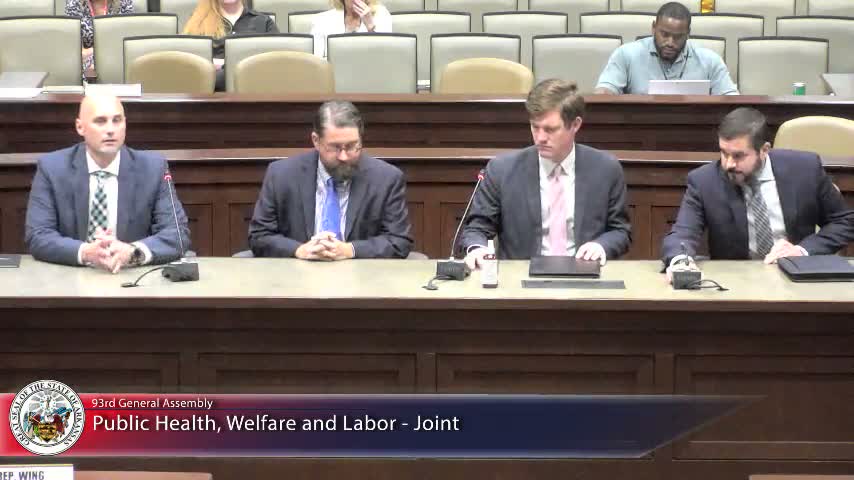
Four representatives of the state’s Medicaid managed‑care contractors told the Public Health, Welfare and Labor Committee that each contractually follows the Arkansas preferred drug list (PDL) and that exceptions exist for clinical necessity, allergies and temporary unavailability.
Jack Hopkins, director of government relations for Arkansas Total Care, Corey Cox for CareSource, Mitch Morris (CEO, Empower Healthcare Solutions) and Brad, government relations director for Summit Community Care, each said being bound to the state PDL creates consistency for members and allows rebate capture for the state. As one witness summarized it: "we are all kind of in the same boat as far as our agreement with the state and that we are all bound by the state's PDL." The witnesses also said prior authorization and administrative exception processes exist so prescribers or pharmacies can request non‑preferred drugs for medical necessity or when a preferred product is unavailable.
Senators pressed plans on potential tradeoffs. Senator Hammer asked whether removing the PDL requirement would increase competition and improve patient outcomes; plan representatives said plan‑level formulary control can increase flexibility but noted they lack full visibility into how state rebate flows support overall program financing. Senator Wallace raised concerns that smaller independent pharmacies may have to order larger quantities of an expensive brand to meet PDL requirements and could bear the cost if inventory expires; plan witnesses said they would investigate supply practices and potential workarounds.
Panelists said pharmaceutical costs are included in the monthly capitation payment actuaries set for each plan, and that prior‑authorization approvals are typically handled at the plan level without systemic delay; they offered to provide data about the frequency of one‑time overrides, administrative time burdens and any material impact on local pharmacies.
Committee members asked for follow‑up on two items: (1) whether capitation payments and rebate flows align with actual drug costs and what portion, if any, accrues to plans or the state; and (2) how often clinical exceptions or administrative overrides are requested and approved. Plan representatives said they would research both questions and report back to the committee.
The chair thanked the panel for their testimony and moved to the next agenda item.
Jack Hopkins, director of government relations for Arkansas Total Care, Corey Cox for CareSource, Mitch Morris (CEO, Empower Healthcare Solutions) and Brad, government relations director for Summit Community Care, each said being bound to the state PDL creates consistency for members and allows rebate capture for the state. As one witness summarized it: "we are all kind of in the same boat as far as our agreement with the state and that we are all bound by the state's PDL." The witnesses also said prior authorization and administrative exception processes exist so prescribers or pharmacies can request non‑preferred drugs for medical necessity or when a preferred product is unavailable.
Senators pressed plans on potential tradeoffs. Senator Hammer asked whether removing the PDL requirement would increase competition and improve patient outcomes; plan representatives said plan‑level formulary control can increase flexibility but noted they lack full visibility into how state rebate flows support overall program financing. Senator Wallace raised concerns that smaller independent pharmacies may have to order larger quantities of an expensive brand to meet PDL requirements and could bear the cost if inventory expires; plan witnesses said they would investigate supply practices and potential workarounds.
Panelists said pharmaceutical costs are included in the monthly capitation payment actuaries set for each plan, and that prior‑authorization approvals are typically handled at the plan level without systemic delay; they offered to provide data about the frequency of one‑time overrides, administrative time burdens and any material impact on local pharmacies.
Committee members asked for follow‑up on two items: (1) whether capitation payments and rebate flows align with actual drug costs and what portion, if any, accrues to plans or the state; and (2) how often clinical exceptions or administrative overrides are requested and approved. Plan representatives said they would research both questions and report back to the committee.
The chair thanked the panel for their testimony and moved to the next agenda item.
Don't Miss a Word: See the Full Meeting!
Go beyond summaries. Unlock every video, transcript, and key insight with a Founder Membership.
✓
Get instant access to full meeting videos
✓
Search and clip any phrase from complete transcripts
✓
Receive AI-powered summaries & custom alerts
✓
Enjoy lifetime, unrestricted access to government data
30-day money-back guarantee
