Tobacco Settlement report: UAMS Centers on Aging highlights program wins, telehealth expansion and funding leverage
September 06, 2022 | PUBLIC HEALTH, WELFARE AND LABOR COMMITTEE - SENATE, Senate, Committees, Legislative, Arkansas
This article was created by AI summarizing key points discussed. AI makes mistakes, so for full details and context, please refer to the video of the full meeting. Please report any errors so we can fix them. Report an error »
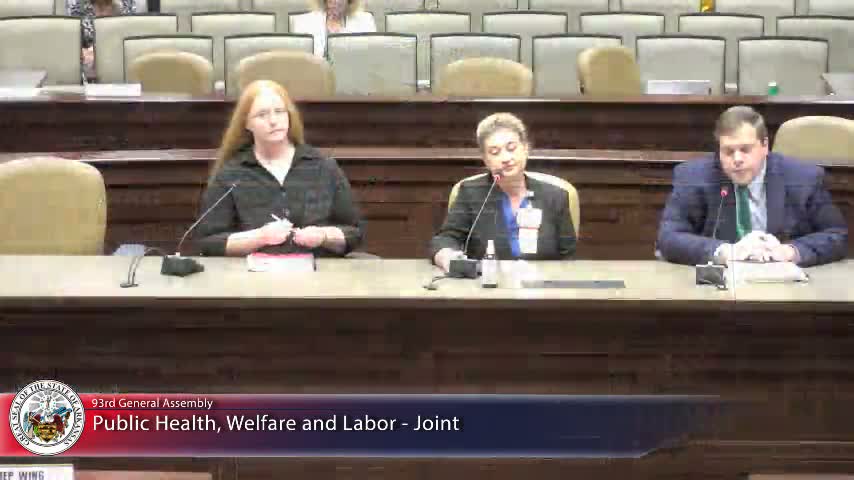
Matt Gilmore of the Department of Health presented the Arkansas Tobacco Settlement Commission’s biannual evaluation for fiscal years 2020–21, telling the committee that COVID interrupted in‑person education and screenings but boosted telemedicine and fund‑leveraging activity. Gilmore said some program metrics (community interactions, screenings) declined during the pandemic period while Medicaid‑served contacts and leveraged grant and private funds increased.
Dr. Overton McCoy, director of the UAMS Centers on Aging, described seven centers that cover all Arkansas counties and focus on clinician training and evidence‑based programs for older adults. She said initiatives such as Tai Chi, Drums Alive and Walk With Ease have produced measurable outcomes: reductions in participant pain and improvements in fall risk metrics. McCoy noted the centers helped move Arkansas from 50th toward the mid‑30s nationally on senior hunger and fall‑risk indicators since 2016 and said the centers recently received roughly $500,000 from the Administration for Community Living to support technology and homebound outreach.
Committee members questioned how programs reach rural counties and how student research participation is tracked. Gilmore said leveraged funds totaled roughly $239 million in outside funds for 2020–21 (as reported in the commission infographic) and confirmed the Arkansas Minority Health Initiative received about $3.5 million combined for FY20–21. He offered to provide county‑level reports, breakdowns of carryforward balances and administrative‑cost detail on request.
Several senators asked about program evaluation and the process for retiring underperforming programs; Gilmore said third‑party evaluation (UCA) and statutory indicators guide decisions and that the commission had not shut down programs, though it had redirected some funds in past years. Committee members also discussed senior food insecurity, SNAP referrals and partnerships with Meals on Wheels and rural hospitals; Dr. McCoy described training, porch deliveries and SNAP referral efforts designed to increase nutrition security for older adults.
The chair thanked presenters and scheduled the committee’s October meeting at UAMS for further engagement.
Dr. Overton McCoy, director of the UAMS Centers on Aging, described seven centers that cover all Arkansas counties and focus on clinician training and evidence‑based programs for older adults. She said initiatives such as Tai Chi, Drums Alive and Walk With Ease have produced measurable outcomes: reductions in participant pain and improvements in fall risk metrics. McCoy noted the centers helped move Arkansas from 50th toward the mid‑30s nationally on senior hunger and fall‑risk indicators since 2016 and said the centers recently received roughly $500,000 from the Administration for Community Living to support technology and homebound outreach.
Committee members questioned how programs reach rural counties and how student research participation is tracked. Gilmore said leveraged funds totaled roughly $239 million in outside funds for 2020–21 (as reported in the commission infographic) and confirmed the Arkansas Minority Health Initiative received about $3.5 million combined for FY20–21. He offered to provide county‑level reports, breakdowns of carryforward balances and administrative‑cost detail on request.
Several senators asked about program evaluation and the process for retiring underperforming programs; Gilmore said third‑party evaluation (UCA) and statutory indicators guide decisions and that the commission had not shut down programs, though it had redirected some funds in past years. Committee members also discussed senior food insecurity, SNAP referrals and partnerships with Meals on Wheels and rural hospitals; Dr. McCoy described training, porch deliveries and SNAP referral efforts designed to increase nutrition security for older adults.
The chair thanked presenters and scheduled the committee’s October meeting at UAMS for further engagement.
Don't Miss a Word: See the Full Meeting!
Go beyond summaries. Unlock every video, transcript, and key insight with a Founder Membership.
✓
Get instant access to full meeting videos
✓
Search and clip any phrase from complete transcripts
✓
Receive AI-powered summaries & custom alerts
✓
Enjoy lifetime, unrestricted access to government data
30-day money-back guarantee
