Committee rejects bill tying paid maternity leave to employer-funded abortion travel benefits
February 22, 2023 | PUBLIC HEALTH, WELFARE AND LABOR COMMITTEE - SENATE, Senate, Committees, Legislative, Arkansas
This article was created by AI summarizing key points discussed. AI makes mistakes, so for full details and context, please refer to the video of the full meeting. Please report any errors so we can fix them. Report an error »
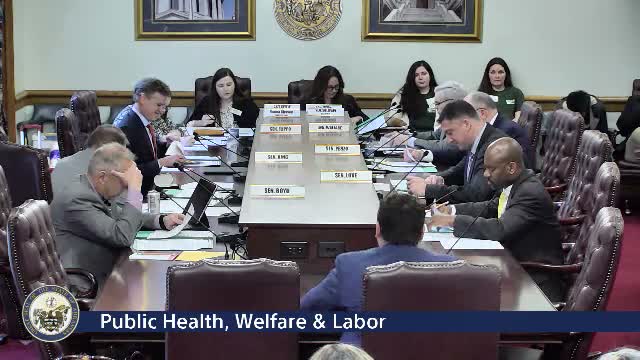
A Senate Public Health, Welfare and Labor Committee on [date not specified] voted to not advance House Bill 1006, a proposal that would have required certain employers that fund abortion-related travel to provide 12 weeks of paid maternity leave to eligible employees.
Representative (presenting in committee) told senators the bill was designed to achieve parity: several large employers have publicly funded travel or services to enable employees to obtain abortion care across state lines, and HB 1006 would require those employers to offer an equivalent benefit — 12 weeks of paid maternity leave — to employees who give birth. The sponsor said the 12-week standard reflects the national average and that the requirement would apply only to employers with more than 50 employees, consistent with the Family and Medical Leave Act threshold.
During questions, senators pressed the sponsor on implementation and scope. Senator Sullivan asked how many states have similar laws; the sponsor said Arkansas would be the first state to tie maternity leave specifically to employer-funded abortion travel, while noting 11 other states have broader paid family/maternity leave programs. Senator King and others asked whether the proposal would effectively 'target' employers for their benefit choices and whether it might strain small businesses. The sponsor said the bill was not intended to burden employers who do not offer abortion-related travel benefits.
No members of the public signed up to testify for or against the bill in committee. After sponsor closing remarks, a motion to report the bill do pass was made and seconded. The committee conducted a voice vote; the chair later announced that the bill failed to pass out of committee.
Because the bill did not advance, there is no committee-level implementation plan or fiscal estimate recorded in the transcript. Department or agency fiscal testimony was not offered during the hearing recorded in the transcript.
What happens next: The committee recorded the bill as failed in this hearing. The transcript does not record a roll call or a detailed tally of votes by name.
Representative (presenting in committee) told senators the bill was designed to achieve parity: several large employers have publicly funded travel or services to enable employees to obtain abortion care across state lines, and HB 1006 would require those employers to offer an equivalent benefit — 12 weeks of paid maternity leave — to employees who give birth. The sponsor said the 12-week standard reflects the national average and that the requirement would apply only to employers with more than 50 employees, consistent with the Family and Medical Leave Act threshold.
During questions, senators pressed the sponsor on implementation and scope. Senator Sullivan asked how many states have similar laws; the sponsor said Arkansas would be the first state to tie maternity leave specifically to employer-funded abortion travel, while noting 11 other states have broader paid family/maternity leave programs. Senator King and others asked whether the proposal would effectively 'target' employers for their benefit choices and whether it might strain small businesses. The sponsor said the bill was not intended to burden employers who do not offer abortion-related travel benefits.
No members of the public signed up to testify for or against the bill in committee. After sponsor closing remarks, a motion to report the bill do pass was made and seconded. The committee conducted a voice vote; the chair later announced that the bill failed to pass out of committee.
Because the bill did not advance, there is no committee-level implementation plan or fiscal estimate recorded in the transcript. Department or agency fiscal testimony was not offered during the hearing recorded in the transcript.
What happens next: The committee recorded the bill as failed in this hearing. The transcript does not record a roll call or a detailed tally of votes by name.
Don't Miss a Word: See the Full Meeting!
Go beyond summaries. Unlock every video, transcript, and key insight with a Founder Membership.
✓
Get instant access to full meeting videos
✓
Search and clip any phrase from complete transcripts
✓
Receive AI-powered summaries & custom alerts
✓
Enjoy lifetime, unrestricted access to government data
30-day money-back guarantee
