Committee rejects, reopens and ultimately approves licensure for behavior analysts after amendment
March 31, 2023 | PUBLIC HEALTH, WELFARE AND LABOR COMMITTEE - SENATE, Senate, Committees, Legislative, Arkansas
This article was created by AI summarizing key points discussed. AI makes mistakes, so for full details and context, please refer to the video of the full meeting. Please report any errors so we can fix them. Report an error »
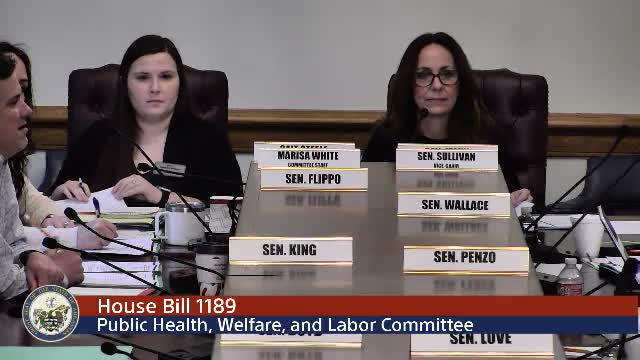
House Bill 1189 — a bill to create state licensure for behavior analysts — produced a lengthy, sometimes contentious exchange before the Public Health Committee. The measure drew detailed testimony from practitioners, professional associations and state agencies, and the committee ultimately passed the bill as amended after a reconsideration.
The debate: Sponsors said licensure would bring in‑state accountability for families and patients who currently must look out‑of‑state for complaint resolution or verification of credentials. Representative Kavanaugh, one of the sponsors, said the measure is intended to close gaps in oversight and create a state‑level licensing process for a field that has expanded in Arkansas.
Opponents, many of them board‑certified behavior analysts and line professionals, urged caution about placing behavior‑analyst licensure under the State Psychology Board. Dr. Sheba Barnes, a doctoral‑level BCBA, testified: "It would be better to have no licensure at all than to have license that falls under the psych board," citing theoretical and practical differences between applied behavior analysis and psychology and concerns about adequate representation on that board.
Proponents and supporters argued the change would bring a local licensing and complaint process and add representation on the psychology board for behavior analysts. Dr. Rocky Haines, a doctoral BCBA representing the Arkansas Association of Behavior Analysis, said state licensure would give families a clear in‑state path for complaints and oversight: "I would encourage a good vote to protect our citizens."
Turning point and amendment: After the bill initially failed to secure a second for passage, sponsors proposed and adopted an amendment clarifying board representation, including two positions for people with behavior‑analysis backgrounds (initially tied to specific credentials and with transition language). Several witnesses who had earlier opposed the bill said the amendment addressed their primary concerns; Dr. Sheba Barnes told the committee she was no longer opposed given the two‑seat representation and an initial transition period.
Vote and effect: Following reconsideration, the committee passed HB1189 as amended by voice vote. The amendment and committee discussion make clear that the licensure will include specific provisions for representation and transitional qualifications; the committee record indicates sponsors and stakeholders will continue to refine the implementing rules.
What to watch: The bill’s implementing rules and the psychology board’s appointment process will determine how much practical representation behavior analysts have on rulemaking panels and complaint investigations. Several witnesses asked the Department of Health and other agencies to publish clear complaint contacts and guidance for families in the interim.
The debate: Sponsors said licensure would bring in‑state accountability for families and patients who currently must look out‑of‑state for complaint resolution or verification of credentials. Representative Kavanaugh, one of the sponsors, said the measure is intended to close gaps in oversight and create a state‑level licensing process for a field that has expanded in Arkansas.
Opponents, many of them board‑certified behavior analysts and line professionals, urged caution about placing behavior‑analyst licensure under the State Psychology Board. Dr. Sheba Barnes, a doctoral‑level BCBA, testified: "It would be better to have no licensure at all than to have license that falls under the psych board," citing theoretical and practical differences between applied behavior analysis and psychology and concerns about adequate representation on that board.
Proponents and supporters argued the change would bring a local licensing and complaint process and add representation on the psychology board for behavior analysts. Dr. Rocky Haines, a doctoral BCBA representing the Arkansas Association of Behavior Analysis, said state licensure would give families a clear in‑state path for complaints and oversight: "I would encourage a good vote to protect our citizens."
Turning point and amendment: After the bill initially failed to secure a second for passage, sponsors proposed and adopted an amendment clarifying board representation, including two positions for people with behavior‑analysis backgrounds (initially tied to specific credentials and with transition language). Several witnesses who had earlier opposed the bill said the amendment addressed their primary concerns; Dr. Sheba Barnes told the committee she was no longer opposed given the two‑seat representation and an initial transition period.
Vote and effect: Following reconsideration, the committee passed HB1189 as amended by voice vote. The amendment and committee discussion make clear that the licensure will include specific provisions for representation and transitional qualifications; the committee record indicates sponsors and stakeholders will continue to refine the implementing rules.
What to watch: The bill’s implementing rules and the psychology board’s appointment process will determine how much practical representation behavior analysts have on rulemaking panels and complaint investigations. Several witnesses asked the Department of Health and other agencies to publish clear complaint contacts and guidance for families in the interim.
View the Full Meeting & All Its Details
This article offers just a summary. Unlock complete video, transcripts, and insights as a Founder Member.
✓
Watch full, unedited meeting videos
✓
Search every word spoken in unlimited transcripts
✓
AI summaries & real-time alerts (all government levels)
✓
Permanent access to expanding government content
30-day money-back guarantee
