PACE Foundation, Arkansas clinicians outline PANS/PANDAS clinic model and international IVIG trial
October 24, 2023 | PUBLIC HEALTH, WELFARE AND LABOR COMMITTEE - SENATE, Senate, Committees, Legislative, Arkansas
This article was created by AI summarizing key points discussed. AI makes mistakes, so for full details and context, please refer to the video of the full meeting. Please report any errors so we can fix them. Report an error »
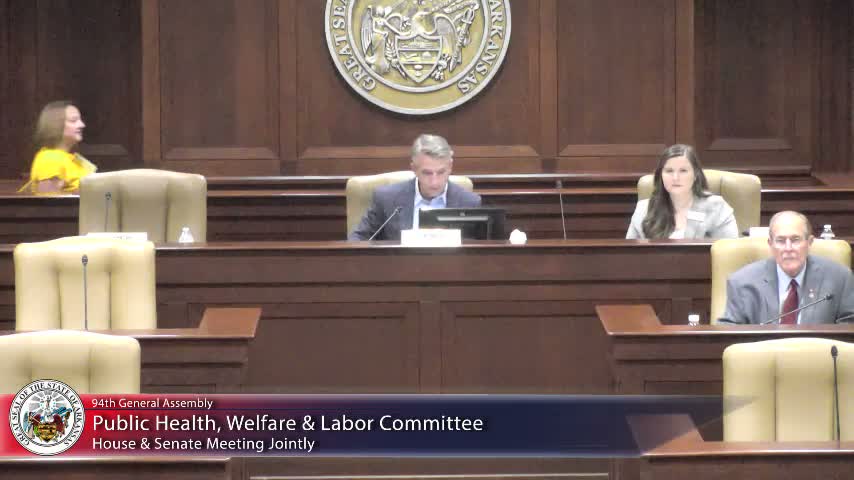
Paul Ryan, president of the PACE Foundation, told the Senate Public Health, Welfare and Labor Committee that Arkansas’s PANS/PANDAS center is part of an expanding network of multidisciplinary clinics working to standardize diagnosis and care.
"IVIG is a world class game changer," Ryan said, describing an international randomized trial testing intravenous immunoglobulin (IVIG) that he said is now enrolling across U.S. and European centers and is roughly one‑third enrolled. Ryan said the trial, if positive and accepted by regulators, could remove the need for state‑by‑state legislative fixes and improve families’ access to the therapy.
The presenters told lawmakers that PANS/PANDAS are typically acquired after an infection rather than congenital. "It's not something the kids are born with," said Dr. Virupiyan, a pediatric neurologist at Arkansas Children’s and UAMS. Clinicians said infections such as strep can trigger an abnormal immune response in susceptible children; as a result, early recognition and treatment by primary‑care clinicians can prevent severe flares that sometimes require IVIG.
Speakers gave several concrete figures to the committee: they said IVIG infusions can cost roughly $10,000–$15,000 per treatment and that historically about 5–10 percent of severe patients receive IVIG in established centers. Ryan said the U.S. trial includes a dozen university sites worldwide and is designed to reach FDA‑grade evidence; he also said patients from the committee’s state have already been enrolled in the trial.
Clinicians and PACE officials emphasized two non‑medical elements they said should change: more education for primary‑care providers and consistent clinic protocols so families and physicians follow the same diagnostic and early‑treatment pathway. The presenters described giving primary‑care physicians treatment protocols, brochures and direct case consultation so children can be managed locally and referred to the center when needed.
Lawmakers asked about time windows for effective treatment and testing. Presenters said earlier treatment generally improves outcomes but acknowledged that onset patterns vary; a cited Stanford case series used a narrow 48‑to‑72 hour research definition, but clinicians told the committee many real‑world cases present more gradually.
The session closed with discussion of policy gaps for late adolescents who age out of pediatric coverage. Ryan and legislators said they are drafting legislation so adults who benefit from ongoing IVIG can continue to access treatment.
The committee took no formal vote on the presentation itself; presenters said the center will shift oversight and continued coordination with public health as part of its transition from the original advisory commission.
"IVIG is a world class game changer," Ryan said, describing an international randomized trial testing intravenous immunoglobulin (IVIG) that he said is now enrolling across U.S. and European centers and is roughly one‑third enrolled. Ryan said the trial, if positive and accepted by regulators, could remove the need for state‑by‑state legislative fixes and improve families’ access to the therapy.
The presenters told lawmakers that PANS/PANDAS are typically acquired after an infection rather than congenital. "It's not something the kids are born with," said Dr. Virupiyan, a pediatric neurologist at Arkansas Children’s and UAMS. Clinicians said infections such as strep can trigger an abnormal immune response in susceptible children; as a result, early recognition and treatment by primary‑care clinicians can prevent severe flares that sometimes require IVIG.
Speakers gave several concrete figures to the committee: they said IVIG infusions can cost roughly $10,000–$15,000 per treatment and that historically about 5–10 percent of severe patients receive IVIG in established centers. Ryan said the U.S. trial includes a dozen university sites worldwide and is designed to reach FDA‑grade evidence; he also said patients from the committee’s state have already been enrolled in the trial.
Clinicians and PACE officials emphasized two non‑medical elements they said should change: more education for primary‑care providers and consistent clinic protocols so families and physicians follow the same diagnostic and early‑treatment pathway. The presenters described giving primary‑care physicians treatment protocols, brochures and direct case consultation so children can be managed locally and referred to the center when needed.
Lawmakers asked about time windows for effective treatment and testing. Presenters said earlier treatment generally improves outcomes but acknowledged that onset patterns vary; a cited Stanford case series used a narrow 48‑to‑72 hour research definition, but clinicians told the committee many real‑world cases present more gradually.
The session closed with discussion of policy gaps for late adolescents who age out of pediatric coverage. Ryan and legislators said they are drafting legislation so adults who benefit from ongoing IVIG can continue to access treatment.
The committee took no formal vote on the presentation itself; presenters said the center will shift oversight and continued coordination with public health as part of its transition from the original advisory commission.
View the Full Meeting & All Its Details
This article offers just a summary. Unlock complete video, transcripts, and insights as a Founder Member.
✓
Watch full, unedited meeting videos
✓
Search every word spoken in unlimited transcripts
✓
AI summaries & real-time alerts (all government levels)
✓
Permanent access to expanding government content
30-day money-back guarantee
