Committee discussion: HB1829 would require processing of anonymous sexual-assault kits; crime lab supports change
April 06, 2023 | PUBLIC HEALTH, WELFARE AND LABOR COMMITTEE - SENATE, Senate, Committees, Legislative, Arkansas
This article was created by AI summarizing key points discussed. AI makes mistakes, so for full details and context, please refer to the video of the full meeting. Please report any errors so we can fix them. Report an error »
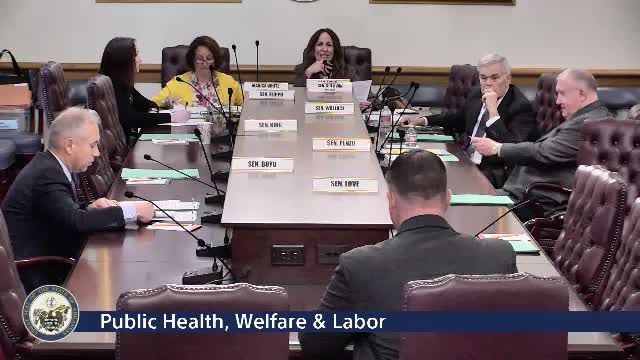
Senator Penzo described House Bill 18-29 as legislation setting a standard process to ensure anonymous sexual-assault kits are processed promptly.
Penzo said anonymous kits—those collected and stored at a hospital or law enforcement facility when a victim has not yet decided whether to press charges—are often not processed until a victim asks prosecutors to pursue a case. "What we want is for the rape kits to be processed," Penzo said, adding that the state crime lab has requested this change because there is not a clear standard for handling anonymous kits and the kits have already been paid for, so there would be no additional fiscal impact to processing them.
The chair noted a widely reported case in Memphis where an evidence kit went unprocessed for about eight months and suggested that earlier processing might have led to earlier identification of the suspect. The committee discussed that unprocessed kits can lead to lost investigative opportunities. As with HB 18-40, the committee did not take action on HB 18-29 at this meeting; the bill remains on the Senate calendar.
Committee members thanked staff for assistance and closed the discussion. The chair adjourned the Public Health, Welfare and Labor Committee meeting.
Penzo said anonymous kits—those collected and stored at a hospital or law enforcement facility when a victim has not yet decided whether to press charges—are often not processed until a victim asks prosecutors to pursue a case. "What we want is for the rape kits to be processed," Penzo said, adding that the state crime lab has requested this change because there is not a clear standard for handling anonymous kits and the kits have already been paid for, so there would be no additional fiscal impact to processing them.
The chair noted a widely reported case in Memphis where an evidence kit went unprocessed for about eight months and suggested that earlier processing might have led to earlier identification of the suspect. The committee discussed that unprocessed kits can lead to lost investigative opportunities. As with HB 18-40, the committee did not take action on HB 18-29 at this meeting; the bill remains on the Senate calendar.
Committee members thanked staff for assistance and closed the discussion. The chair adjourned the Public Health, Welfare and Labor Committee meeting.
View the Full Meeting & All Its Details
This article offers just a summary. Unlock complete video, transcripts, and insights as a Founder Member.
✓
Watch full, unedited meeting videos
✓
Search every word spoken in unlimited transcripts
✓
AI summaries & real-time alerts (all government levels)
✓
Permanent access to expanding government content
30-day money-back guarantee
