DEQ presents new used‑tire reimbursement rates; counties warn program not sustainably funded
February 29, 2024 | PUBLIC HEALTH, WELFARE AND LABOR COMMITTEE - SENATE, Senate, Committees, Legislative, Arkansas
This article was created by AI summarizing key points discussed. AI makes mistakes, so for full details and context, please refer to the video of the full meeting. Please report any errors so we can fix them. Report an error »
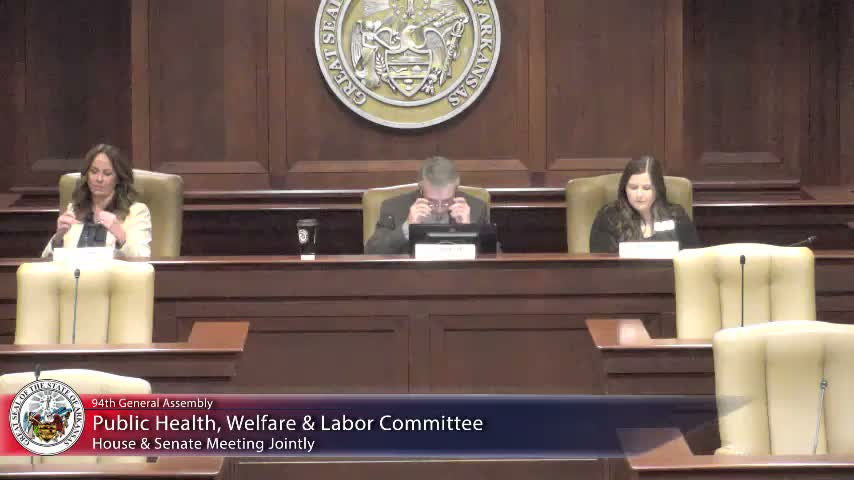
The Division of Environmental Quality asked the Senate Public Health, Welfare and Labor Committee to review business plans and proposed reimbursement rates for four newly consolidated used‑tire districts created under Act 713 of 2023. Caleb Osborne, DEQ’s chief administrator and director, said the agency and the Pollution Control and Ecology Commission have already approved the plans and outlined recommended rates: Northwest $2.82, Northeast $2.86, Southwest $2.80 and Southeast $2.90 per tire.
DEQ told the committee it expects current revenues—primarily from the statutory $3 rim‑removal fee—will allow full reimbursements through the end of the year, but officials warned that long‑term sustainability depends on continued rim‑removal fee revenue and how quickly districts process stored tires. “We feel like there is adequate funding in the program to cover, should be through the end of this year,” Osborne said.
Representative Gonzalez, who helped shepherd the 2023 legislation, told the committee the program was never fully funded. He said the state needs legislative attention to avoid recurring shortfalls: “It’s not gonna sustain itself long term the way it is,” Gonzalez said, urging lawmakers to study options, including privatization, that were discussed in 2023.
Local operators gave the committee a local‑government perspective. Jimmy Hart, chairman of UTP1 and Conway County judge, testified that the district’s public operation is close in cost to private bids—within about $0.25 per tire in some comparisons—and stressed the importance of local processing to keep haul costs down. Justin Sparrow, executive director of the West River Valley Solid Waste District, said private proposals showed similar per‑tire costs and that logistics and proximity drive overall expense.
County representatives said the program’s pro rata reimbursement mechanism complicates operations because it can create short‑term cash‑flow pressures for local districts. Hart said his district borrowed $3.5 million to sustain operations and is several months away from paying that note off; he called for clear, reliable revenue streams and careful budgeting.
The committee did not take a formal vote on legislation at the hearing. DEQ agreed to continue discussions and follow up with more detailed long‑term cost projections and financial modeling for lawmakers considering funding or statutory changes next session.
The committee moved on to other agenda items after members thanked the witnesses for their presentations and local perspective.
DEQ told the committee it expects current revenues—primarily from the statutory $3 rim‑removal fee—will allow full reimbursements through the end of the year, but officials warned that long‑term sustainability depends on continued rim‑removal fee revenue and how quickly districts process stored tires. “We feel like there is adequate funding in the program to cover, should be through the end of this year,” Osborne said.
Representative Gonzalez, who helped shepherd the 2023 legislation, told the committee the program was never fully funded. He said the state needs legislative attention to avoid recurring shortfalls: “It’s not gonna sustain itself long term the way it is,” Gonzalez said, urging lawmakers to study options, including privatization, that were discussed in 2023.
Local operators gave the committee a local‑government perspective. Jimmy Hart, chairman of UTP1 and Conway County judge, testified that the district’s public operation is close in cost to private bids—within about $0.25 per tire in some comparisons—and stressed the importance of local processing to keep haul costs down. Justin Sparrow, executive director of the West River Valley Solid Waste District, said private proposals showed similar per‑tire costs and that logistics and proximity drive overall expense.
County representatives said the program’s pro rata reimbursement mechanism complicates operations because it can create short‑term cash‑flow pressures for local districts. Hart said his district borrowed $3.5 million to sustain operations and is several months away from paying that note off; he called for clear, reliable revenue streams and careful budgeting.
The committee did not take a formal vote on legislation at the hearing. DEQ agreed to continue discussions and follow up with more detailed long‑term cost projections and financial modeling for lawmakers considering funding or statutory changes next session.
The committee moved on to other agenda items after members thanked the witnesses for their presentations and local perspective.
View the Full Meeting & All Its Details
This article offers just a summary. Unlock complete video, transcripts, and insights as a Founder Member.
✓
Watch full, unedited meeting videos
✓
Search every word spoken in unlimited transcripts
✓
AI summaries & real-time alerts (all government levels)
✓
Permanent access to expanding government content
30-day money-back guarantee
