Arkansas lawmakers hear pleas for ALS clinics, travel help and respite care as presenters describe access gaps
February 08, 2024 | PUBLIC HEALTH, WELFARE AND LABOR COMMITTEE - SENATE, Senate, Committees, Legislative, Arkansas
This article was created by AI summarizing key points discussed. AI makes mistakes, so for full details and context, please refer to the video of the full meeting. Please report any errors so we can fix them. Report an error »
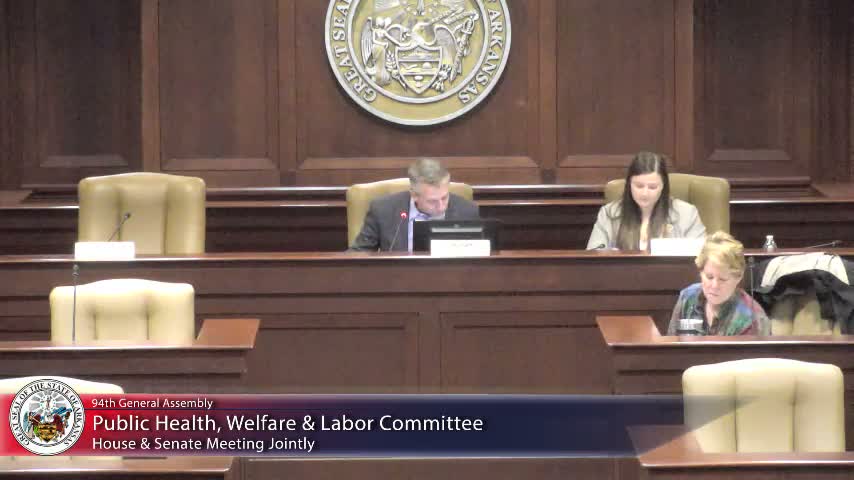
Members of the Senate Public Health, Welfare and Labor Committee heard testimony that Arkansas lacks adequate statewide access to multidisciplinary care for people living with amyotrophic lateral sclerosis, commonly called ALS or Lou Gehrig’s disease, and that lawmakers could help by funding travel, respite care and outreach.
Janet Thorn, managing director for the ALS Association Mid-South Territory, told the committee that ALS “means no muscle movement” and emphasized the urgency of early care: the diagnostic process can take about 18 months and average life expectancy after diagnosis is two to five years. She said Arkansas currently has one ALS specialty clinic and that many Arkansans cannot reach neuromuscular specialists and multidisciplinary teams that provide therapies, equipment and clinical trials.
“People have to travel long distances and many simply can’t,” Thorn said, noting the association serves roughly 103 people across the state but estimates the true prevalence may be “closer to 250 or more.”
David Brunton, chair of the ALS Association Leadership Council for Arkansas, described practical barriers he and his late wife faced, including a manufacturer that would not build a customized power wheelchair without a guaranteed payer and an insurer that initially refused a newly approved drug before later approving it. Brunton said he agreed to underwrite the wheelchair to get it manufactured, and described the stress of repeatedly appealing insurance denials.
“They changed their mind and approved the drug. But why did they have to cause that stress in the first place?” Brunton asked.
Tommy May, a U.S. veteran living with ALS who said he was diagnosed 17 years ago, credited the Department of Veterans Affairs with extending his access to care and urged the committee to expand clinical and research capacity in Northwest Arkansas so patients do not have to travel out of state. Dr. Rohit Dahl, chair of neurology at the University of Arkansas for Medical Sciences (UAMS), told senators that UAMS currently serves roughly 60–70 of the known patients and that about half of Arkansas residents with ALS are not being reached by existing services.
Presenters and legislators identified several specific needs: funding for travel and accessible transport to clinics, respite-care programs for exhausted family caregivers, an outreach coordinator to find unserved patients in rural areas, and state support to attract clinical-trial enrollment. On research funding, witnesses said UAMS has a clinical trust of about $2,000,000 and a research endowment of roughly $1.5 million, but additional dedicated resources and a chair to lead bench research are still needed.
Senator Jimmy Hammer (Senator Hammer) asked the witnesses to prepare a “tangible dollar and plan” the legislature could consider; the chair said staff would task a named committee member to follow up and help bring a detailed proposal back to the committee.
Committee members also raised insurer practices and prior authorization as points of policy concern. Lawmakers and witnesses described how urgent equipment needs and co-payments can create financial and logistical hurdles for patients, especially those in rural communities who face multi-hour drives to specialty clinics.
The committee offered to coordinate with Northwest Arkansas representatives and regional health systems; Denise Garner, who said she serves on the boards of UAMS and Washington Regional, invited the presenters to follow up so local legislators can assist with planning and outreach.
The presenters concluded by asking legislators to support expanded clinics, travel funding, respite programs and outreach to ensure people living with ALS can access specialty care and clinical trials. The committee moved on to other agenda items after thanking the witnesses.
Janet Thorn, managing director for the ALS Association Mid-South Territory, told the committee that ALS “means no muscle movement” and emphasized the urgency of early care: the diagnostic process can take about 18 months and average life expectancy after diagnosis is two to five years. She said Arkansas currently has one ALS specialty clinic and that many Arkansans cannot reach neuromuscular specialists and multidisciplinary teams that provide therapies, equipment and clinical trials.
“People have to travel long distances and many simply can’t,” Thorn said, noting the association serves roughly 103 people across the state but estimates the true prevalence may be “closer to 250 or more.”
David Brunton, chair of the ALS Association Leadership Council for Arkansas, described practical barriers he and his late wife faced, including a manufacturer that would not build a customized power wheelchair without a guaranteed payer and an insurer that initially refused a newly approved drug before later approving it. Brunton said he agreed to underwrite the wheelchair to get it manufactured, and described the stress of repeatedly appealing insurance denials.
“They changed their mind and approved the drug. But why did they have to cause that stress in the first place?” Brunton asked.
Tommy May, a U.S. veteran living with ALS who said he was diagnosed 17 years ago, credited the Department of Veterans Affairs with extending his access to care and urged the committee to expand clinical and research capacity in Northwest Arkansas so patients do not have to travel out of state. Dr. Rohit Dahl, chair of neurology at the University of Arkansas for Medical Sciences (UAMS), told senators that UAMS currently serves roughly 60–70 of the known patients and that about half of Arkansas residents with ALS are not being reached by existing services.
Presenters and legislators identified several specific needs: funding for travel and accessible transport to clinics, respite-care programs for exhausted family caregivers, an outreach coordinator to find unserved patients in rural areas, and state support to attract clinical-trial enrollment. On research funding, witnesses said UAMS has a clinical trust of about $2,000,000 and a research endowment of roughly $1.5 million, but additional dedicated resources and a chair to lead bench research are still needed.
Senator Jimmy Hammer (Senator Hammer) asked the witnesses to prepare a “tangible dollar and plan” the legislature could consider; the chair said staff would task a named committee member to follow up and help bring a detailed proposal back to the committee.
Committee members also raised insurer practices and prior authorization as points of policy concern. Lawmakers and witnesses described how urgent equipment needs and co-payments can create financial and logistical hurdles for patients, especially those in rural communities who face multi-hour drives to specialty clinics.
The committee offered to coordinate with Northwest Arkansas representatives and regional health systems; Denise Garner, who said she serves on the boards of UAMS and Washington Regional, invited the presenters to follow up so local legislators can assist with planning and outreach.
The presenters concluded by asking legislators to support expanded clinics, travel funding, respite programs and outreach to ensure people living with ALS can access specialty care and clinical trials. The committee moved on to other agenda items after thanking the witnesses.
View the Full Meeting & All Its Details
This article offers just a summary. Unlock complete video, transcripts, and insights as a Founder Member.
✓
Watch full, unedited meeting videos
✓
Search every word spoken in unlimited transcripts
✓
AI summaries & real-time alerts (all government levels)
✓
Permanent access to expanding government content
30-day money-back guarantee
