Arkansas health officials: vaccines cut severe COVID outcomes; therapeutics remain limited
February 07, 2022 | PUBLIC HEALTH, WELFARE AND LABOR COMMITTEE - SENATE, Senate, Committees, Legislative, Arkansas
This article was created by AI summarizing key points discussed. AI makes mistakes, so for full details and context, please refer to the video of the full meeting. Please report any errors so we can fix them. Report an error »
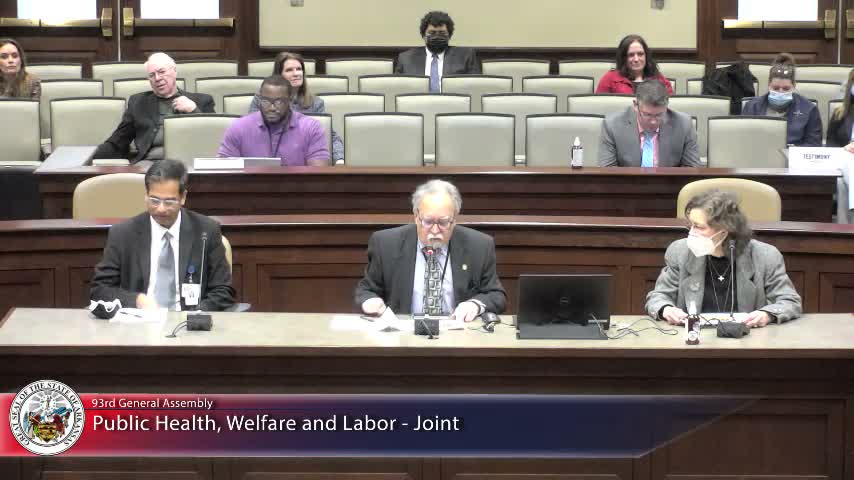
Arkansas Department of Health Secretary Jose Romero told the Senate Public Health, Welfare and Labor Committee that COVID‑19 vaccines remain highly effective at preventing severe illness and death and that booster doses are needed to optimize protection against the Omicron variant. Romero said the state’s hospitalizations and deaths continue to be concentrated among people who are unvaccinated or who have not completed a primary series plus boosters.
"COVID vaccines have been proven to be highly effective in the prevention of severe illness and death," Romero said, adding that those who have been boosted form "a very, very small percentage" of hospitalizations and deaths in Arkansas. He said vaccine safety is monitored through multiple national systems and that adverse events are reviewed by the CDC and ACIP.
Dr. Jennifer Dillehay, ADH chief medical officer, provided Arkansas totals reported to VAERS: 473 serious adverse events and 3,777 non‑serious events, with 95 deaths reported after vaccination; Dillehay said none of the deaths have been associated with the vaccine to date. "We have a total of 4,345 reports in VAERS for Arkansas," she said.
On therapeutics, the department laid out three categories: therapeutic monoclonal antibodies used to treat infection (sotrovimab is currently active against Omicron), oral antivirals with EUAs (Paxlovid, Molnupiravir), and pre‑exposure monoclonal antibodies for certain immunocompromised people (Evusheld). Romero and Dr. Atul Kothari emphasized timing: oral antivirals must be started within a narrow window after diagnosis to be effective.
The ADH officials said many previously used monoclonal antibodies had their EUAs rescinded because they lack activity against Omicron. Romero said sequencing data show the vast majority of current isolates in Arkansas are Omicron, and that sotrovimab remains the monoclonal with demonstrated activity against it.
Committee members asked for more granular data. Senator Sullivan and others requested vaccination status cross‑tabulated with comorbidities; ADH said it would attempt to provide that epidemiologic breakdown. ADH also acknowledged that supplies of monoclonal antibodies and oral antivirals were constrained in January and that distribution is informed by caseload, regional representation and available dispensing sites.
The department urged clinicians and patients to use the ADH therapeutics web map to locate current inventories and stressed that allocations change rapidly as supply moves among hospitals, pharmacies and federal partners. ADH said it will continue enhanced communications with prescribers and update the committee with requested data.
"COVID vaccines have been proven to be highly effective in the prevention of severe illness and death," Romero said, adding that those who have been boosted form "a very, very small percentage" of hospitalizations and deaths in Arkansas. He said vaccine safety is monitored through multiple national systems and that adverse events are reviewed by the CDC and ACIP.
Dr. Jennifer Dillehay, ADH chief medical officer, provided Arkansas totals reported to VAERS: 473 serious adverse events and 3,777 non‑serious events, with 95 deaths reported after vaccination; Dillehay said none of the deaths have been associated with the vaccine to date. "We have a total of 4,345 reports in VAERS for Arkansas," she said.
On therapeutics, the department laid out three categories: therapeutic monoclonal antibodies used to treat infection (sotrovimab is currently active against Omicron), oral antivirals with EUAs (Paxlovid, Molnupiravir), and pre‑exposure monoclonal antibodies for certain immunocompromised people (Evusheld). Romero and Dr. Atul Kothari emphasized timing: oral antivirals must be started within a narrow window after diagnosis to be effective.
The ADH officials said many previously used monoclonal antibodies had their EUAs rescinded because they lack activity against Omicron. Romero said sequencing data show the vast majority of current isolates in Arkansas are Omicron, and that sotrovimab remains the monoclonal with demonstrated activity against it.
Committee members asked for more granular data. Senator Sullivan and others requested vaccination status cross‑tabulated with comorbidities; ADH said it would attempt to provide that epidemiologic breakdown. ADH also acknowledged that supplies of monoclonal antibodies and oral antivirals were constrained in January and that distribution is informed by caseload, regional representation and available dispensing sites.
The department urged clinicians and patients to use the ADH therapeutics web map to locate current inventories and stressed that allocations change rapidly as supply moves among hospitals, pharmacies and federal partners. ADH said it will continue enhanced communications with prescribers and update the committee with requested data.
Don't Miss a Word: See the Full Meeting!
Go beyond summaries. Unlock every video, transcript, and key insight with a Founder Membership.
✓
Get instant access to full meeting videos
✓
Search and clip any phrase from complete transcripts
✓
Receive AI-powered summaries & custom alerts
✓
Enjoy lifetime, unrestricted access to government data
30-day money-back guarantee
