Alzheimer’s advisory council urges early detection, seeks state match to expand caregiver respite grant
December 05, 2023 | PUBLIC HEALTH, WELFARE AND LABOR COMMITTEE - SENATE, Senate, Committees, Legislative, Arkansas
This article was created by AI summarizing key points discussed. AI makes mistakes, so for full details and context, please refer to the video of the full meeting. Please report any errors so we can fix them. Report an error »
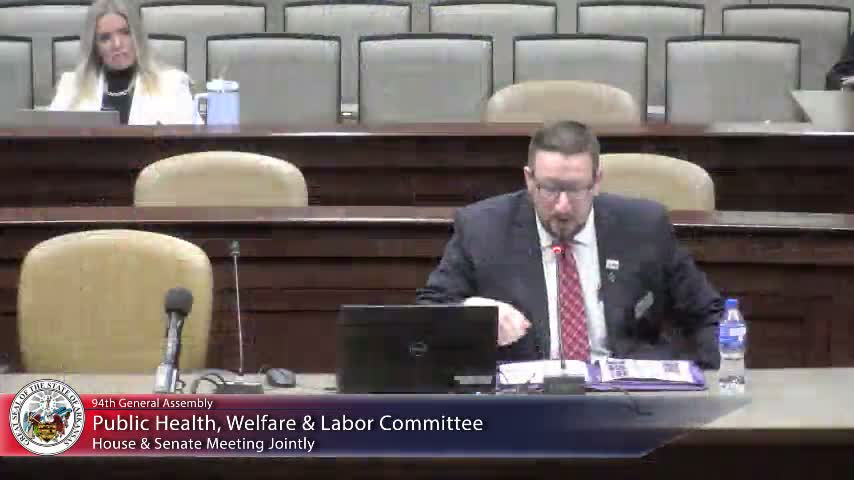
David Cook, director of public policy for the Alzheimer's Association, told the Senate Public Health, Welfare and Labor Committee the state’s Alzheimer’s and dementia response must shift toward early detection and caregiver support as treatments become available.
“What we do know is what's good for the heart is also good for the brain,” Cook said, emphasizing lifestyle risk reduction and the need for clinicians and patients to prioritize early screening so eligible people can access early-stage therapies.
Cook reported Arkansas estimates show more than 58,000 residents age 65 and older living with Alzheimer’s and projected that number could reach about 67,000 by 2025. He noted Alzheimer’s is the sixth-leading cause of death in Arkansas and said deaths rose substantially from 2000–2019. Cook also highlighted caregiver impact: in 2022 roughly 54,000 Arkansans provided an estimated 268,000,000 hours of unpaid care, a contribution he valued at more than $4.4 billion.
Cook reviewed recent legislative and administrative advances tied to the state plan: adding providers and sectors to the Alzheimer’s Dementia Advisory Council; creation of a dementia services coordinator position at the Department of Human Services (position posted); and new statutory training requirements—Act 70 (two hours of dementia training for home-care providers), Act 202 (two hours for law enforcement and first responders) and Act 335 (expanded assisted-living training requirements).
He described the Alzheimer’s dementia caregiver respite pilot, initially funded at $200,000 (matched by a federal block grant routed through DHS), which provided $500 respite grants to caregivers in year one and served about 400 families. Cook said the program included a rural-access threshold (set at 25% initially and met at 32% in year one) and that through Dec. 1, 2023 the program had served 266 families in 2023 and held roughly $68,607 remaining of the original funds.
As policy requests for 2024, Cook asked the legislature to fund a state public-awareness campaign focused on early detection, risk reduction and clinician education, and urged the Medicaid agency to adopt an existing CMS planning CPT code reimbursement so Medicaid beneficiaries under 65 (non–dual-eligible) can access cognitive screening and care planning services. He said DHS coverage decisions and private payer determinations will be monitored as more FDA-approved Alzheimer’s therapies emerge.
In a committee exchange, Senator Chesterfield raised concerns about side effects and payer coverage for new drugs. Cook said some clinical data for the drug Leqembi have shown risks such as brain bleeds in certain patients and that Arkansas Blue Cross and Blue Shield had made a coverage determination not to cover the drug, while Medicaid, the VA and some private insurers (including UnitedHealth) were covering it. He advocated continued monitoring and payer outreach to ensure equitable access.
The presentation concluded with committee members thanking Cook and the advisory council and the committee moved to the next agenda item. The committee did not take formal votes on policy requests during this meeting; Cook’s requests were framed as legislative and administrative asks to inform the 2024 session.
“What we do know is what's good for the heart is also good for the brain,” Cook said, emphasizing lifestyle risk reduction and the need for clinicians and patients to prioritize early screening so eligible people can access early-stage therapies.
Cook reported Arkansas estimates show more than 58,000 residents age 65 and older living with Alzheimer’s and projected that number could reach about 67,000 by 2025. He noted Alzheimer’s is the sixth-leading cause of death in Arkansas and said deaths rose substantially from 2000–2019. Cook also highlighted caregiver impact: in 2022 roughly 54,000 Arkansans provided an estimated 268,000,000 hours of unpaid care, a contribution he valued at more than $4.4 billion.
Cook reviewed recent legislative and administrative advances tied to the state plan: adding providers and sectors to the Alzheimer’s Dementia Advisory Council; creation of a dementia services coordinator position at the Department of Human Services (position posted); and new statutory training requirements—Act 70 (two hours of dementia training for home-care providers), Act 202 (two hours for law enforcement and first responders) and Act 335 (expanded assisted-living training requirements).
He described the Alzheimer’s dementia caregiver respite pilot, initially funded at $200,000 (matched by a federal block grant routed through DHS), which provided $500 respite grants to caregivers in year one and served about 400 families. Cook said the program included a rural-access threshold (set at 25% initially and met at 32% in year one) and that through Dec. 1, 2023 the program had served 266 families in 2023 and held roughly $68,607 remaining of the original funds.
As policy requests for 2024, Cook asked the legislature to fund a state public-awareness campaign focused on early detection, risk reduction and clinician education, and urged the Medicaid agency to adopt an existing CMS planning CPT code reimbursement so Medicaid beneficiaries under 65 (non–dual-eligible) can access cognitive screening and care planning services. He said DHS coverage decisions and private payer determinations will be monitored as more FDA-approved Alzheimer’s therapies emerge.
In a committee exchange, Senator Chesterfield raised concerns about side effects and payer coverage for new drugs. Cook said some clinical data for the drug Leqembi have shown risks such as brain bleeds in certain patients and that Arkansas Blue Cross and Blue Shield had made a coverage determination not to cover the drug, while Medicaid, the VA and some private insurers (including UnitedHealth) were covering it. He advocated continued monitoring and payer outreach to ensure equitable access.
The presentation concluded with committee members thanking Cook and the advisory council and the committee moved to the next agenda item. The committee did not take formal votes on policy requests during this meeting; Cook’s requests were framed as legislative and administrative asks to inform the 2024 session.
Don't Miss a Word: See the Full Meeting!
Go beyond summaries. Unlock every video, transcript, and key insight with a Founder Membership.
✓
Get instant access to full meeting videos
✓
Search and clip any phrase from complete transcripts
✓
Receive AI-powered summaries & custom alerts
✓
Enjoy lifetime, unrestricted access to government data
30-day money-back guarantee
