Senate committee approves SB192 to let insurers prefer biosimilars under step‑therapy rules
February 07, 2023 | INSURANCE & COMMERCE - SENATE, Senate, Committees, Legislative, Arkansas
This article was created by AI summarizing key points discussed. AI makes mistakes, so for full details and context, please refer to the video of the full meeting. Please report any errors so we can fix them. Report an error »
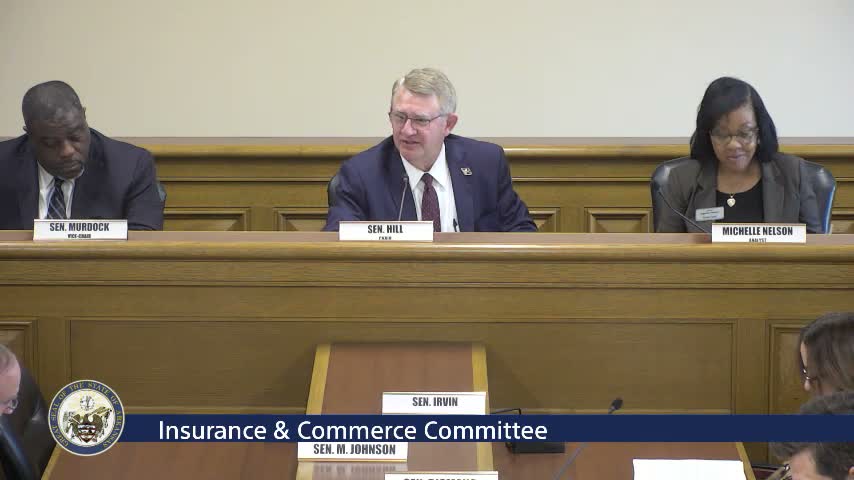
The Senate Insurance & Commerce Committee advanced SB192 after a discussion focused on whether the change would shift clinical decisions from prescribers to insurers.
Senator Sandra Boyd, sponsor of SB192, told the committee the bill adds biosimilars and interchangeable biologic products to the list of allowed step‑therapy exceptions, saying the products are "FDA‑approved medications that are very close to the originator product" and that allowing insurers to prefer biosimilars would introduce competition that could lower drug prices. "These are drugs that cost hundreds to thousands of dollars," Boyd said, adding the change is intended to "save the health care system a lot of money."
Committee members questioned how the change would affect the doctor‑patient relationship and pharmacy workflow. Senator Johnson, who identified himself as a pharmacist, asked Boyd to clarify differences among generics, biosimilars and interchangeable biologics; Boyd explained generics are identical small‑molecule drugs, biosimilars are biologically produced and may have slight molecular differences, and an "interchangeable" designation is an additional FDA finding that supports automatic substitution.
On who controls the final decision, Boyd and other speakers said prescribers retain authority: physicians, nurse practitioners and physician assistants can prevent substitution by writing "do not substitute" or "do not therapeutically interchange" on prescriptions. Boyd also described two real‑world pathways: a pharmacist can contact the prescriber if an insurer prefers a biosimilar, or, under a separate therapeutic‑substitution law enacted by the Legislature, a pharmacist may substitute and then notify the prescriber, provided the patient consents.
Concerns about liability and patient safety came up. Senator Irvin asked who would be liable if a substitution caused harm; Boyd said pharmacists must follow statutory duties and could be accountable to patients and the state Board of Pharmacy, but he declined to offer a legal opinion. "If the pharmacist were working in his or her capacity of pharmacist and doing something, then he or she would need to dot every i and cross every t," Boyd said. He added he would not expect drug‑drug interactions or unexpected allergic reactions from biosimilars that would not occur with the originator product.
After questions and final remarks, Boyd moved that SB192 "do pass." The motion was seconded and the committee voice‑voted the bill out of committee. The committee did not record a roll‑call tally on the floor; the chair announced that the bill "has passed."
What happens next: SB192 proceeds from committee to the next legislative stage for further consideration and possible floor action, with revised bill text available from the sponsor upon request.
Senator Sandra Boyd, sponsor of SB192, told the committee the bill adds biosimilars and interchangeable biologic products to the list of allowed step‑therapy exceptions, saying the products are "FDA‑approved medications that are very close to the originator product" and that allowing insurers to prefer biosimilars would introduce competition that could lower drug prices. "These are drugs that cost hundreds to thousands of dollars," Boyd said, adding the change is intended to "save the health care system a lot of money."
Committee members questioned how the change would affect the doctor‑patient relationship and pharmacy workflow. Senator Johnson, who identified himself as a pharmacist, asked Boyd to clarify differences among generics, biosimilars and interchangeable biologics; Boyd explained generics are identical small‑molecule drugs, biosimilars are biologically produced and may have slight molecular differences, and an "interchangeable" designation is an additional FDA finding that supports automatic substitution.
On who controls the final decision, Boyd and other speakers said prescribers retain authority: physicians, nurse practitioners and physician assistants can prevent substitution by writing "do not substitute" or "do not therapeutically interchange" on prescriptions. Boyd also described two real‑world pathways: a pharmacist can contact the prescriber if an insurer prefers a biosimilar, or, under a separate therapeutic‑substitution law enacted by the Legislature, a pharmacist may substitute and then notify the prescriber, provided the patient consents.
Concerns about liability and patient safety came up. Senator Irvin asked who would be liable if a substitution caused harm; Boyd said pharmacists must follow statutory duties and could be accountable to patients and the state Board of Pharmacy, but he declined to offer a legal opinion. "If the pharmacist were working in his or her capacity of pharmacist and doing something, then he or she would need to dot every i and cross every t," Boyd said. He added he would not expect drug‑drug interactions or unexpected allergic reactions from biosimilars that would not occur with the originator product.
After questions and final remarks, Boyd moved that SB192 "do pass." The motion was seconded and the committee voice‑voted the bill out of committee. The committee did not record a roll‑call tally on the floor; the chair announced that the bill "has passed."
What happens next: SB192 proceeds from committee to the next legislative stage for further consideration and possible floor action, with revised bill text available from the sponsor upon request.
View the Full Meeting & All Its Details
This article offers just a summary. Unlock complete video, transcripts, and insights as a Founder Member.
✓
Watch full, unedited meeting videos
✓
Search every word spoken in unlimited transcripts
✓
AI summaries & real-time alerts (all government levels)
✓
Permanent access to expanding government content
30-day money-back guarantee
